






The Data Boom's Hidden Energy Bill
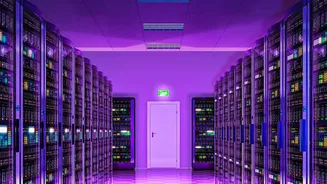
India’s data centre market is experiencing explosive growth. Recent reports from October 2026 indicate the nation's capacity is on track to reach 2 gigawatts (GW) by the end of the year, a significant milestone. This expansion, fueled by AI, cloud computing,
and massive investment, positions India as a leading data centre hub in the Asia-Pacific region. However, these nerve centres of the digital age are incredibly power-hungry. Cooling systems alone can account for 30-40% of a facility's total energy use, and an average data centre can consume as much electricity as 100,000 homes. As capacity is projected to surge to nearly 10 GW by 2030, this places immense strain on the national power grid and raises serious questions about sustainability.
Working Smarter, Not Just Harder
Server optimisation is the first critical step toward efficiency. This isn't just about buying newer, more powerful machines. A key strategy is virtualization, which allows a single physical server to run multiple virtual machines, drastically reducing the number of underutilised or idle servers. Many data centres suffer from 'ghost servers'—machines that are plugged in and consuming power but are no longer performing useful work. Identifying and decommissioning this hardware can yield immediate energy savings. Furthermore, intelligent workload management ensures that computing tasks are distributed efficiently across servers, preventing individual machines from being consistently pushed to their maximum capacity, which reduces wear and tear and extends hardware lifespan. Optimising how servers are used is a cost-effective way to cut power consumption without sacrificing performance.
The Challenge of Keeping Cool
In a tropical climate like India's, keeping thousands of heat-generating servers from overheating is a monumental task. Traditional cooling methods, which often operate like massive air-conditioning systems, are notoriously inefficient and a major drain on electricity. With the rise of artificial intelligence and other high-density computing tasks, server racks are becoming more powerful and generating far more heat in a smaller space. An average server rack might draw 5-10 kilowatts (kW) of power, but racks designed for AI workloads can draw up to 120 kW or more. This intensification of heat makes conventional air cooling inadequate and unsustainable, forcing the industry to look for smarter alternatives.
Next-Generation Cooling Solutions
The future of data centre cooling is liquid. Advanced solutions like direct-to-chip and immersion cooling are becoming a strategic necessity. Direct-to-chip cooling uses pipes to circulate a liquid coolant directly over hot components like CPUs and GPUs, removing heat at its source. Immersion cooling goes a step further, submerging entire servers in a non-conductive dielectric fluid. These methods are dramatically more efficient than air, as liquids can transfer heat up to 1,000 times more effectively. Adopting liquid cooling can reduce a data centre's energy consumption by up to 40% and significantly lower its Power Usage Effectiveness (PUE), a key metric for efficiency. As India's liquid cooling market is projected to grow exponentially, these technologies are pivotal for managing the heat from next-generation AI servers.
A Sustainable Digital Future
Embracing server optimisation and smarter cooling is not merely a technical upgrade; it's a strategic business decision with wide-ranging benefits. For operators, it leads to significant reductions in operational expenditure through lower electricity bills. From a national perspective, it eases the strain on India's power grid, a crucial factor as data centre demand for electricity is expected to grow from less than 1% of the national total to around 3% by 2030. Most importantly, it aligns the industry's rapid growth with India's broader sustainability goals. By building more efficient, less power-intensive data centres, India can ensure that its digital transformation is both powerful and responsible, securing its place as a leader in the global digital economy without compromising its environmental commitments.