






From Local Heritage to Global Spotlight
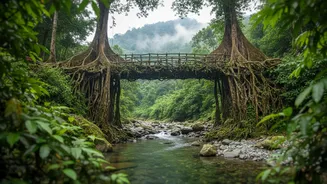
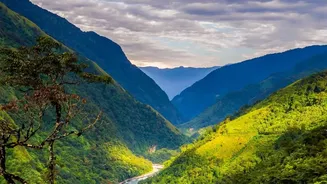
Deep within the lush, rain-soaked hills of Meghalaya, a tradition of building bridges from living tree roots has captured the world's attention. These structures, known as Jingkieng Jri, are at the heart of a major push for global recognition. India has formally
nominated the 'Living Root Bridge Cultural Landscape' for inscription on the UNESCO World Heritage List. This submission places the unique bio-engineering of the Khasi and Jaintia communities onto a global stage, positioning it not as a relic of the past, but as a vital lesson in sustainable infrastructure. The nomination, which has advanced to the detailed evaluation phase for the 2026-27 cycle, highlights a profound harmony between humans and nature, a concept that international environmental forums are increasingly eager to understand and promote.
The Art of Growing a Bridge
So, what exactly is living architecture? It is the practice of creating functional structures from living plants. In Meghalaya, this involves guiding the aerial roots of the Indian rubber fig tree (Ficus elastica) across rivers and gorges. Villagers use hollowed-out bamboo or areca nut trunks to direct the pliable roots, which are then woven together. Over a span of 15 to 25 years, these roots grow, thicken, and merge to form a strong, living bridge that becomes more robust with each passing year. Unlike concrete and steel, which decay and require constant maintenance in the region's harsh, wet climate, these living bridges are self-repairing and can last for centuries. They are a testament to an indigenous philosophy that seeks to coexist with nature rather than conquer it, a belief system encapsulated in the reverence for 'Mei Ramew', or Mother Earth.
A New Generation Takes Root
The headline-grabbing UNESCO nomination is powered by a quiet revolution on the ground, led by the region's youth. As modern infrastructure slowly reaches remote villages, there's a risk of this ancient knowledge fading. Stepping into this gap are young leaders like Morningstar Khongthaw, founder of the Living Bridge Foundation. He and other young volunteers are not just documenting and repairing existing bridges; they are actively building new ones. This initiative serves a dual purpose: it preserves a priceless cultural heritage and transfers critical intergenerational knowledge. By organizing workshops where village elders teach the craft to younger members, these youth-led projects ensure the practice continues to live and breathe. Supported by bodies like the United Nations Development Programme (UNDP), these efforts are transforming the bridges from mere utilities into symbols of cultural pride and sustainable livelihood through eco-tourism.
A Benchmark for a Changing World
The reason these projects are being hailed as 'success benchmarks' is clear. At a time when the world is grappling with the high carbon footprint of construction, living architecture offers a carbon-negative alternative. These structures actively contribute to their ecosystem, prevent soil erosion, and support biodiversity. They represent a model of climate-resilient infrastructure, providing vital connectivity in areas prone to landslides and flash floods, where conventional bridges often fail. More than 75 villages in Meghalaya rely on this network. The bridges are a powerful example of community-led innovation, built and maintained through collective effort without formal architectural plans. This indigenous science, developed over centuries, offers profound lessons for modern urban planners and architects looking to create designs that are not just green, but regenerative.