






The High Cost of Vague Forecasts
The phrase “scattered showers expected” is of little use to a farmer deciding whether to sow seeds worth thousands of rupees. Traditional weather forecasts, often issued at a state or regional level, lack the granularity needed for modern agriculture.
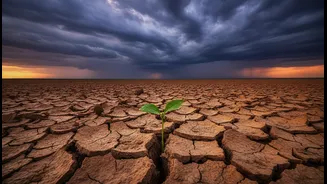
Climate change has made weather patterns even more erratic, turning once-reliable instincts into risky gambles. A forecast that is off by a few days or a few dozen kilometres can be the difference between a bumper crop and a devastating loss. When a prediction covers a vast area, it fails to account for microclimates and the chaotic, convection-based nature of much of India's rainfall, making it difficult for farmers to plan crucial activities like sowing, irrigation, and pesticide application.
The Promise of Precision with AI
Artificial intelligence is changing the weather game entirely. By processing immense datasets from satellites, ground sensors, and decades of historical patterns, AI models can generate hyper-local forecasts with unprecedented accuracy. Instead of a regional outlook, a farmer can receive a forecast for their specific village or even their individual farm, sometimes down to a one-kilometre resolution. Recent initiatives in India have demonstrated this power. In 2025, an AI-based model successfully predicted a nearly three-week stall in the monsoon, allowing vital information to be sent via SMS to 38 million farmers who could then adjust their planting schedules accordingly.
From Forecast to Actionable Intelligence
The true revolution isn't just better predictions; it's the ability to turn those predictions into actionable advice. An AI system doesn't just say “rain likely”; it can specify the expected quantity, timing, and duration. This allows for the precise scheduling of irrigation, saving precious water and the cost of diesel for pumps. It enables farmers to apply pesticides and fertilisers at optimal times, ensuring they aren't washed away by an unexpected downpour. In states like Uttar Pradesh, pilot programs are already delivering 10-day rainfall forecasts at a 1-km resolution, empowering farmers with the intelligence to manage risk and improve efficiency.
Bridging the Digital and Data Divide
Implementing this technology nationwide is not without its challenges. The effectiveness of any AI model is dependent on the quality and quantity of the data it is fed. There are still significant gaps in on-the-ground weather monitoring infrastructure, particularly in remote and difficult terrains like the Himalayas. Furthermore, delivering these sophisticated forecasts requires robust digital connectivity and ensuring farmers have the tools and digital literacy to access and act on the information. Overcoming these hurdles requires investment in both physical infrastructure, like more automated weather stations, and digital infrastructure that ensures the final, crucial step of delivering the forecast to the farmer's mobile phone is successful.