

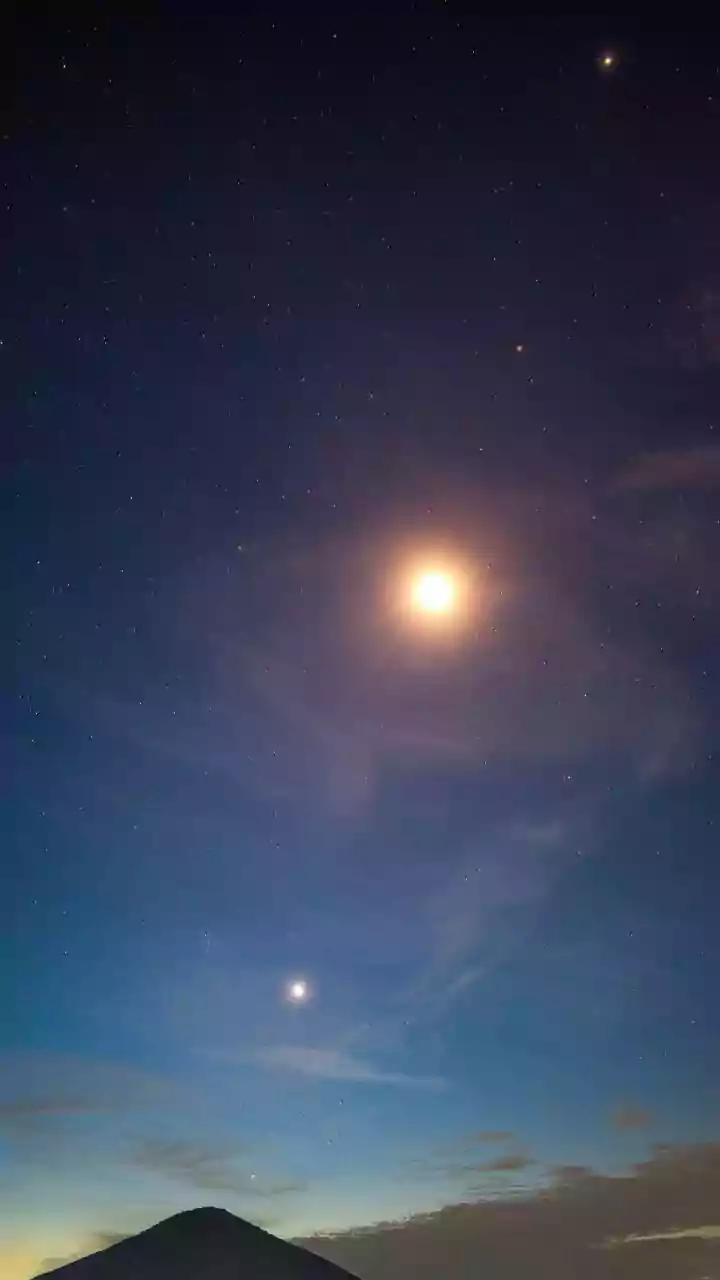



The Last of the Perseids
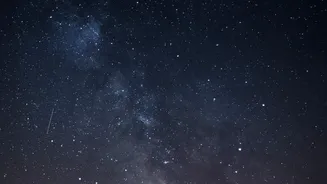
While the spectacular peak of the Perseid meteor shower occurred around August 12-13, the show isn’t entirely over. The shower remains active until about August 24. In the days following the peak, you can still catch stray meteors, often called shooting
stars, streaking across the sky. For your best chance, find a location away from city lights, preferably after midnight. The moon phase is also in our favour; the First Quarter moon on August 20 sets early, leaving the late-night hours dark enough for spotting these faint streaks of light. Patience is key, as the rate will be much lower than the peak, but a few bright meteors can still provide a rewarding experience.
The Summer Triangle Overhead
One of the most prominent features of the August sky is the Summer Triangle. This is not a constellation, but a large pattern, or asterism, formed by three brilliant stars from three separate constellations. Look straight up after sunset to find Vega, the brightest of the three, followed by Deneb and Altair. These stars are among the brightest in the night sky and are easily visible even from light-polluted urban areas. Vega is part of the constellation Lyra (the Harp), Deneb is in Cygnus (the Swan), and Altair belongs to Aquila (the Eagle). The band of the Milky Way runs right through the triangle, and if you can get to a dark sky location, you’ll see this hazy river of stars creating a breathtaking backdrop.
Look South for Scorpius
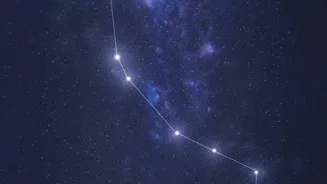
Gazing towards the southern sky in the evenings reveals the magnificent constellation of Scorpius, the Scorpion. It is one of the few constellations that truly resembles its namesake, with a curving body and a distinct tail that hooks around like a scorpion's stinger. Its brightest star is the reddish giant Antares, often called the “heart of the scorpion.” Finding Scorpius is particularly exciting because it points the way towards the very centre of our own Milky Way galaxy. On a clear, dark night, this region appears as the brightest and densest part of the Milky Way's band, a truly humbling sight.
The Planets Put on a Show
Several planets are well-placed for viewing in late August. Saturn, the ringed planet, is becoming a brilliant evening object as it heads towards its opposition in early October. Look for it rising in the east as the sky gets dark. Mars and Jupiter are also visible, though you’ll have to stay up late or wake up early to see them. They rise in the late-night and pre-dawn hours, appearing as exceptionally bright, star-like objects in the eastern sky. While Mercury and Saturn were part of a planetary line-up earlier in the month, Jupiter and Mars remain easily identifiable for patient observers.
A Full Moon to Close the Month
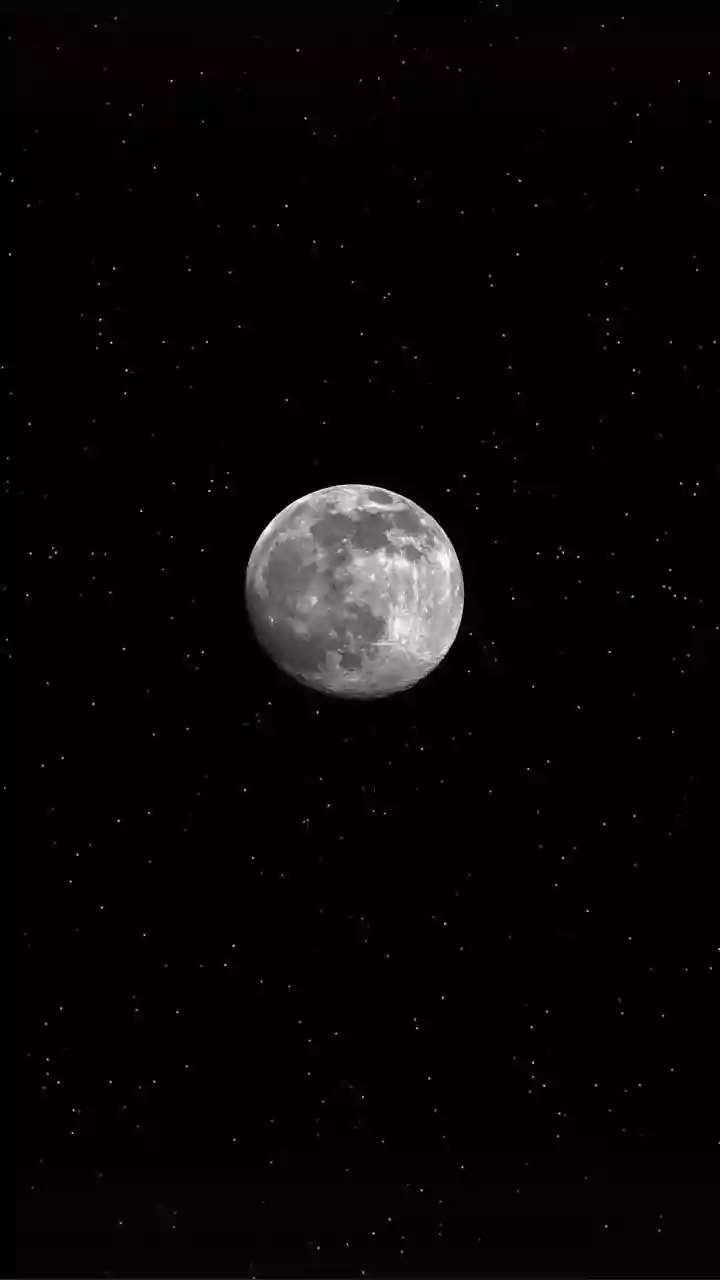
The lunar cycle brings its own drama to the end of the month. After the First Quarter on August 20, the Moon will grow fuller each night, a phase known as Waxing Gibbous. This culminates in a Full Moon on August 28. While a bright moon washes out fainter stars and meteors, its own illuminated surface is a beautiful target for the naked eye or a pair of binoculars. The nights around the full moon offer a different kind of stargazing, one focused on the bright, detailed face of our closest celestial neighbour.