




The Problem: Understanding 'Tech Neck'
Many of us spend six hours or more each day sitting at a desk, often with our heads pushed slightly forward to focus on a screen. This position, sometimes called 'tech neck' or forward head posture, places immense strain on the cervical spine and surrounding
muscles. For every inch your head moves forward, the load on your neck muscles increases significantly. Over time, this chronic tension can lead to muscle fatigue, stiffness, and persistent tension-type headaches that radiate from the base of the skull. These headaches are not a separate issue but a symptom of the underlying postural strain from prolonged sitting.
The Solution: Gentle Strength with Isometrics
The key to counteracting this strain is not just stretching, but also strengthening. This is where isometric exercises come in. An isometric contraction is when you activate a muscle without actually moving the joint. Instead of lifting a weight, you push against a fixed object — in this case, your own hand. This method is ideal for the delicate neck area because it allows you to build strength and stability gently and with a high degree of control. By consistently strengthening the muscles that support your head, you improve your body's ability to maintain a healthy posture, reducing the chronic load that causes pain.
Your 5-Minute Daily Desk Routine
You can perform this entire routine while sitting at your desk. The goal is to create gentle resistance without causing pain or strain. For each exercise, aim to hold the contraction for 10 seconds and repeat 3 to 5 times. Sit upright in your chair with your feet flat on the floor and your shoulders relaxed. 1. Forward Press: Place your palm flat against your forehead. Gently press your head forward into your hand, while your hand provides equal resistance to keep your head from moving. You should feel the muscles at the front of your neck engage. 2. Backward Press: Clasp your hands behind your head. Gently press your head backward into your hands, using your hands to prevent any actual movement. This will activate the muscles at the back of your neck. 3. Right Side Press: Place your right palm against the right side of your head, just above your ear. Gently press your head into your hand as if trying to touch your ear to your shoulder. Your hand should provide enough resistance to keep your neck straight. 4. Left Side Press: Repeat the previous exercise on the opposite side, placing your left palm on the left side of your head and resisting the movement.
Consistency Is More Important Than Intensity
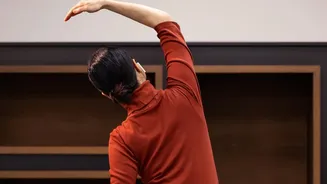
The benefits of isometric loading come from consistency, not force. You should only use about 50% of your maximum effort for each contraction; it should feel like a gentle activation, not a powerful strain. The best way to see results is to make this short routine a daily habit. Try linking it to an existing part of your day, such as right after your lunch break or during your mid-afternoon coffee. A few minutes each day is far more effective than one longer, more intense session once a week. Taking regular breaks every 30-45 minutes to stand and stretch can also dramatically reduce the buildup of postural strain throughout the day.
Safety and When to See a Professional
These exercises should be pain-free. If you experience any sharp pain, dizziness, or tingling while performing them, stop immediately. It's important to start gently and listen to your body, especially if you have a history of neck injuries. While this routine can be highly effective for preventing tension headaches caused by posture, it is not a substitute for medical advice. If your headaches are severe, persistent, or accompanied by other concerning symptoms, it's crucial to consult a healthcare provider or a physical therapist to rule out other conditions and get a personalized treatment plan.