



A Telescope on Two Continents
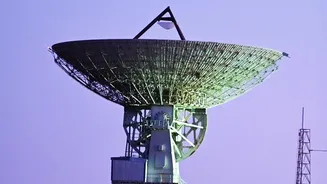
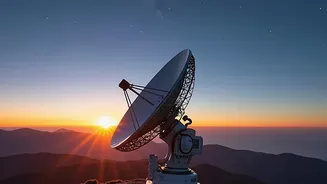
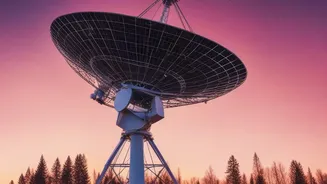
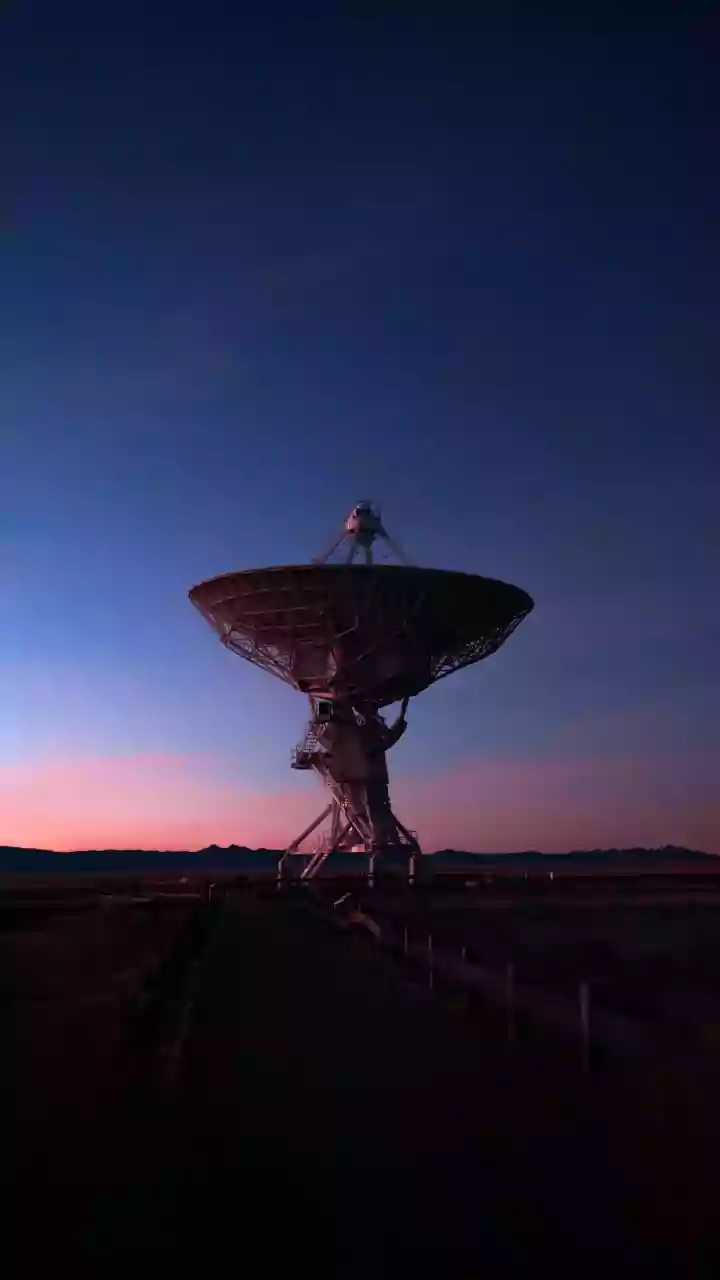
The SKA isn't a single instrument but two distinct and complementary telescopes spread across two continents. In South Africa's Karoo desert, 197 dishes, including the existing 64 MeerKAT dishes, will form SKA-Mid. In Western Australia, on the traditional
lands of the Wajarri Yamaji people, 131,072 Christmas-tree-like antennas will make up SKA-Low. Construction officially began in December 2022, marking a major milestone for this global project decades in the making. The two locations were chosen for their remoteness, offering skies free from the radio frequency interference created by modern electronics, which would otherwise drown out the faint cosmic signals the SKA is designed to catch. Together, these arrays will function as the largest radio telescope ever built, revolutionising our view of the cosmos.
The Power of Working Together
The secret to the SKA's immense power lies in a technique called interferometry. Instead of building one impossibly large dish, astronomers connect thousands of smaller antennas with fibre optic cables. When signals from a cosmic object arrive at these antennas at slightly different times, supercomputers can precisely combine them. This process allows the network of antennas to act as a single, virtual telescope with a size equal to the maximum distance between them, which can be up to 150 kilometres. This technique provides two huge advantages: sensitivity and resolution. The combined collecting area of all the antennas allows the SKA to detect incredibly faint signals that have travelled for billions of years. Simultaneously, the vast distances between antennas give it the power to create images with far greater detail and sharpness than any previous radio telescope.
Tuning into the Cosmic Dawn
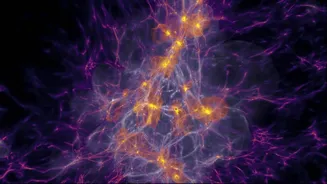
One of the SKA's primary missions is to peer back into a mysterious period known as the Cosmic Dawn and the Epoch of Reionisation. This was a time, from about 300,000 to one billion years after the Big Bang, when the first stars and galaxies began to form, and their light started ionising the neutral hydrogen gas that filled the universe. The SKA-Low telescope in Australia is specifically designed to detect the faint, low-frequency radio signals emitted by this neutral hydrogen. These signals have been travelling across the expanding universe for over 13 billion years, their wavelengths stretched out along the way. By capturing these ancient frequencies, the SKA will create three-dimensional maps of how the first luminous structures emerged from the cosmic dark ages, effectively watching the universe switch on for the first time.
Beyond the Universe's First Light
While observing the early universe is a headline goal, the SKA's capabilities will impact nearly every area of astrophysics. The SKA-Mid telescope in South Africa will survey a billion galaxies to map the influence of dark matter and dark energy, the mysterious forces that govern the universe's structure and expansion. It will also be an unparalleled tool for testing Einstein's theory of general relativity by precisely timing the signals from pulsars, which are rapidly spinning dead stars. Scientists will use the telescope to hunt for fast radio bursts, map the invisible lines of cosmic magnetism, and even search for the complex organic molecules that are the building blocks of life, potentially offering clues about our own origins.
A Deluge of Cosmic Data
Listening to the universe on this scale creates an unprecedented challenge: data. The SKA telescopes will generate more data in a single day than the entire global internet. This torrent of information will be sent via fibre optic links to massive supercomputing facilities in Perth and Cape Town for processing. These science data processors are expected to be among the most powerful computers on Earth, performing over 100 quadrillion calculations per second. Developing the smart algorithms and innovative technology needed to manage and analyse this data is a monumental task in itself, pushing the boundaries of computing and information technology. The discoveries made by the SKA will therefore not only be in astronomy, but also in the fields of big data and high-performance computing.