






First, What is GRAP?
Think of the Graded Response Action Plan, or GRAP, as an emergency playbook for fighting Delhi-NCR's air pollution. Notified in 2017 after a Supreme Court order, it is a set of measures that become progressively stricter as the air quality worsens. The
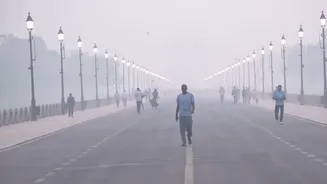
plan is divided into four stages, triggered by the Air Quality Index (AQI). Stage 1 kicks in when the air is 'Poor' (AQI 201-300), while Stage 4 ('Severe+') involves the harshest measures. This system, managed by the Commission for Air Quality Management (CAQM), allows authorities to act pre-emptively based on forecasts, rather than waiting for a public health crisis. On October 21, 2026, the CAQM invoked Stage 1 as Delhi's AQI slipped into the 'poor' category.
Stage 1: Declaring War on Dust
The primary target of GRAP Stage 1 is one of the most visible culprits of urban pollution: dust. This includes coarse particles from road dust and finer particles from construction and demolition (C&D) activities. The 25 action points under Stage 1 are heavily focused on dust suppression. Municipal bodies and other agencies across the NCR are mandated to enforce strict dust control norms. This isn't just a suggestion; it's a mandatory directive with the force of law, aimed at stopping pollution at its source before it spirals out of control.
The Municipal Action Plan
So, what are municipalities actually doing? Their preparations involve a multi-pronged strategy. First is ramping up mechanical road sweeping and ensuring frequent water sprinkling, especially on high-traffic corridors. Second is a major crackdown on construction sites. All C&D projects on plots of 500 square metres or more must be registered on the government's web portal and comply with dust mitigation measures, such as covering raw materials and using anti-smog guns. Any site found violating these norms faces immediate action, including hefty fines and work-stoppage orders. Transportation of C&D waste is only permitted in fully covered vehicles to prevent dust from escaping into the air.
Enforcement and Penalties
A plan is only as good as its enforcement. To ensure compliance, municipalities across Delhi, Noida, Ghaziabad, and Gurugram have deployed special inspection teams. These teams are actively monitoring construction sites, industrial areas, and major roads. The financial deterrents are significant. In recent days, authorities have already imposed fines amounting to lakhs of rupees on violators for flouting dust control guidelines. For instance, the UP Pollution Control Board has been actively penalising construction projects in Noida and Greater Noida for continuing work without adequate dust mitigation. This signals a zero-tolerance approach to non-compliance.
Beyond Dust: Other Key Measures
While dust is the main focus, GRAP Stage 1 also includes other important restrictions. The use of coal and firewood in tandoors at hotels and restaurants is banned. Furthermore, the use of diesel generator sets is restricted, allowed only for emergency and essential services. Municipalities are also tasked with managing waste to prevent open burning, another significant source of particulate matter. Citizens are encouraged to use apps like 'Green Delhi' to report violations, creating a feedback loop for authorities to act swiftly.