



A System of Seven Worlds
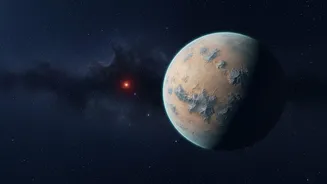
Just 40 light-years away lies a star system that has captured the imagination of scientists and the public alike: TRAPPIST-1. It features not one, but seven rocky planets roughly the size of Earth, making it a natural laboratory for studying worlds outside
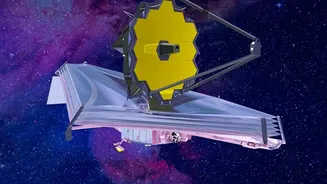
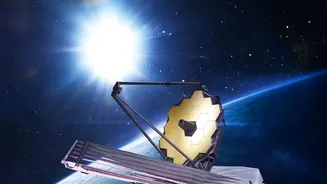
our own solar system. Three of these planets orbit within the star’s ‘habitable zone,’ a region where conditions might be right for liquid water to exist on a planet’s surface. Because of this tantalizing setup, the system became a top-priority target for the powerful James Webb Space Telescope, which can peer into the light from distant stars to search for the chemical fingerprints of an atmosphere.
The Search for a Second Earth
Finding an atmosphere is the first and most critical step in determining if a distant planet could be habitable. An atmosphere can regulate temperature, shield the surface from harmful radiation, and provide the necessary pressure to maintain liquid water. Scientists have been particularly keen to look for atmospheres dominated by carbon dioxide, nitrogen, or oxygen. A thick CO2 atmosphere, for example, could point to volcanic activity and a dynamic geology, similar to the processes that have shaped Earth. Initial theories suggested some TRAPPIST-1 worlds could be Venus-like, with dense, carbon-rich skies—a key signpost in the search for habitable environments.
What Webb Has Actually Found
Despite the high hopes, JWST’s observations have painted a starkly different picture, especially for the planets closest to the TRAPPIST-1 star. Data for the innermost planet, TRAPPIST-1b, indicate it has a temperature of roughly 220 degrees Celsius and suggest it has no significant atmosphere. It appears to be a bare, hot rock. Similarly, follow-up studies on the second planet, TRAPPIST-1c, have ruled out a thick, Venus-like carbon dioxide atmosphere. The high temperatures measured on these worlds are consistent with planets that lack a gaseous envelope to redistribute heat from their star-facing side to their dark side. While disappointing for those hoping for an easy find, these results are crucial for understanding the harsh reality for planets orbiting so close to their parent stars.
A More Complicated Picture Emerges
The story gets more nuanced as we move to the outer planets. For TRAPPIST-1e, a world within the habitable zone, the data is not yet conclusive. Observations have effectively ruled out a dense, CO2-heavy atmosphere, meaning it's not a twin of Venus or Mars. However, two possibilities remain on the table: the planet could be an airless rock like its inner siblings, or it could possess a secondary atmosphere made of heavier molecules, such as nitrogen—the main component of Earth’s own atmosphere. Distinguishing between these scenarios is incredibly challenging, as the signals are faint and can be contaminated by the activity of the star itself. More observations are needed to solve the puzzle.
Redefining the Astrobiology Frontier
So, where does this leave the search for life? The findings from TRAPPIST-1 are opening a new astrobiology frontier, just not in the way many expected. Instead of a simple discovery, we are learning that planetary evolution is complex and that many Earth-sized worlds may struggle to hold onto their atmospheres, especially around active red dwarf stars like TRAPPIST-1. This knowledge is invaluable. Understanding why some planets become barren rocks while others might retain their skies is fundamental to narrowing the search for life. Every null result and inconclusive finding helps refine our models, teaching us where to look next and what signs are truly indicative of a habitable world. The frontier isn't a single discovery but the painstaking, vital process of scientific exploration itself.