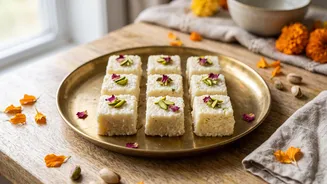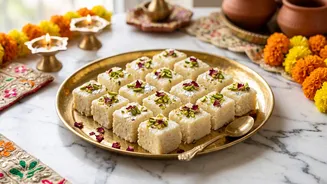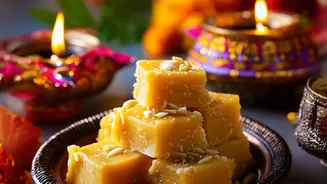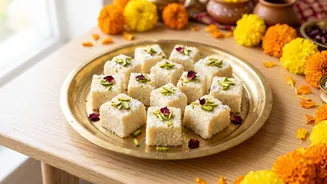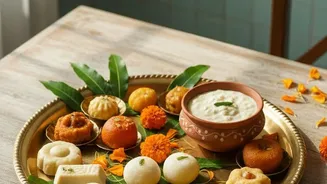





Diwali is incomplete without a platter of traditional Indian sweets. This year, impress your loved ones by adding homemade Kalakand, a rich and milky delight. Our easy recipe breaks it down, making it achievable for everyone.
The Joy of Homemade Kalakand
Kalakand is a beloved Indian
milk cake, known for its soft, moist, and delicately grainy texture that simply melts in your mouth. While traditional recipes can be time-consuming, involving hours of reducing milk, modern shortcuts make it surprisingly simple to prepare at home. This recipe uses readily available ingredients to create a sweet that tastes just as authentic as the one from your favourite 'halwai' (confectioner). Making it at home not only fills your kitchen with a festive aroma but also allows you to control the sweetness and quality of ingredients, ensuring a fresh and delicious result perfect for Diwali festivities.
Gathering Your Essential Ingredients
The magic of this easy Kalakand lies in its simplicity. For a quick version, you will primarily need fresh paneer (chenna) and sweetened condensed milk. Using full-fat ingredients is crucial for achieving that rich, creamy texture Indian sweets are famous for. If using store-bought paneer, make sure it's fresh; grating it or soaking it in warm water for a few minutes can help soften it. For flavour, a pinch of green cardamom powder is essential, and you can also add a splash of rose water or a few saffron strands for a more festive touch. Finally, have some chopped pistachios or almonds ready for a beautiful and crunchy garnish.
A Simple Step-by-Step Guide
Start by crumbling or grating your paneer to ensure it has a fine, even texture with no large lumps. In a heavy-bottomed, non-stick pan, combine the crumbled paneer and the sweetened condensed milk. Begin cooking this mixture over a low to medium flame, stirring continuously. Initially, the mixture will become runny as the condensed milk heats up. Continue stirring frequently to prevent it from sticking to the bottom of the pan. After about 10-15 minutes, you will notice the mixture starting to thicken and pull away from the sides of the pan. This is the most crucial stage. You want the mixture to be a thick, moist mass, but not completely dry. Overcooking can make the Kalakand hard or chewy. Once it reaches the right consistency, turn off the heat and stir in the cardamom powder.
Setting and Serving Your Sweet
Before you start cooking, prepare a tray or dish by greasing it lightly with ghee. Immediately transfer the hot Kalakand mixture into the prepared tray. Use a spatula, also lightly greased, to spread the mixture evenly to your desired thickness, usually about three-quarters of an inch. Sprinkle the chopped pistachios and almonds over the top and gently press them in so they adhere to the surface. Allow the Kalakand to cool to room temperature, which can take a couple of hours. For a firmer set, you can then refrigerate it for another 2–3 hours. Once fully set, use a sharp knife to cut it into squares or diamond shapes. Your delicious homemade Kalakand is now ready to be served.
Tips for Perfect Texture and Storage
The signature of a good Kalakand is its grainy yet moist texture. To achieve this, always cook on a low to medium flame and stir constantly to ensure even cooking and prevent the milk solids from burning. If your mixture looks too dry, you can stir in a tablespoon of warm milk or cream to restore moisture. Since Kalakand is a milk‐based sweet, it is perishable and should be stored in an airtight container in the refrigerator. It tastes best when consumed within 3–4 days. For serving, you can either enjoy it chilled straight from the fridge or let it sit at room temperature for about 15–20 minutes to soften slightly.