






A Village Resolution for the Stars
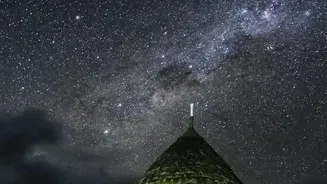
Udmal, a Kokna tribal village in Surgana taluka, is not fighting for more light, but for a more authentic darkness. Its Gram Sabha recently passed a landmark resolution under the Panchayats (Extension to Scheduled Areas) Act to officially conserve its
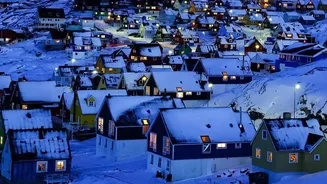
pristine night skies. This community-led initiative involves curbing light pollution by adopting responsible outdoor lighting—not less light, but smarter, more targeted light. The goal is to prevent the artificial skyglow that plagues cities, which washes out all but the brightest celestial objects. With this resolution, Udmal is poised to become India’s first community certified by DarkSky International, a global authority on night sky conservation.
The Bigger Picture: Maharashtra's Astro-Tourism Mission
Udmal’s decision is a crucial grassroots victory for a much larger state-wide vision. The Maharashtra government has been actively developing a Dark Sky Policy to position the state as a prime destination for astro-tourism. Udmal is one of eleven sites identified for this initiative, joining locations like the Pench and Tadoba-Andhari Tiger Reserves, Lonar Crater Lake, and Bhimashankar. The effort in Maharashtra is part of a growing national interest, following the establishment of India's first Dark Sky Reserve in Hanle, Ladakh, in 2022. While Hanle is a high-altitude reserve focused on scientific research, and Pench Tiger Reserve became India's first Dark Sky Park in 2024, Udmal represents a new model: a living tribal settlement driving the conservation effort itself.
Why Darkness is a Resource
For most of human history, a star-filled sky was a universal experience. Today, for over 80% of the world's population, it’s a lost wonder due to pervasive light pollution. This excess artificial light at night (ALAN) doesn't just obscure our view of the cosmos; it has tangible negative impacts. It disrupts ecosystems, affecting nocturnal wildlife like insects and birds whose life cycles depend on natural darkness. In humans, it can be linked to sleep disorders and other health issues. By consciously preserving darkness, communities like Udmal are protecting biodiversity, saving energy, and reclaiming a shared natural heritage. The movement frames darkness not as an absence of something, but as a valuable resource in itself.
The Promise of a Starlit Economy
The push for dark skies is not just about conservation; it’s about creating new, sustainable economic opportunities. Astro-tourism is a rapidly growing niche, attracting travellers who are tired of city lights and eager to reconnect with the night sky. For Udmal, this translates into a unique development model. The Nashik district administration has sanctioned ₹42.1 lakh to support the project, funding night-sky quality assessments, the installation of shielded, environment-friendly lighting, and public awareness campaigns. The plan includes training local tribal youth as astronomy guides, creating jobs that are directly linked to the preservation of their natural environment. This allows the community to build a new economic identity around tourism without falling into the traps of over-commercialisation.
A Model for the Future
The initiative in Udmal is a powerful example of how environmental policy can succeed when driven from the ground up. Instead of a top-down mandate, the desire to protect the night sky came from the community itself, which recognised the unique value of its location. Its position on a hilltop, with no major urban centre for several kilometres, gives it a natural advantage against light pollution. By formalizing their commitment, the villagers are creating a blueprint for other rural communities across India. It demonstrates that development doesn't always have to mean brighter lights and more concrete. Sometimes, the most valuable asset a place can offer is a clear, unobstructed view of the universe.