

Choosing the Best Saffron
To unlock the best flavour, you must start with high-quality saffron. Look for whole threads, not powder, as pre-ground saffron can be easily adulterated. Genuine saffron threads should be a deep, uniform crimson colour with a slightly lighter, trumpet-shaped
end. They should be dry and brittle to the touch. A strong, floral, and slightly earthy aroma is a key indicator of quality; if it smells weak, musty, or has no scent, it's likely old or of poor quality. A simple home test can verify authenticity: place a few threads in cool water. Real saffron will slowly release a golden colour over several minutes while the threads themselves remain red. If the colour bleeds out instantly, it’s a sign of dye.
The Art of Blooming Saffron
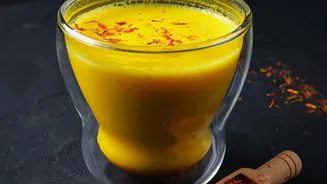
The single most critical step to unlocking saffron’s magic is 'blooming'. Simply tossing dry threads into rice is a common mistake that wastes their potential, resulting in uneven colour and muted flavour. Blooming involves steeping the saffron in a warm liquid to rehydrate the threads and release their precious colour (crocin) and aroma (safranal) compounds. To do this, lightly crush a generous pinch of saffron threads (about 15-25 threads for a dish serving four) between your fingers or with a mortar and pestle. Steep these crushed threads in two to three tablespoons of warm—not boiling—liquid for at least 15-20 minutes. Boiling liquid can damage the delicate aromatic compounds. The ideal liquid can be warm water for a pure flavour, or warm milk for a richer result, which is common for biryanis and sweet dishes.
Saffron in Biryani and Pulao
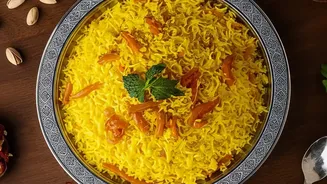
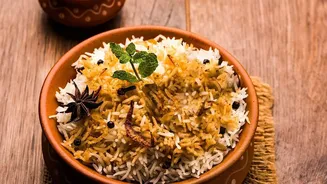
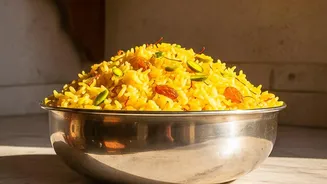
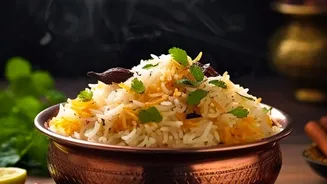
While both biryani and pulao are celebrated Indian rice dishes, they use saffron differently due to their distinct cooking methods. Pulao is a one-pot dish where rice and other ingredients cook together, absorbing a seasoned broth. For pulao, the bloomed saffron liquid can be stirred into the cooking liquid before the pot is covered, ensuring an even, gentle flavour throughout. Biryani, in contrast, is a layered dish. The rice and meat or vegetables are cooked separately and then layered in a pot for a final steaming stage known as 'dum'. Here, the bloomed saffron, often steeped in milk, is drizzled over the top layer of rice just before the pot is sealed. This technique creates beautiful, distinct streaks of golden, fragrant rice, rather than a uniform colour, which is the hallmark of a great biryani.
Mastering Sweet Saffron Rice
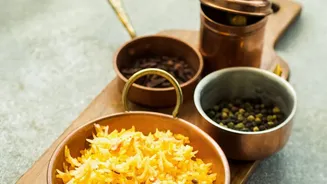
Saffron is not just for savoury dishes. It is the star ingredient in many Indian sweets, including sweet rice preparations like Zarda or Meethe Chawal. In these recipes, saffron provides both a beautiful colour and a sophisticated aroma that balances the sweetness. The process remains the same: bloom the saffron in warm milk or water before adding it to the dish. For a classic Zarda, the bloomed saffron liquid is typically added along with sugar syrup to the partially cooked rice, infusing the grains with its distinct flavour and golden colour as they finish cooking. The floral notes of saffron pair exceptionally well with other aromatic ingredients common in these sweet dishes, such as cardamom, cloves, and nuts.
Common Mistakes to Avoid
To ensure success with saffron, avoid these common pitfalls. First, do not use too much; an excess of saffron can make a dish taste bitter or medicinal. A small pinch is powerful. Second, never skip the blooming process. Adding dry threads directly to a dish is the most frequent reason for disappointing results. Third, avoid using boiling liquids, as extreme heat destroys saffron's delicate aroma. Finally, add saffron towards the end of the cooking process in long-simmering dishes. This preserves its volatile aromatic compounds, which can dissipate with prolonged heat.