






A Surprising Lunar 'Cake'
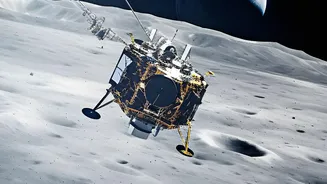
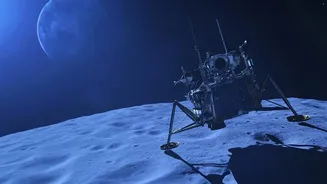
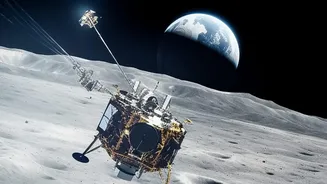
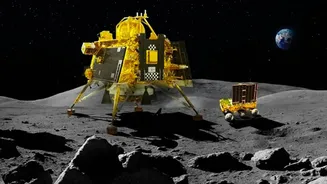
Scientists analysing data from the Chandrayaan-3 mission have made a remarkable discovery at Shiv Shakti Point, the lander's historic touchdown site near the lunar south pole. What was once assumed to be a simple, uniform layer of dust, known as regolith,
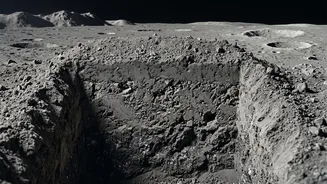
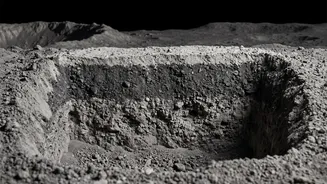
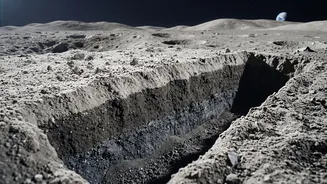
is actually a complex, multi-layered structure. A study published in 'npj Space Exploration' reveals three distinct layers within just the top 10 centimetres of the lunar soil, each with its own physical and thermal properties. This finding overturns the long-held assumption that the Moon's surface soil was mostly homogenous, presenting a more intricate picture of the lunar environment. Researchers from the Physical Research Laboratory in Ahmedabad led the analysis, noting that such fine-scale layering had never been observed or even expected before.
The Tool Behind the Discovery
The key instrument behind this finding is the Chandra’s Surface Thermophysical Experiment, or ChaSTE. This ingenious device is essentially a high-tech thermometer probe designed to be inserted into the lunar regolith. Equipped with 10 highly sensitive temperature sensors along its 10 cm length, ChaSTE’s job was to measure the temperature profile and thermal conductivity of the soil. By doing so, it provided the first-ever in-situ thermal profile of the lunar south pole’s high-latitude region. The probe recorded a startling temperature difference of about 73 Kelvin from the surface to its maximum depth at local noon, with each of the newly discovered layers responding to solar heat in a different way.
Decoding the Three Layers
The study describes a fascinating geological profile. The very top layer, extending down about 3 cm, is extremely porous and fluffy, with a low density. Think of it like loose, dry flour. Below that, from 3 to 6 cm, is a middle layer with higher thermal conductivity, meaning it transfers heat more readily. Finally, the bottom layer, from 6 to 10 cm, is the densest and most cohesive, with properties some scientists have compared to damp, stiff clay. The density nearly triples from the surface to a depth of 10 cm. Researchers theorise that this layering was created over eons by successive meteorite impacts from nearby craters, which deposited blankets of ejected material with different compositions and textures.
Why This Finding Matters
This discovery is more than just a geological curiosity; it has profound implications for both science and future exploration. For scientists, it provides a new window into the Moon's history and the processes that have shaped its surface, such as meteorite bombardment. For engineers and mission planners, this knowledge is critical. Understanding the physical and thermal properties of the lunar regolith is essential for designing rovers that won't get stuck, habitats that can remain stable, and equipment that can withstand the extreme temperature swings. The high cohesion of the lower layers, for instance, is much greater than previous estimates from earlier missions and will need to be factored into the design of any future drilling or excavation hardware.
Paving the Way for a Human Return
As nations, including India, gear up for future missions aimed at establishing a more permanent presence on the Moon, these kinds of detailed ground-truth measurements are invaluable. The properties of the topsoil, such as its ability to conduct heat, can affect the stability of water ice in the shallow subsurface—a resource vital for supporting human life. This new, more complex understanding of the lunar ground beneath our feet, courtesy of Chandrayaan-3 and the ChaSTE instrument, will directly inform how we build, drill, and live on the Moon. It's a foundational piece of the puzzle for turning science fiction's lunar bases into a concrete engineering reality.