
Thick Books as Sturdy Blocks
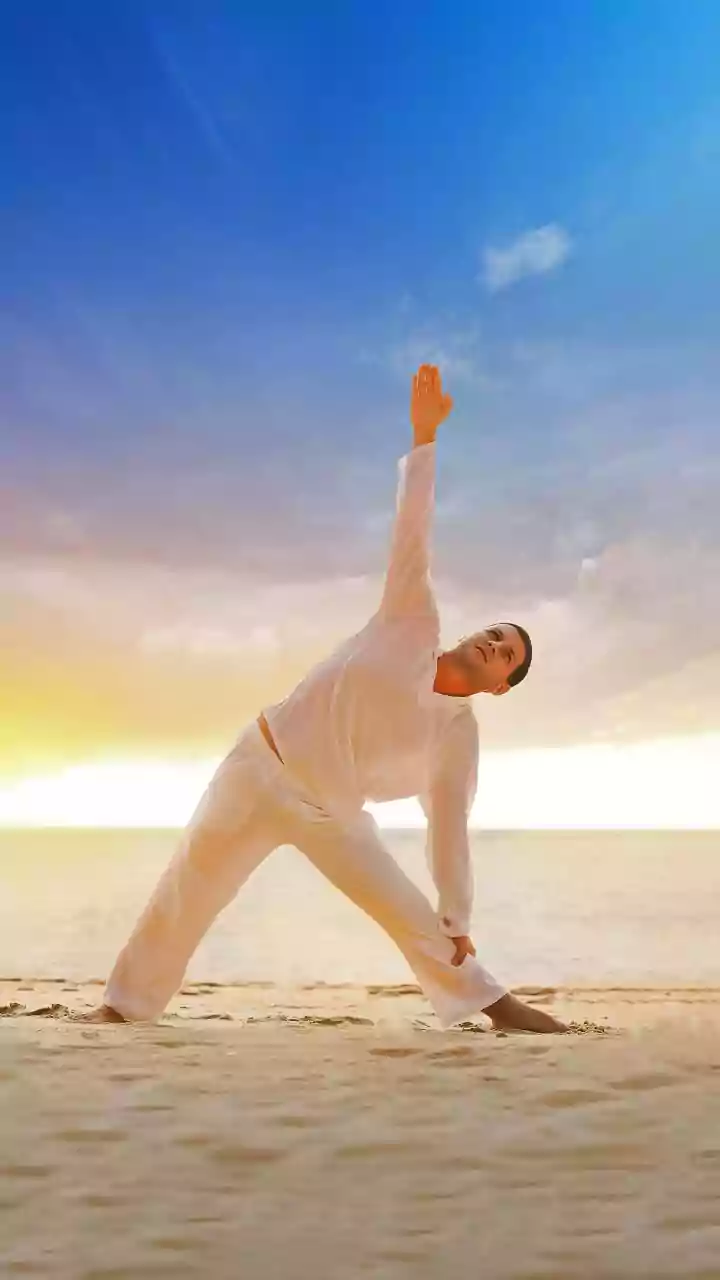
Yoga blocks are fantastic for bringing the floor closer to you, but a stack of sturdy, hardcover books can do the same job. Find two stacks of similar height to place under your hands in poses like Triangle (Trikonasana) or Extended Side Angle Pose (Parsvakonasana)
to maintain alignment without straining. You can even wrap them with rubber bands or tape to keep them from sliding open. For a softer surface, simply place a folded towel on top. This simple hack provides stability and support, making challenging poses more accessible. Just ensure the books are thick and won't buckle under pressure.
A Belt or Scarf as a Yoga Strap
A yoga strap is an excellent tool for deepening stretches, but you don't need to buy one. A bathrobe tie, a non-stretchy scarf, or a regular belt from your wardrobe works perfectly. Use it to loop around the ball of your foot in a seated forward bend, helping you to gently lengthen your hamstrings without rounding your back. A strap substitute can act as an extension of your arms, bridging the gap in binds or helping you hold a pose with better alignment. The key is to use it for support, not to force a stretch.
Pillows and Cushions as a Bolster
A bolster provides comfort and support, especially in restorative yoga, but can be bulky and expensive. Luckily, your sofa cushions or a few firm bed pillows can be a perfect substitute. Stack a couple of firm cushions to place under your back for a gentle heart-opener or under your knees during Savasana (Corpse Pose) to release lower back tension. You can also tightly roll a few thick blankets together to create a dense, supportive shape that mimics a traditional bolster. This allows your body to fully relax and release into the pose without any muscular effort.
A Simple Blanket for Warmth and Padding
The humble blanket is perhaps the most versatile prop of all. A folded blanket can provide crucial padding for sensitive knees in poses on all fours. You can also sit on the edge of a folded blanket during meditation or seated poses to help tilt your pelvis forward, allowing for a straighter, more comfortable spine. And, of course, a soft blanket is essential for staying warm and cozy during your final relaxation in Savasana, helping your body to fully absorb the benefits of your practice.
The Wall as Your Ultimate Support System
Don't overlook the biggest and most stable prop you have: a wall. It's an incredible tool for both beginners and experienced practitioners. Use it for support in balancing poses like Tree Pose (Vrksasana) or for checking your alignment in standing postures. The wall is also central to one of the most restorative poses, Legs-Up-The-Wall (Viparita Karani), which is wonderful for circulation and relaxation. It can provide a sense of security and stability, allowing you to explore poses more deeply and safely.
Setting the Sanctuary Scene
Transforming your space isn't just about physical props; it's also about creating a calming atmosphere. Choose a corner of a room, declutter the area, and make it special. Dim the lights, light a candle or an incense stick, or use an essential oil diffuser to introduce a soothing scent. Playing soft, instrumental music can also help signal to your mind that it's time to slow down and turn inward. This sensory experience elevates a simple workout into a mindful ritual, making your home practice something you truly look forward to.