



The Launch of a New Era
Until recently, India's celebrated space program was almost exclusively the domain of the Indian Space Research Organisation (ISRO). However, a landmark decision in 2020 to open the sector to private enterprise changed the game entirely. This led to the creation
of the Indian National Space Promotion and Authorisation Centre (IN-SPACe), a single-window agency designed to promote, regulate, and facilitate private participation. This policy shift has unleashed a torrent of entrepreneurial energy, with the number of space startups growing from just one in 2014 to over 400 by mid-2026. The goal was not to sideline ISRO, but to free it up to focus on deep space exploration and R&D, while private players handle more routine operations and drive commercial growth.
Upstream Innovation Takes Flight
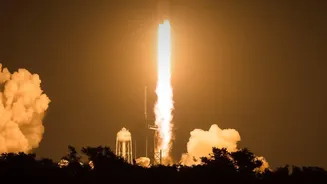
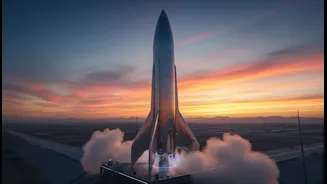
The most visible impact of this boom is in the 'upstream' sector—the development and launch of rockets and satellites. Companies like Skyroot Aerospace and Agnikul Cosmos have become trailblazers. Skyroot achieved a historic milestone with the successful orbital launch of its Vikram-1 rocket, making India one of the few countries with a privately developed orbital vehicle. Agnikul Cosmos is pioneering technologies like the world's first single-piece 3D-printed rocket engine, which drastically reduces manufacturing time and complexity. These startups are not just building hardware; they are creating high-value jobs for aerospace engineers, materials scientists, and software developers. The success of these firms sends a powerful signal to global investors, solidifying India's position as a hub for cost-effective and reliable launch services.
The Downstream Ripple Effect
While rockets capture the headlines, much of the economic and social impact comes from the 'downstream' sector, which uses data from space to create services on Earth. This is where the opportunities multiply across science and technology. For instance, Bengaluru-based Pixxel is deploying a constellation of hyperspectral satellites that provide incredibly detailed data. This data is invaluable for modern agriculture, helping farmers monitor crop health, optimize water usage, and increase yields. In urban planning, satellite imagery helps manage infrastructure development and monitor environmental changes. This creates a massive demand for data scientists, AI specialists, and software developers to build the applications that turn raw satellite data into actionable insights for various industries, from disaster management to finance.
Fostering a Full-Stack Ecosystem
The boom extends beyond just launch and data. A comprehensive ecosystem is emerging, with startups tackling every part of the value chain. Companies like Dhruva Space are manufacturing satellites and related components, while others focus on ground station services and communication technologies. This vertical integration is crucial for creating a self-reliant space economy. Furthermore, the challenges of space exploration are driving innovation in other advanced fields. The need for lightweight, durable materials for rockets and satellites spurs research in materials science. The complexity of operating autonomous spacecraft pushes the boundaries of robotics and artificial intelligence. This symbiotic relationship ensures that breakthroughs in the space sector directly fuel advancements in other deep-tech industries, creating a powerful cycle of innovation.