





From Sugarcane to Sweetener
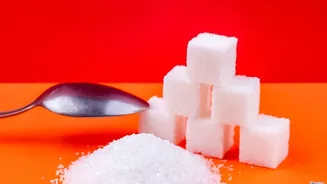
The core difference between jaggery and white sugar lies in their production. Both originate from sugarcane juice, but their paths diverge significantly from there. White sugar undergoes intensive refining, a multi-step process involving chemicals to
strip away all impurities and molasses, resulting in pure, crystallised sucrose. This process gives it a neutral taste and uniform appearance but removes virtually all minerals and vitamins present in the original plant. Jaggery, on the other hand, is unrefined. The sugarcane juice is simply boiled in large, open pans until it thickens into a dense, golden-brown paste or solid block. Because it skips the heavy processing and retains its molasses content, jaggery keeps a small amount of the original nutrients from the sugarcane. This fundamental difference in processing is the source of all claims about its health benefits.
The Nutritional Reality Check
On paper, jaggery is the clear nutritional winner. It contains trace amounts of essential minerals like iron, magnesium, and potassium, which are entirely absent in white sugar. Per 100 grams, jaggery can provide around 11 mg of iron and over 1000 mg of potassium. However, the real-world impact of these minerals is minimal due to portion sizes. A typical serving of jaggery in tea or a sweet is about 10-15 grams. At that amount, the mineral contribution is a small fraction of your daily needs. You would need to consume hundreds of calories from jaggery to get a significant dose of iron, at which point the harm from the high sugar intake would far outweigh the mineral benefits. Calorie-wise, the two are nearly identical, with jaggery at about 383 calories per 100 grams and sugar at 387.
The Great Glycemic Index Surprise
One of the most persistent beliefs is that jaggery is safer for blood sugar management. The data, however, tells a surprising story. The glycemic index (GI), which measures how quickly a food raises blood glucose, is actually higher for common sugarcane jaggery than for white sugar. Most sources place sugarcane jaggery's GI at around 84, which is considered high, while white sugar's GI is about 65. This means jaggery can cause a faster and sharper spike in blood sugar than its refined counterpart. This is because jaggery contains free glucose and fructose that are absorbed instantly, whereas the sucrose in white sugar needs to be broken down first. For anyone with diabetes or insulin resistance, this makes jaggery a riskier, not safer, choice.
Winter Warmth and Ayurvedic Wisdom
For centuries, Ayurveda has championed jaggery, especially in winter. It's considered an 'ushna' or warming food, believed to generate heat in the body, making it ideal for colder months. Traditional wisdom suggests it helps with digestion, prevents constipation, and acts as a remedy for colds and coughs. Many of these benefits are linked to its ability to stimulate digestive enzymes and its purported cleansing properties. In many Indian households, a small piece of gur after a meal is a common practice to aid digestion and satisfy sweet cravings. These traditional uses contribute significantly to jaggery's reputation as a wholesome, comforting food during winter, where it's a key ingredient in festive sweets like til ke laddoo.
The Hidden Downsides
Despite its 'natural' image, jaggery is not without its drawbacks. At its core, it is still a concentrated sugar, and overconsumption carries the same risks as white sugar, including weight gain and an increased risk of tooth decay. Furthermore, the unrefined nature of jaggery production can be a double-edged sword. If not produced and stored hygienically, it can be prone to impurities like dust and dirt. There have also been reports of adulteration, where chemicals like washing soda or artificial colours are added to improve appearance and increase weight, posing serious health risks. Therefore, sourcing high-quality, organic jaggery from a trusted supplier is crucial.