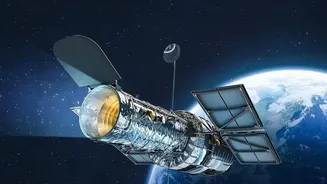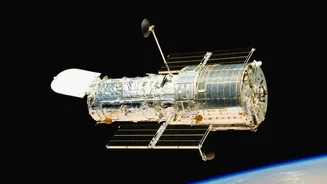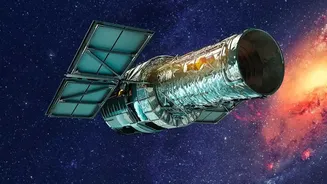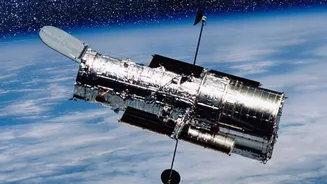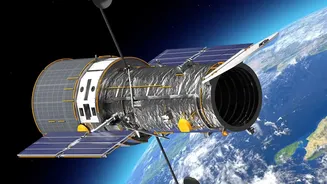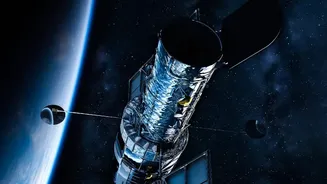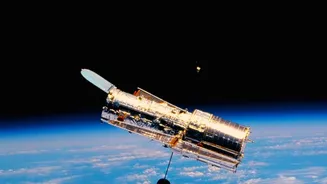

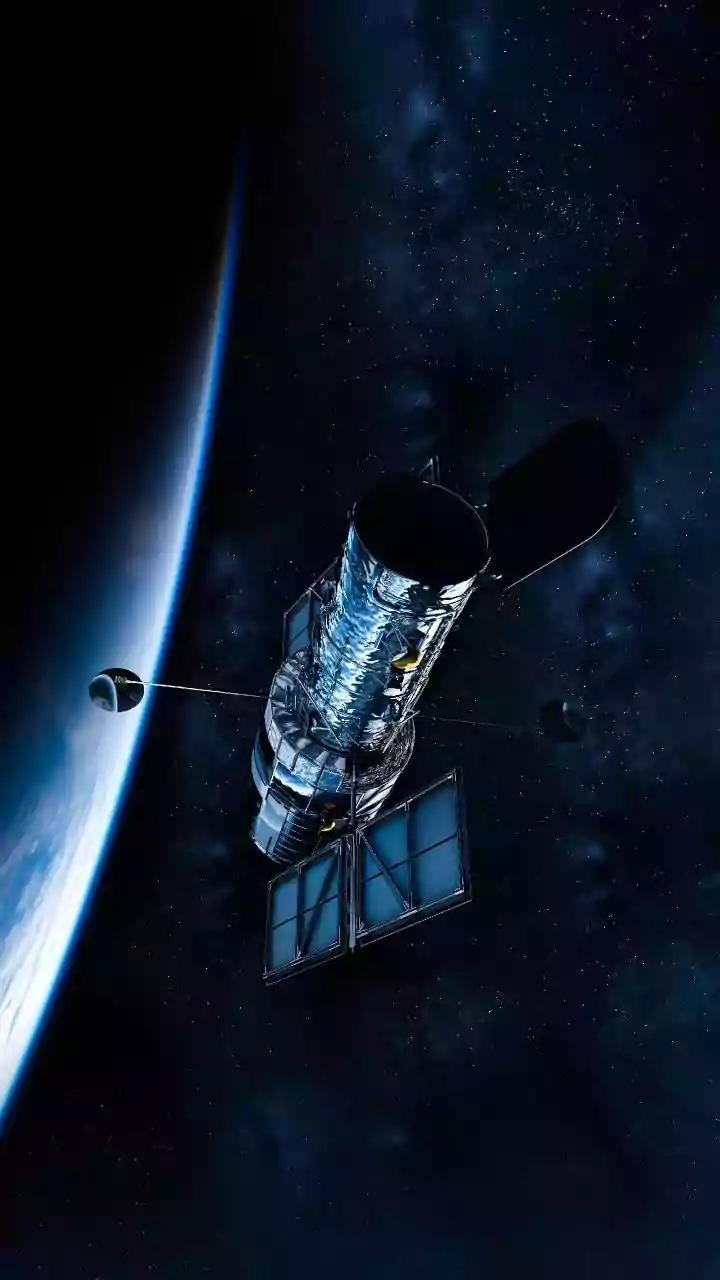



For over 35 years, the Hubble Space Telescope has been humanity's tireless eye on the cosmos. But its long journey is nearing a slow, inevitable end as its orbit decays. Now, NASA is looking to the private sector for a lifeline.
A Slow Descent From Greatness
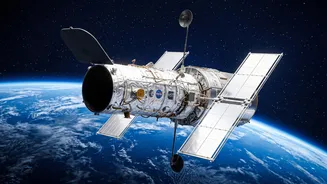
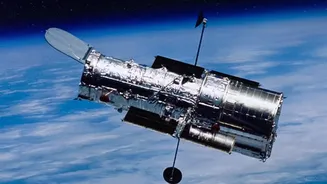
The Hubble Space Telescope
has no engine of its own to maintain its altitude. Since its last servicing mission by the Space Shuttle in 2009, atmospheric drag has been gently but relentlessly pulling it closer to Earth. Currently orbiting at about 470-480 kilometers, its altitude is decaying by approximately 14 kilometers per year, a rate accelerated by higher-than-expected solar activity. NASA's projections show a likely uncontrolled reentry into the atmosphere sometime between 2033 and 2034 if no action is taken. This gradual fall poses a dual threat: the eventual loss of an invaluable scientific instrument and the risk of an uncontrolled debris fall from the school bus-sized observatory.
The Golden Age of Shuttle Servicing
Hubble's longevity is a testament to the five crewed servicing missions performed by NASA's Space Shuttle fleet between 1993 and 2009. Astronauts conducted spacewalks to repair and upgrade the telescope's instruments, correct its famous flawed mirror, replace gyroscopes, and boost its orbit. The final shuttle visit in 2009 left the telescope more powerful than ever, but it was also the last time a vehicle designed for such complex, hands-on orbital repairs would ever visit. With the retirement of the Space Shuttle program in 2011, NASA lost its native ability to physically service Hubble, leaving the iconic observatory to its fate until a new generation of spacecraft emerged.
A New Commercial Lifeline?
The landscape of spaceflight has been transformed by commercial players. In 2022, billionaire entrepreneur Jared Isaacman, in partnership with SpaceX, proposed a privately funded mission under their Polaris Program to use a Dragon spacecraft to visit and reboost Hubble. The idea was to study the feasibility of a commercial crew rendezvousing with the telescope and raising its orbit, potentially adding decades to its operational life. While NASA and SpaceX signed an unfunded agreement to study the concept, the agency ultimately decided against pursuing that specific plan in 2024, citing risks. However, the idea planted a seed: perhaps the private sector held the key to Hubble's future.
NASA's Call for Ideas
Instead of greenlighting a single proposal, NASA has taken a broader, more cautious approach. On October 29, 2026, the agency issued a formal Request for Information (RFI) to the entire commercial space industry. This isn't a contract, but rather a fact-finding mission to survey the market for viable solutions. The RFI outlines three potential paths: a mission to capture Hubble and boost it to a more stable orbit of at least 600 kilometers; a full-scale servicing mission to enhance its capabilities; or a mission to safely de_orbit the telescope for a controlled disposal at the end of its life. This open call allows any qualified company, from established giants to innovative startups, to present their technical concepts, costs, and risk assessments.
The deadline for companies to submit their responses to NASA's RFI is November 30, 2026. This marks a critical moment for the telescope's future. The proposals will give NASA a clear picture of what is technologically and financially possible in the commercial realm. Potential solutions could range from a robotic 'tug' that latches onto Hubble and pushes it higher to another crewed mission, though the latter is considered less likely. It is important to note that NASA has not allocated any funding for a rescue mission at this stage. The responses due this month are the first step in a long decisionmaking process that will determine whether a mission is approved, and if so, who will fly it and how.