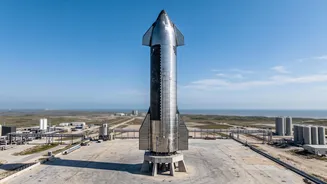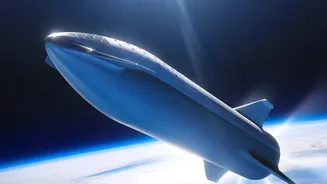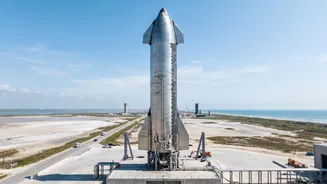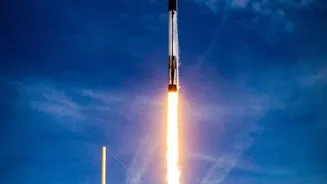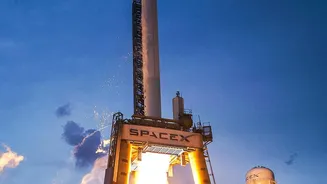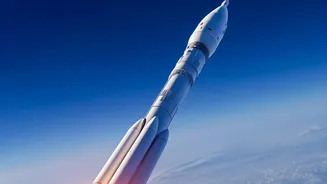




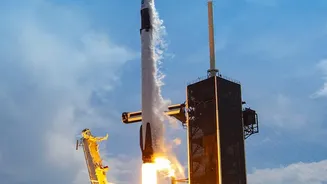
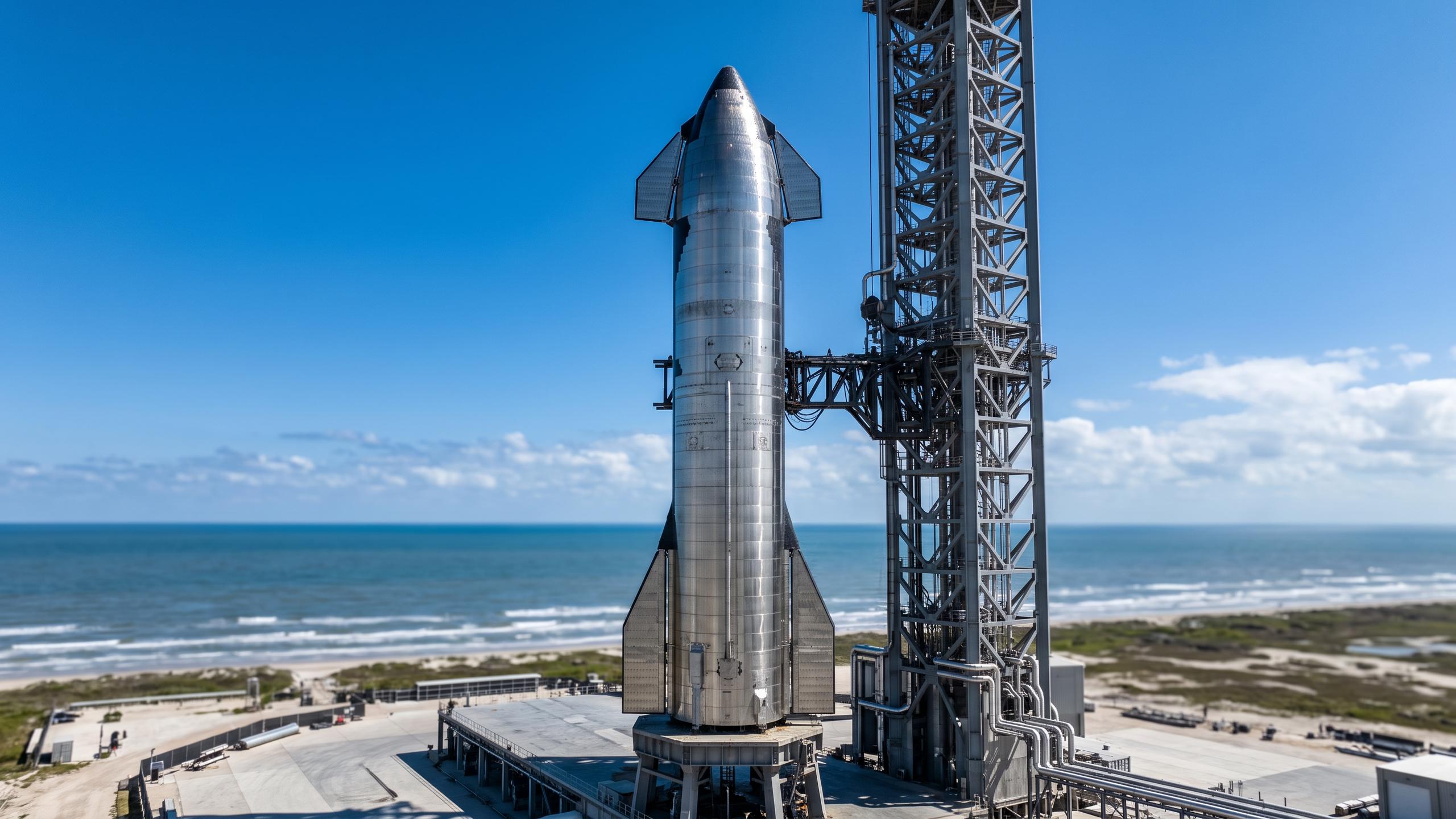
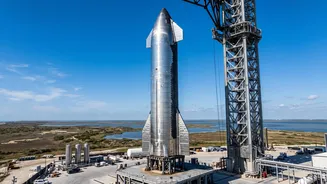
A rocket launch is a spectacle of power, but have you ever wondered why they shed pieces on their way up? This isn't a malfunction; it's a brilliant engineering solution to the biggest challenge in spaceflight: gravity itself.
The Problem: Dead Weight Is the Enemy
To escape Earth's gravity,
a rocket needs to achieve incredible speed. To get that speed, it needs a huge amount of propellant. The problem is that propellant is extremely heavy. In fact, up to 90% of a rocket's initial mass can be just propellant. This creates a vicious cycle: to go faster, you need more fuel, but more fuel adds more mass, which then requires even more fuel to lift. This fundamental challenge is described by the Tsiolkovsky rocket equation, a core principle of astronautics. It shows that just building a bigger fuel tank on a single-stage rocket yields diminishing returns. You are forced to use energy to accelerate the mass of the giant, now-empty tank, which is incredibly inefficient.
The Solution: Shedding Mass Mid-Flight
This is where staging comes in as an elegant solution. A multi-stage rocket is essentially a stack of smaller rockets. Each stage has its own engines and propellant. The process is simple: once the first and largest stage has burned through its fuel, the entire empty structure—tanks, engines, and all—is jettisoned. By dropping this 'dead weight', the mass of the remaining rocket is dramatically reduced. The next stage's engine then ignites, and because it now has to push a much lighter vehicle, it can achieve a much greater acceleration and final velocity than would have been possible otherwise. This process is repeated until the final stage delivers the payload—like a satellite or crew capsule—into orbit.
A Journey in Stages
A typical journey to orbit illustrates this perfectly. The first stage is the workhorse, providing the massive thrust needed to lift the fully-loaded rocket off the launchpad and through the thickest part of Earth's atmosphere. Its engines are optimized for high thrust at sea-level pressure. After a few minutes, its propellant is spent, and it separates and falls away. Then, the second stage takes over. Its engine is typically smaller and designed for efficiency in the thin upper atmosphere or the vacuum of space, where atmospheric pressure doesn't interfere with the engine's nozzle. This stage performs the final push to get the payload to orbital velocity. Some missions to higher orbits or other planets may even use a third or fourth stage.
Types of Staging
There are two main ways to stage a rocket. The most intuitive is 'serial staging', where the stages are stacked one on top of the other, like the iconic Saturn V moon rocket. The first stage fires, separates, then the second stage fires, and so on. The other common method is 'parallel staging'. This is where smaller booster rockets are strapped to the side of a central, larger core stage. In this design, all the engines—both the boosters and the core—often ignite at launch for maximum power. Once the side boosters have spent their fuel, they are jettisoned, while the central core continues to burn. Many modern rockets, like the SpaceX Falcon 9 and Ariane 5, use a combination of both booster and serial stages.
The Business of Reusability
For decades, those discarded stages were simply expensive, single-use hardware that would burn up in the atmosphere or crash into the ocean. The modern business of spaceflight, however, is driven by cost reduction. This has led to the next evolution of staging: reusability. Companies like SpaceX have pioneered technologies to land and recover their first-stage boosters, most famously on the Falcon 9 rocket. While the principle of staging remains the same—shedding mass to gain efficiency—the goal has expanded. It's no longer just about throwing away dead weight, but about safely returning that valuable hardware to be refurbished and flown again, drastically cutting the cost of accessing space.