






India's rich heritage has received a new nod on the global stage, with several sites added to UNESCO's Tentative List. Among them are the geologically spectacular subduction volcanoes of the Andaman and Nicobar Islands.
A Stepping Stone to Global Recognition
Before a site can be crowned a UNESCO
World Heritage Site, it must first earn a spot on its country's Tentative List. This is essentially an inventory of valuable cultural and natural sites that a nation believes have 'Outstanding Universal Value' and intends to nominate for full inclusion in the coming years. Getting on this list is the crucial first step. The World Heritage Committee won't even consider a nomination unless the property has been on the Tentative List for at least a year. This recent announcement signals India's official intent to champion these unique locations for one of the world's most prestigious honours.
The Fiery Heart of the Andamans
The star of the new entries is undoubtedly the 'Andaman Subduction Volcanoes' site, comprising Barren Island and Narcondam Island. These aren't just any volcanoes; they are part of a volcanic arc formed as the Indian tectonic plate slides beneath the Burmese plate. This process, known as subduction, makes the region a live-action geology lesson. Barren Island is famously the only confirmed active volcano in all of South Asia, having erupted as recently as 2025. Its counterpart, Narcondam, is a dormant volcano, home to the endemic Narcondam Hornbill. Together, they offer a rare, side-by-side glimpse into different stages of volcanic life and the unique ecosystems that can develop in such isolated and extreme environments.
More Than Just Volcanoes
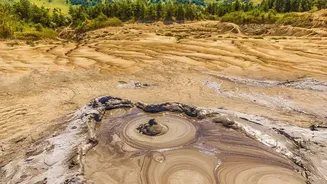
While the Andaman volcanoes capture the imagination, they were not the only sites to make the cut. The recent submissions highlight the sheer diversity of India's heritage. Also added to the Tentative List was the 'Karst-mud-volcano Complex of Baratang', another geological marvel in the Andamans known for its limestone caves and active mud volcanoes. These are different from lava volcanoes, instead spewing a mix of mud, water, and gases. Far from the islands, the 'Sirpur Cultural and Archaeological Landscape' in Chhattisgarh was also included. This ancient site, located on the banks of the Mahanadi river, is rich with temples, Buddhist monasteries, and archaeological remains that tell the story of a once-thriving settlement.
The Long Road to Inscription
Being on the Tentative List is a moment of pride, but the journey is far from over. The path to becoming a full-fledged World Heritage Site is a long and rigorous one, often taking several years. After a site has been on the list for at least a year, the country can prepare a detailed nomination dossier. This exhaustive file must prove the site's 'Outstanding Universal Value' and detail the plans for its protection and management. The dossier is then submitted to the World Heritage Centre, where it is evaluated by independent advisory bodies—the IUCN for natural sites and ICOMOS for cultural ones. These bodies conduct their own research and site visits before making a recommendation. The final decision is made by the World Heritage Committee, which meets once a year.
Why This Matters for India
The push for UNESCO recognition is about more than just a prestigious title. Achieving World Heritage status can bring a host of benefits. It raises the international profile of a site, often leading to increased tourism, which, if managed responsibly, can boost local economies. More importantly, it brings a renewed focus on conservation. A UNESCO listing can unlock international assistance and expertise for preservation efforts, ensuring that these invaluable parts of our natural and cultural history are protected for future generations to study and admire. For sites like the Andaman volcanoes, it underscores their global scientific importance and strengthens the case for their continued protection and research.