



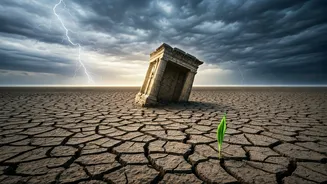




The Problem with 'Panic Headlines'
Every few weeks, a dramatic headline appears: “Archaeologists Stunned!” or “History Rewritten!” or “Ancient Site Lost Forever!”. This kind of sensationalism grabs attention and can even drive funding, which the field desperately needs. But archaeologists
increasingly argue that this approach is a double-edged sword. Panic-driven narratives often oversimplify complex situations. A site is rarely just “lost”; it degrades over time due to a confluence of factors. By focusing only on the dramatic endpoint, these headlines can mislead the public and create a sense of helplessness or fatigue. When every new discovery is a “breakthrough” and every threat is a “catastrophe,” the words lose their meaning, making it harder to rally support for the slow, methodical work of preservation. This can also create a difficult position for researchers, who may feel pressured to produce spectacular results to secure grants, potentially compromising academic integrity.
The Very Real Urgency
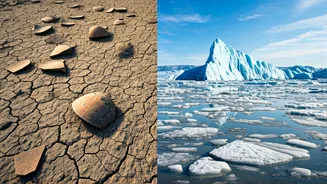
The need for urgency, however, is not manufactured. It’s grounded in very real, accelerating threats. Climate change is a primary culprit. Rising sea levels and increased storm activity are eroding coastal archaeological sites around the world, from Scotland to Ghana and the Americas. In India, monuments like the Taj Mahal, the Sun Temple at Konark, and various coastal forts face threats from extreme weather, pollution, and rising waters. In the Arctic, thawing permafrost causes organic artifacts—once perfectly preserved in a natural freezer—to rapidly decay. Beyond climate, rapid urban development, modern agricultural practices, and infrastructure projects like dams and roads are constantly encroaching on un-excavated sites. This has given rise to "rescue archaeology," a practice where teams race against time to salvage what they can before a site is destroyed by construction. It is a constant battle fought under immense time and resource pressure.
Science vs. the Soundbite
Herein lies the central conflict. Archaeology is, by its nature, slow and meticulous. It involves careful excavation, painstaking documentation, and lengthy peer review. A soundbite-driven media and funding cycle, however, demands speed and spectacle. A researcher might spend a career interpreting a single site, but a news report needs a hook for today. This disconnect puts archaeologists in a bind. They have a responsibility to communicate their findings to the public, not least because many projects rely on public funds. Yet, translating nuanced, complex findings into a 280-character tweet or a 30-second news spot without losing crucial context is a major challenge. Some archaeologists note that sensationalist claims often originate not just with journalists, but with the researchers themselves in press releases, in a bid to capture attention in a crowded media landscape.
A Path to Responsible Urgency
So, what does “urgency without panic” look like in practice? It means moving beyond a simple crisis narrative to tell a more complete story. It involves archaeologists and journalists working together to explain not just what is at risk, but why it matters. This means framing stories around the process of discovery, the significance of a site to local communities, and the incredible knowledge it holds about human history and adaptation. Instead of just showing crumbling walls, explain what those walls tell us about past societies' responses to environmental change—a lesson with direct relevance today. Public outreach and engagement are key, fostering a sense of shared stewardship over cultural heritage. By explaining the long-term, systemic threats and the ongoing efforts to mitigate them, archaeologists can build sustained public support that outlasts the fleeting attention span of a panic-driven news cycle. The goal is to make the public a partner in preservation, not just a passive audience for a drama of decay.