





The Sun’s Fiery Temper
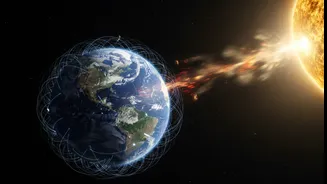
A solar flare is an intense explosion on the Sun's surface that releases a tremendous amount of radiation. When powerful, these events can be accompanied by a Coronal Mass Ejection (CME), a massive bubble of plasma and magnetic field that hurtles through
space. If Earth is in the path of a CME, the consequences can be significant. These solar storms can disrupt our planet's magnetic field, potentially leading to widespread issues. The primary threats include radio blackouts that affect aviation and military communications, damage to critical power grid infrastructure, and interference with GPS navigation signals.
Our Dedicated Solar Watchers
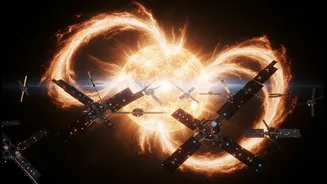
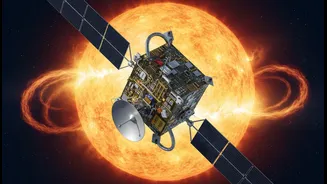
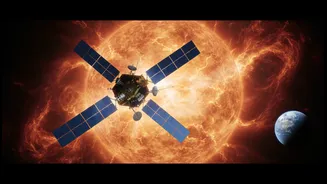
To stand guard against this cosmic weather, humanity has deployed a fleet of sophisticated observatories in space. These missions provide an uninterrupted view of the Sun. Key players include NASA’s Solar Dynamics Observatory (SDO), which captures high-definition images of the Sun in multiple wavelengths every few seconds, generating enormous amounts of data daily. The Parker Solar Probe is on a daring mission to 'touch' the Sun, flying through its outer atmosphere, the corona, to sample particles and magnetic fields directly. And, significantly for India, the Aditya-L1 mission is strategically positioned at a Lagrange point 1.5 million km from Earth, allowing it to continuously watch the Sun and study solar storms before they head our way.
From Light Speed to Lifesaving Alerts
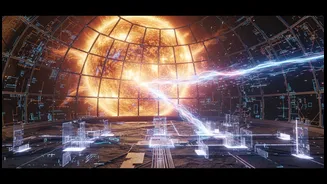
These observatories don't just take pictures; they collect a vast array of real-time data. Instruments measure the Sun's magnetic fields, track the temperature of its plasma, and record ultraviolet and X-ray radiation. This information travels at the speed of light to receiving stations on Earth, where it is fed to forecasting centers like the NOAA Space Weather Prediction Center (SWPC). Here, forecasters and, increasingly, artificial intelligence algorithms, analyze the data for warning signs. A key indicator of an impending flare is the presence of complex, twisted magnetic field lines in active regions on the Sun's surface. Machine learning models can now sift through terabytes of data much faster than humans, identifying subtle patterns that precede a major eruption.
The Critical Race Against Time
Once a flare erupts, the most intense radiation reaches Earth in about eight minutes. However, the more disruptive CMEs travel much slower, taking anywhere from one to four days to cross the 93 million miles to our planet. This gives us a crucial, albeit short, window to prepare. The real-time data stream is the starting gun for this race. By observing the initial eruption, scientists can model the CME's trajectory and speed to determine if it poses a threat to Earth. This forecast allows them to issue watches, warnings, and alerts, similar to how meteorologists forecast hurricanes.
Why Early Warnings Matter
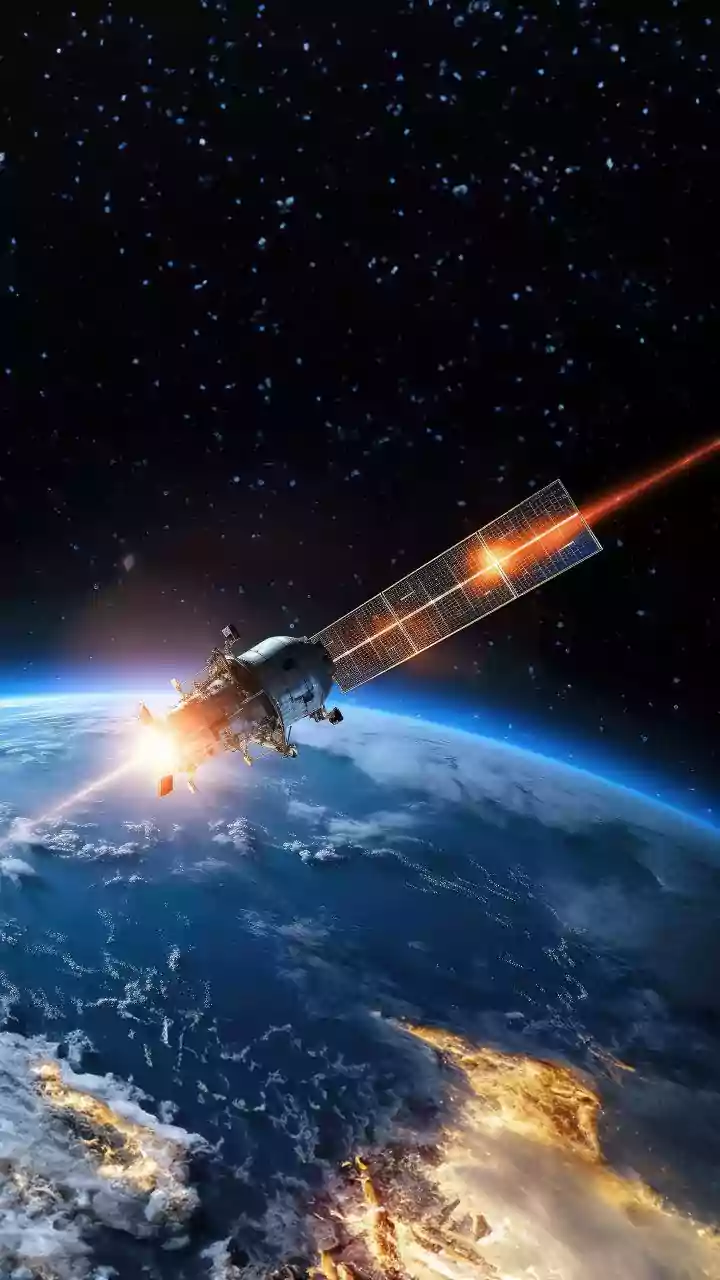
An advance warning of a few hours or days is invaluable. It allows power grid operators to take protective measures to prevent blackouts. Satellite operators can put their spacecraft into a safe mode to protect sensitive electronics from damaging radiation. Airlines can reroute flights that would otherwise pass over the polar regions, where the effects of solar storms are strongest and could disrupt communication. And for future human missions to the Moon and beyond, these forecasts will be essential for astronaut safety. The constant vigilance of our solar observatories provides a vital shield, helping to protect the technological backbone of our modern world from the Sun's inevitable fury.