






A Foundation of Infrastructure
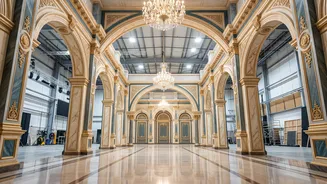
The story of Mumbai's dominance begins with its physical infrastructure. The city is home to Dadasaheb Phalke Chitranagari, more famously known as Film City. Established in 1977 and spread across more than 500 acres, this government-owned studio complex
offers a vast array of facilities, from sound stages and recording studios to permanent sets that can mimic anything from a police station to a village. Beyond Film City, Mumbai boasts over 150 studios and more than 250 post-production facilities. This concentration means that a filmmaker can complete the entire production process, from shooting to visual effects and sound mixing, without ever leaving the city. This integrated setup creates immense efficiency, saving both time and money for producers who have everything they need within a few square kilometres.
The Unmatched Talent Pipeline
Infrastructure is only one part of the equation. Mumbai's greatest asset is arguably its dense and diverse talent pool. For decades, it has been the "City of Dreams" for aspiring actors, directors, writers, and technicians from all over India. This magnetic pull has created a self-sustaining cycle: the talent comes because the work is here, and the work stays here because the talent is readily available. Major talent management agencies like Collective Artists Network, YRF Talent, and Dharma's DCAA are all headquartered in Mumbai, primarily in the Andheri-Bandra belt. This area functions as the industry's operational centre, housing not just stars but also thousands of skilled professionals, from cinematographers and editors to stunt coordinators and set designers. This concentration makes collaboration and networking seamless, a crucial element in a project-based industry.
Where the Money Flows
Historically, Bollywood financing was an informal and often murky affair. However, after gaining official "industry status" in 2000, the financial landscape professionalized dramatically. Today, Mumbai is the undisputed financial capital of Indian cinema. The country's largest production houses and film financiers, including giants like Reliance Entertainment, Dharma Productions, and Jio Studios, are based here. This ecosystem has been further supercharged by corporate investments and the entry of global players. Recent years have seen major deals, such as Universal Music Group's stake in Excel Entertainment and Adar Poonawalla's investment in Dharma Productions, injecting significant capital into the Mumbai-based production scene. The presence of these financial powerhouses ensures a steady flow of capital for projects of all scales, from big-budget blockbusters to content for OTT platforms.
Navigating Modern Challenges
Mumbai's dominance is not without its challenges. The high cost of living and production complexities have led some to predict the industry's decline in the city. Furthermore, other hubs are rising, notably Hyderabad with its world-class Ramoji Film City and the burgeoning southern film industries ('Tollywood' and 'Kollywood') that have delivered pan-India blockbusters. The rise of streaming platforms has also changed the game, decentralizing content creation to some extent. However, Mumbai has shown a remarkable ability to adapt. Rather than being replaced, its ecosystem is evolving. The city remains the primary hub for the lucrative Hindi-language market and has become a crucial centre for creating original content for major OTT players like Netflix and Amazon. While regional cinema is gaining a larger share of the box office, Mumbai's industry is responding by collaborating with southern stars and production houses, aiming to create films with a broader national appeal.