




The Kitchen as the New Living Room
For generations, the Indian kitchen was a space of pure utility. Often tucked away at the back of the house, it was a functional zone, a place for preparation, not presentation. Socialising happened in the living room, far from the sizzle of the tadka
and the clatter of pots. But a significant shift is underway in urban homes across the country. The walls are literally coming down. The modern kitchen has broken free from its confines to become the primary stage for social life. This isn't just about an open-plan layout; it's a deliberate design philosophy that merges cooking, dining, and lounging into one seamless, dynamic area. Known as the 'social kitchen,' this space is designed with guests in mind, turning the act of cooking from a behind-the-scenes chore into the main event.
Why We’re Ditching the Drawing Room
This evolution reflects a deeper change in our lifestyles. The stiff formality of the past is giving way to a desire for more relaxed, authentic interactions. Who wants to sit primly on a sofa making small talk while the host is isolated in another room? Today’s entertaining is casual, interactive, and centres around shared experiences—and nothing is more experiential than food. The social kitchen allows hosts to chop, stir, and sauté while chatting with friends perched on barstools at a sprawling island. It fosters a sense of togetherness that a separate drawing room simply cannot. This layout is also a practical response to modern urban living, where multi-functional spaces are essential. An integrated kitchen-living area makes a home feel larger, brighter, and more connected.
The Performance of Cooking
We can’t ignore the influence of global foodie culture, amplified by Instagram and celebrity chef shows. Cooking has transformed from a domestic duty into a celebrated art form and a popular hobby. People are proud of their culinary skills and want a beautiful backdrop to showcase them. A social kitchen is the perfect stage. It’s where you can perform the theatre of cooking, whether you’re pouring a glass of wine for a friend as you stir a risotto or letting guests assemble their own appetisers on the countertop. The kitchen is no longer just a place to make food; it’s a place to create memories. This performative aspect is a key part of the 'flex'—it signals that you are not just a host, but a gourmand, a creator, and someone who values quality experiences.
What Makes It a ‘Flex’
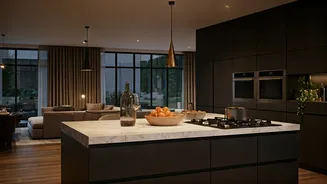
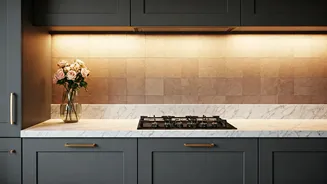
So, what elevates a simple open kitchen to a 'social cooking space' worthy of being called a decor flex? It’s all in the details. The centrepiece is almost always a statement kitchen island, often massive, topped with luxurious materials like veined marble, gleaming quartz, or warm wood. This island doubles as a prep area, a breakfast bar, and a cocktail station, complete with stylish high chairs. Another key element is aesthetics. Appliances are no longer just functional; they are design objects, often in sleek stainless steel or bold colours, seamlessly integrated into custom cabinetry. Statement lighting, such as a cluster of pendant lamps over the island, adds drama and sophistication. And crucially, there's an obsession with clutter-free surfaces. This is often achieved with clever storage solutions like walk-in pantries or even a secondary 'wet kitchen' hidden away for the truly messy work, keeping the main stage pristine.
A Modern Take on Indian Hospitality
In the Indian context, this trend is a fascinating reinterpretation of our deep-rooted traditions of hospitality. While 'Atithi Devo Bhava' (the guest is God) has always been a cultural cornerstone, the social kitchen modernises this principle. It breaks down the traditional separation between the host and the guest, and often, the gendered divide of the kitchen space. It creates a more inclusive, egalitarian form of entertaining where everyone is part of the process. It’s a space that’s built for long conversations over chai, for children doing their homework while a meal is prepared, and for festive gatherings where the aroma of food is part of the ambience. It proves that the essence of Indian hospitality isn’t about formal service, but about warmth, generosity, and the joy of sharing a meal together.