


Why Halving a Recipe Doesn't Halve the Time
When you reduce the amount of food, you change its thermal properties. Cooking time is determined by how long it takes for heat to penetrate to the centre of the food and, in many cases, how much moisture evaporates. A smaller volume of food heats up
faster than a larger one. Think of it in terms of geometry: the ratio of surface area to volume changes. A smaller item has more surface area relative to its mass, allowing heat to get to the middle more quickly. For this reason, you can't just cut the time in half; instead, you need a new strategy that relies more on observation than simple division.
Baking: A Game of Depth and Area
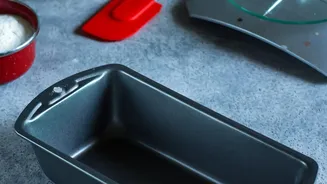
Baking is where timing adjustments are most critical. When you halve a cake or brownie recipe, you must use a smaller pan. If you use the original pan, the batter will be too thin and will bake far too quickly, likely burning at the edges. The key is the batter's depth. If you successfully halve the recipe and use a pan with roughly half the surface area, the batter depth should be similar to the original. Even so, the reduced total mass will bake faster. A good rule of thumb is to start checking for doneness at about two-thirds or 75% of the original baking time. For a cake that originally took 40 minutes, start checking around the 25 or 30-minute mark.
Stovetop Cooking: Watching for Reduction
For dishes like soups, stews, and sauces, the main factor affecting time is often evaporation. If you halve a soup recipe but cook it in the same large pot, the wider surface area will cause the liquid to reduce much faster. Using a smaller pot is ideal. Even then, the time it takes to bring the smaller volume to a simmer will be shorter. However, the overall cooking time might not decrease as dramatically as in baking, especially if you're simmering to develop flavours. As with baking, it's wise to check on the dish earlier than you normally would, but focus on the consistency and flavour development rather than the clock.
Roasting: It’s About Thickness, Not Just Weight
When roasting meat or vegetables, the most critical dimension is thickness. Halving the weight of a roast doesn't mean it will cook in half the time, especially if the thickness remains similar. A smaller roast will still cook faster, but the relationship isn't linear. For example, a 1 kg chicken will cook more quickly than a 2 kg chicken, but not in exactly half the time. The best way to judge doneness for meat is with an instant-read thermometer. For vegetables, look for visual cues like browning and tenderness. When reducing the quantity, begin checking for doneness at about 75% of the original estimated time.
The Universal Rule: Trust Your Senses
No formula for adjusting cooking time is perfect, because every oven, stove, and pan is different. The most reliable tools are your own senses and a few key kitchen gadgets. Look for visual cues: are the edges of the cake pulling away from the pan? Is the top golden brown? Use touch: does the cake spring back when lightly pressed? And most importantly for meats and some baked goods, use an instant-read thermometer to check the internal temperature. Start checking early—you can always cook something for longer, but you can never un-bake it.