






The Two Faces of Kathal
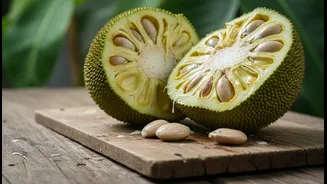
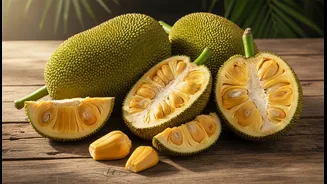
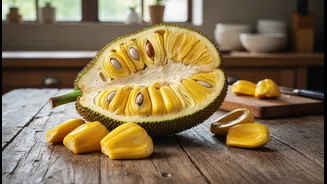
Known as jackfruit in English, Kathal is a versatile tropical fruit that has been a staple in Indian cuisine for generations. What makes it so unique is its dual personality. When unripe and green, its flesh is firm with a neutral taste and a fibrous,
meat-like texture. This version, often called 'raw kathal', is treated as a vegetable and is the star of savoury dishes. When left to ripen, it transforms completely, becoming sweet, aromatic, and distinctly fruity, perfect for desserts or eating on its own. This ability to shift from a hearty vegetable to a sweet fruit makes it an incredibly dynamic ingredient in the kitchen.
A Nutritional Powerhouse
Beyond its culinary flexibility, kathal is packed with impressive health benefits. It is a great source of dietary fibre, which aids digestion and promotes gut health. It’s also rich in essential vitamins and minerals, including Vitamin C for immunity, potassium for heart health, and antioxidants that help combat inflammation. For those watching their weight, kathal is low in calories and its high fibre content helps you feel full for longer, reducing cravings. It also provides a steady release of energy, unlike processed carbohydrates that cause sharp spikes in blood sugar.
From Traditional Sabzi to Modern Tacos
For years, kathal has been the heart of many traditional Indian dishes. The classic Kathal ki Sabzi, a rich and spicy curry, is a beloved preparation across North India. Other regional specialities include kathal biryani, which uses the fruit's meaty texture as a satisfying alternative to mutton, and various pickles and cutlets. But its journey doesn't stop there. Globally, raw kathal has been embraced as a plant-based meat substitute. Its ability to absorb flavours makes it perfect for dishes like pulled 'pork' sandwiches, tacos, and even pizza toppings. This has introduced the humble kathal to a new generation of health-conscious and vegan eaters.
A Beginner's Guide to Preparation
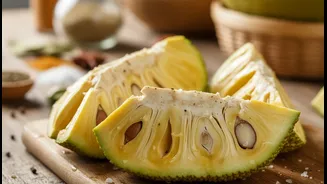
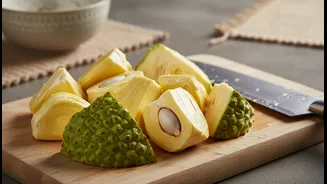
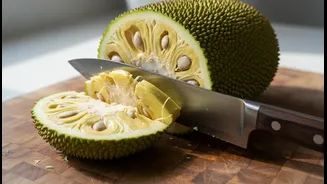
Working with a whole, raw kathal can seem intimidating due to its spiky skin and sticky sap. The key is to apply mustard oil or any cooking oil to your hands and the knife before you start cutting; this prevents the sap from sticking. Begin by chopping off the top and bottom, then slice the fruit into large, manageable rings or quarters. From there, carefully remove the outer green skin and the hard central core. Cut the white, fibrous flesh into cubes. It's a good practice to immediately place the cut pieces in a bowl of salted water to prevent them from discolouring. If this sounds like too much work, many vendors sell pre-cut kathal, and canned or frozen versions are also readily available.
Easy Ways to Start Cooking
The easiest way to begin is by making a simple stir-fry or a classic kathal curry. Many recipes suggest boiling or lightly frying the jackfruit pieces first to ensure they are tender and can absorb the spices well. For a simple sabzi, start by frying the jackfruit pieces until golden. In a separate pan, prepare a masala with onions, tomatoes, ginger-garlic paste, and a blend of spices like turmeric, coriander, and garam masala. Add the fried kathal to the masala, along with some water, and let it simmer until the flavours meld together. Garnish with fresh coriander and serve hot with rotis or rice for a truly satisfying meal.