







The Ultimate Ejection Seat
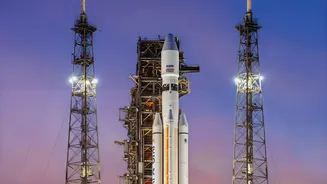
At the heart of astronaut safety is the Crew Escape System (CES). Think of it as the most sophisticated ejection seat ever built. Its sole purpose is to protect the crew in the event of a catastrophic failure during launch or ascent. If the powerful LVM3
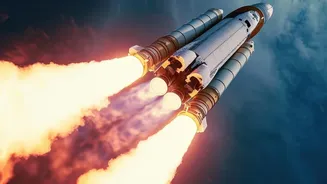
rocket veers off course or encounters a critical problem, the CES is designed to fire a set of quick-acting solid motors. These motors pull the Crew Module—the capsule carrying the astronauts—away from the malfunctioning launch vehicle at incredible speed, taking them to a safe distance before parachutes deploy for a gentle landing.
Testing for a Worst-Case Scenario
To ensure this system works flawlessly, ISRO has been conducting a rigorous series of tests simulating every possible emergency. The first was the Pad Abort Test, conducted in 2018, which validated the system's ability to pull the crew away if an emergency occurs while the rocket is still on the launch pad. More recently, the focus shifted to in-flight emergencies. The Test Vehicle Demonstration 1 (TV-D1) mission was a high-altitude abort test. In this crucial demonstration, a test rocket was launched to a specific altitude and speed, at which point the escape was deliberately triggered. The CES fired perfectly, separating the module and proving its effectiveness in the intense conditions of a high-speed, high-altitude flight.
From High-Altitude Fire to a Gentle Splash
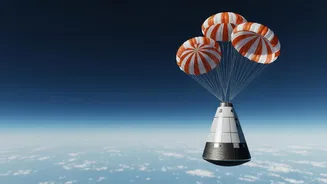
Getting the crew away from the rocket is only half the battle. They also need to land safely. This is where another series of crucial tests, the Integrated Air Drop Tests (IADT), come into play. In these tests, a full-scale mock-up of the Crew Module was lifted by an Indian Air Force Chinook helicopter to an altitude of several kilometres and dropped. An automated sequence then deployed a complex system of ten parachutes—from smaller drogue chutes to stabilise the module to three massive main parachutes—to slow the descent for a safe splashdown in the sea. Successful completion of these tests confirmed that the entire deceleration and recovery system is reliable.
A Symphony of Systems
Beyond the escape and landing, astronaut safety relies on a network of interconnected systems. In July 2026, ISRO announced the successful qualification of three more vital components. This included the Crew Module Up-righting System (CMUS), an ingenious flotation system that uses inflatable balloons to ensure the capsule stays upright after splashing down in the ocean. Another test validated the mechanism that cleanly severs the connection between the Crew Module and the Service Module just before re-entry. Finally, engineers confirmed the structural integrity of the capsule during the jettisoning of its apex cover, which protects the parachutes until they are needed. Each test is a piece of a complex puzzle, ensuring every phase of the mission is as safe as humanly possible.
The Path to India's First Crewed Flight
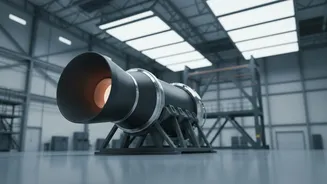
With the successful static testing of all five motors for the Crew Escape System and the validation of in-flight abort scenarios, ISRO has ticked a major box on its human-rating checklist. These achievements, recently confirmed in official government updates, demonstrate that the foundational safety architecture for Gaganyaan is robust. The focus now shifts towards further uncrewed test flights to integrate and validate all systems in an end-to-end mission profile. Each successful test brings India one step closer to the historic day when it will launch its own astronauts into orbit, joining an elite club of space-faring nations and marking a new era for the country's ambitions in space exploration.