




Why Gloomy Days Drain Your Focus
Long stretches of overcast weather do more than make you wish for sunshine; they actively disrupt your work-from-home environment. The lack of bright, natural light can lead to significant eye strain as your eyes struggle to adapt to the lower contrast
on your screen and papers. This visual fatigue often manifests as headaches, dry eyes, and a general feeling of being drained. Furthermore, our bodies are wired to respond to light. Reduced exposure to daylight can interfere with our natural circadian rhythms, impacting both energy levels and mood. Without the alerting cues of bright light, it's common to feel sluggish and unmotivated, making it harder to stay productive through the workday.
Master the Language of Light
Choosing the right light bulb is your first line of defence. Instead of grabbing any box, look at the “Lighting Facts” label. You'll want to focus on two key measurements: lumens and Kelvin (K). Lumens measure brightness; for general computer work, a desk lamp providing 450 to 700 lumens is usually sufficient. If your work involves reading physical documents, aim for a bit higher. Kelvin measures the light's colour temperature, from warm (yellowish) to cool (bluish-white). While warm tones around 2700K are cozy for a living room, they can signal your brain to relax. For a productive workspace, aim for a cooler, more energizing light in the 4000K to 5000K range, which mimics natural daylight and helps enhance focus.
The Right Way to Use a Desk Lamp
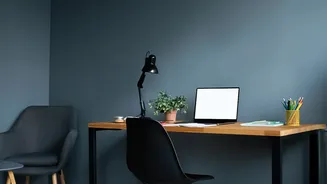
Your desk lamp, or task light, is the most critical tool for focused work. But its placement is just as important as its brightness. To avoid casting distracting shadows over your work area, always position the lamp on the opposite side of your dominant hand. If you are right-handed, your lamp should be on your left, and vice versa. The ideal height is typically about 15 to 20 inches above your desk surface, which allows the light to spread evenly without creating harsh glare on your screen or directly in your eyes. An adjustable lamp is invaluable, allowing you to direct the pool of light precisely where you need it, whether it's on your keyboard or a notepad.
Layering Light for a Better Workspace
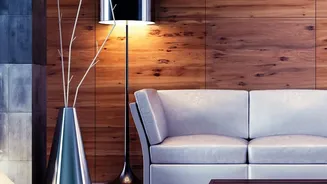
Relying on a single, harsh overhead light is a common mistake that creates an uncomfortable, high-contrast environment. Professional designers use a technique called “layered lighting” which combines three types of light to create a balanced space. Start with ambient light—the soft, general illumination for the whole room, which can come from a central fixture with a diffuser or floor lamps. Next is your task lighting, like the focused desk lamp discussed above. Finally, consider adding accent lighting, such as a small lamp highlighting a bookshelf or artwork. This third layer adds depth and warmth, reducing the stark contrast between your bright desk and the darker corners of the room, making the entire space feel more comfortable and visually appealing.
Mimic the Sun with Full-Spectrum Bulbs
On days when natural sunlight is completely absent, full-spectrum lighting can be a powerful tool. These bulbs are designed to replicate the balanced, complete spectrum of natural daylight. Exposure to this type of light has been shown to improve alertness, enhance mood, and support the body's natural sleep-wake cycle. While often used in light therapy lamps to help with symptoms of Seasonal Affective Disorder (SAD), simply swapping the standard bulbs in your desk and room lamps for full-spectrum versions can provide similar benefits. They offer excellent colour accuracy and reduce eye strain, making them a worthwhile investment for any home office that suffers from a lack of natural light.