




The Rhythmic Agility of Dance
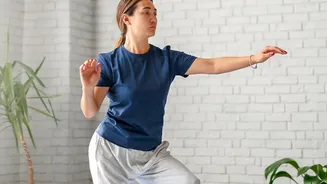
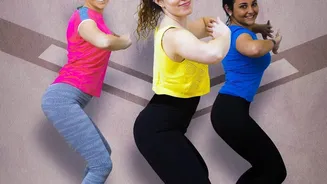
Dance is the art of dynamic, multi-planar movement. It demands that the body rapidly accelerate, decelerate, and change direction, all while maintaining balance and aesthetic lines. This requires an exceptionally high level of proprioception—your body's
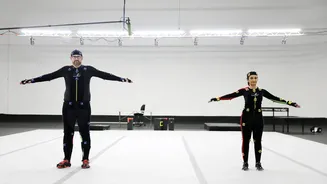
innate sense of its position in space. Dancers constantly make micro-adjustments using the muscles of their feet, ankles, legs, and core to control their center of gravity. Unlike more linear exercises, dance forces the hips, knees, and ankles to manage forces across all planes of motion: sagittal (forward and back), frontal (side to side), and transverse (rotational). This develops reactive coordination, the ability to respond instantly to shifts in balance, momentum, and rhythm. Training in dance, from ballet to hip-hop, builds an extensive movement vocabulary, improving spatial awareness and the nervous system's ability to execute complex motor sequences under physical stress.
The Synchronized Power of Rowing
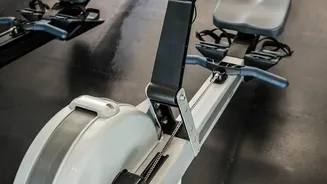
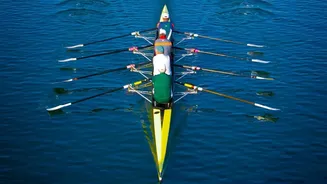
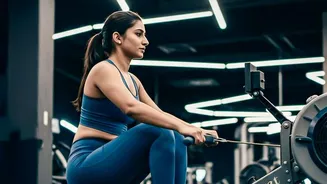
Rowing, whether on an ergometer or on the water, is a masterclass in synchronized, powerful coordination. The entire movement is cyclical and occurs primarily in the sagittal plane, but its effectiveness depends on a precisely timed sequence. The rowing stroke is comprised of four phases: the catch, the drive, the finish, and the recovery. The power of the stroke originates from a powerful leg drive, engaging the quadriceps, glutes, and hamstrings. This force is then transferred through a braced core to the back and finally the arms. This sequence requires tremendous neuromuscular control to ensure all muscle groups fire in the correct order to generate maximum force efficiently. The repetitive, bilateral nature of the movement strengthens the connections between the brain and muscles, reinforcing neural pathways for smooth, symmetrical control. Rowing builds a specific type of coordination rooted in power, endurance, and rhythm.
Proprioception: The Body's Sixth Sense
Both activities heavily rely on and develop proprioception, sometimes called the 'sixth sense'. This system of sensors in your joints, muscles, and tendons constantly feeds information to your brain about your body's position and movement, allowing for automatic adjustments to maintain balance. In dance, proprioception is challenged by unstable positions, jumps, and turns, forcing the nervous system to become highly adept at making rapid-fire corrections. In rowing, proprioception is crucial for maintaining posture and stability on an unstable machine or boat, ensuring that power is transferred effectively without losing form. The symmetrical movement of rowing helps balance coordination between the left and right sides of the body, while dance develops the ability to control asymmetrical and complex movements with precision.
Muscle Engagement and Control
While both are full-body workouts, their approach to muscle engagement differs significantly. Dance engages a wide array of muscles, including large movers and small, deep stabilizers. The need for external rotation at the hips in styles like ballet, for example, requires specific training of the deep lateral rotators. Constant changes in movement prevent any single muscle group from becoming dominant, promoting balanced muscular development. Rowing, on the other hand, relies on the powerful, rhythmic contraction of the body's largest muscle groups in a repeating pattern. It's renowned for engaging around 86% of the body's muscles, with the legs and glutes doing the majority of the work. It builds immense strength and endurance in the posterior chain (glutes, hamstrings, back) through a highly structured and powerful movement.
Which Path for Your Goals?
The choice between dancing and rowing ultimately depends on your fitness objectives. If your goal is to enhance agility, balance, spatial awareness, and the ability to perform complex, creative movements, dance is an unparalleled choice. It builds coordination that is adaptable and reactive. If you are seeking a low-impact, high-intensity cardiovascular workout that develops powerful, rhythmic, and symmetrical coordination, rowing is one of the most efficient options available. It excels at building neuromuscular efficiency through repetition and synchronization. For athletes in other sports, dance can be an excellent cross-training tool to improve agility and body control, while rowing can build a powerful endurance engine without the joint impact of running.