


The Cosmic Legacy of Halley's Comet
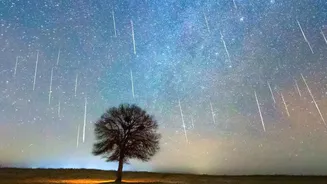
The Orionid meteor shower is more than just a collection of shooting stars; it's a direct link to one of history's most famous celestial visitors: Comet 1P/Halley. Each October, Earth passes through the dusty debris trail left behind by the comet on its
76-year journey around the sun. These tiny fragments, often no bigger than a grain of sand, enter our atmosphere at incredible speeds—about 66 kilometres per second—and burn up, creating the brilliant streaks of light we call meteors. These are some of the fastest and brightest meteors of any shower, and they are known to occasionally leave behind glowing trails, or 'trains', that can linger for several seconds. The shower gets its name from the constellation Orion, as the meteors appear to radiate from a point near the bright star Betelgeuse.
Peak Viewing Times for India in 2026
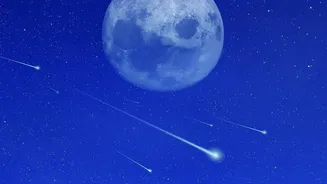
For skygazers in India, the Orionid meteor shower will be active from early October to early November. The peak, when the most meteors are expected, will occur on the night of October 21-22, 2026. Under perfect conditions—a dark, clear sky with no moon—you might see between 10 to 20 meteors per hour. However, the 2026 shower faces a challenge: a bright waxing gibbous Moon will be present for much of the night, washing out the fainter meteors. The best strategy is to wait for the window of time after the Moon sets but before the sun rises. For most locations in India, this prime viewing time will be in the pre-dawn hours on October 22. Check a local astronomical calendar for the exact moonset time in your city to maximise your chances.
How to Watch: Simple Steps for Success
You don’t need any special equipment like a telescope or binoculars to enjoy the Orionids; in fact, their wide field of view can be a disadvantage for catching meteors that can appear anywhere. Your eyes are the best tool for the job. Find a comfortable spot where you can lie back on a blanket or reclining chair and take in as much of the sky as possible. While the meteors radiate from the constellation Orion—found in the southwestern sky in the Northern Hemisphere—you don’t need to stare directly at it. The longest and most spectacular streaks often appear farther from the radiant.
Finding the Perfect Stargazing Spot
The single most important factor for a successful meteor shower viewing is a dark sky. For those in Indian cities, this means getting as far away from urban light pollution as possible. Even a short drive to the outskirts of your town or a rural area can make a significant difference. High-altitude locations are excellent, but any open space with a clear view of the sky, like a large park or a beach, will work. For truly dedicated observers, India offers world-class dark-sky sites in places like Hanle in Ladakh (India's first Dark Sky Reserve), Spiti Valley, and the Rann of Kutch. Wherever you go, ensure it's a safe and accessible location.
Essential Tips for a Memorable Night
To make the most of the Orionids, a little preparation goes a long way. First, give your eyes at least 20 to 30 minutes to fully adapt to the darkness; this means avoiding your phone screen, as its white light can ruin your night vision. If you need a light, use a red-light torch. Second, check the weather forecast for clouds before you head out. Third, be patient. Meteor watching can involve long waits between sightings, so settle in for at least an hour. Finally, dress in warm layers. Even in India, October nights can get chilly, especially in the hours before dawn. Comfort is key to enjoying this stunning natural fireworks display.