


A Planetary Near-Miss
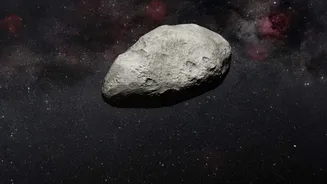
The asteroid, designated 2026 RW1, was a small rock measuring about one meter in diameter. It was first detected by the Mount Lemmon Survey in Arizona. Within hours, observatories and automated systems calculated its trajectory and confirmed it was on a collision
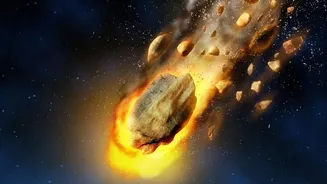
course with Earth. Because of its tiny size, it posed no threat and was predicted to disintegrate upon entering the atmosphere, which it did. While this event was harmless, it was only the 13th time in history that an incoming asteroid has been detected before impact. Events like this, and a similar one in January 2024 when asteroid 2024 BX1 was spotted three hours before it broke up over Germany, serve as a constant reminder of the dynamic and crowded space environment our planet navigates.
The Global Hunt for Asteroids
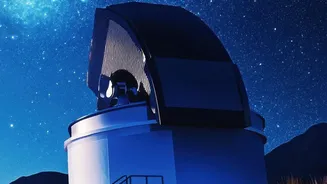
Spotting these objects is the work of a global network of scientists and observatories dedicated to planetary defense. Since 1998, NASA's Near-Earth Object (NEO) Observations Program has funded projects that continuously scan the skies. Surveys like the Catalina Sky Survey and Pan-STARRS use wide-field telescopes to take pictures of large patches of the night sky. Sophisticated software then analyzes these images, looking for faint points of light that move against the backdrop of stationary stars. If a moving object is detected and isn't a known satellite or asteroid, it gets flagged. Astronomers around the world, including a large community of amateur observers, then perform follow-up observations to help calculate the object's orbit with greater precision. This data is sent to the Minor Planet Center, the global clearinghouse for all asteroid and comet observations.
Why Some Are Found So Late
Despite this constant vigilance, some asteroids are only found at the last minute. Several factors make detection incredibly challenging. The first is sheer size. While major surveys have successfully cataloged over 90% of NEOs larger than a kilometer wide—the kind that could cause global catastrophe—the task becomes exponentially harder for smaller objects. Objects like 2026 RW1 are so small they are incredibly faint and only become visible when they are very close to Earth. Another major challenge is the Sun. Asteroids approaching from the sunward direction are masked by its intense glare, creating a significant blind spot for Earth-based telescopes. The infamous Chelyabinsk meteor in 2013, which was about 20 meters wide and injured over a thousand people in Russia, came from this sunward direction and was completely undetected. The asteroid's composition also plays a role; darker, less reflective space rocks are much harder to spot than those with brighter surfaces.
Improving Our Cosmic Vision
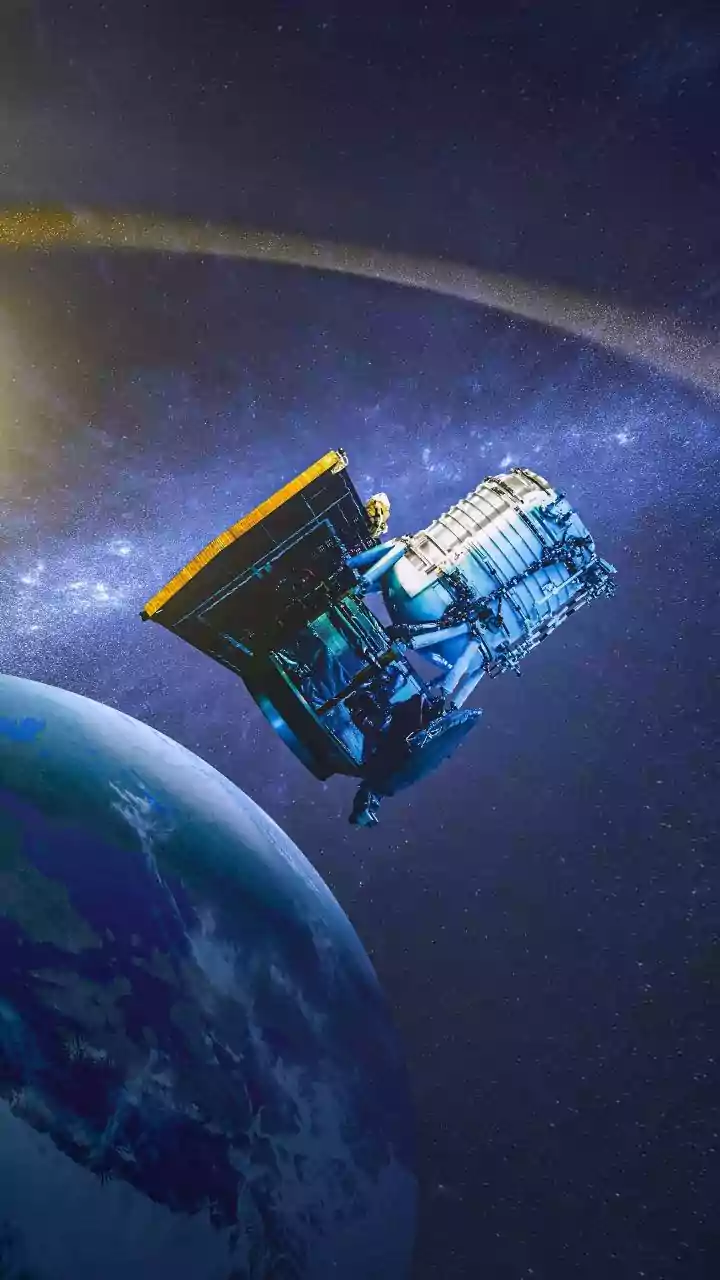
The good news is that every late detection is, in itself, a success story. Finding a one-meter rock hours before it hits is a testament to how sensitive our detection systems have become. And technology is constantly improving. The Vera C. Rubin Observatory, expected to begin full operations soon, will scan the entire visible sky every few nights, drastically increasing our ability to spot faint, fast-moving objects. To solve the problem of the Sun's glare, space agencies are developing space-based telescopes. NASA's upcoming NEO Surveyor mission, planned for a 2027 launch, will be positioned at a point in space between Earth and the Sun. From this vantage point, it will use infrared detectors to spot asteroids by the heat they radiate, making it possible to find them regardless of their direction or how dark their surfaces are. The mission is expected to fulfill the goal of finding 90% of all hazardous asteroids over 140 meters in size within a decade of its launch.