




The August Anomaly: A City on Pause
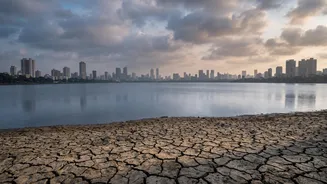
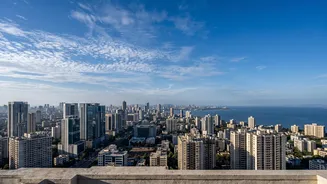
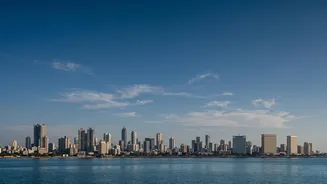
For a city that braces itself for torrential downpours from June to September, this August has felt different. While the first two months of the monsoon brought significant rainfall, August has been characterized by long dry spells and sunny days. According
to the India Meteorological Department (IMD), rainfall across the country has been below normal. An IMD press release from August 25th noted that subdued rainfall activity was likely to continue over peninsular India for the week. This extended dry period, known as a 'break' phase, has left Mumbai's cumulative rainfall for the month significantly lower than average, a stark contrast to the usual deluge.
Explaining the 'Monsoon Break'
So, what exactly is a 'monsoon break'? It's a temporary pause in the heavy rains that characterize the season. This phenomenon typically occurs when the monsoon trough—an elongated low-pressure area that drives the rains—shifts from its normal position over the Indian plains northward to the foothills of the Himalayas. When this happens, rainfall decreases significantly over central and peninsular India, including Mumbai, while it intensifies over the northeastern states and the Himalayan region. These breaks are a natural part of the monsoon's intra-seasonal cycle, but a prolonged one, especially in August, can have significant consequences.
The Water Supply Question
The most immediate concern for Mumbaikars during a dry spell is the city's water supply. The seven lakes that provide drinking water to Mumbai depend entirely on monsoon rains to be filled. As of August 27, the combined water stock in these lakes stood at a healthy 95.84%. This is a comfortable position, largely thanks to the heavy rainfall in July. However, this level is slightly lower than the 96.74% recorded at the same time last year. While one of the seven lakes, Vihar, is 100% full, the city’s largest reservoir, Bhatsa, is at 95.91%. Officials from the Brihanmumbai Municipal Corporation (BMC) are keeping a close watch. A continued lack of rain through September could put pressure on these reserves, raising the possibility of water cuts later in the year.
September's Wildcard: A Late Surge?
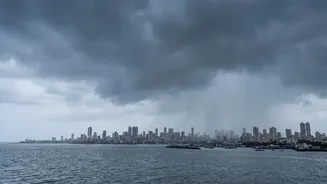
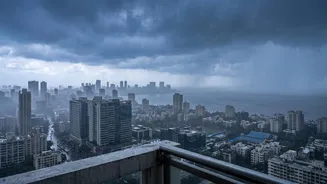
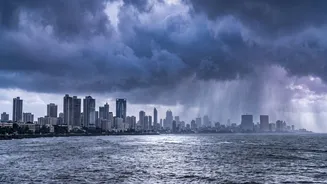
The quiet August has everyone looking towards September. Meteorologists are considering two main possibilities. The first is that the current 'break' phase, influenced by developing El Niño conditions, could continue, leading to a weaker end to the monsoon. Some IMD sources have suggested that India could be on course for its weakest monsoon in nearly two decades, with a significant deficit possible in September. The alternative is a late, aggressive revival. Historically, some 'break' periods are followed by a vigorous return of monsoon currents. This could mean September might see intense, heavy downpours as the monsoon trough shifts back to its normal position. This 'whiplash' effect, from drought-like conditions to deluge, has been observed in recent years and can lead to its own set of problems, including sudden waterlogging and flooding.
What History Tells Us
Looking at past monsoon patterns provides some context. Mumbai's monsoon is notoriously variable. There have been years with quiet periods followed by extremely wet months that make up for the deficit. For example, in 2025, a very wet September with over 600 mm of rain pushed the seasonal total past the 3,000 mm mark after a variable season. However, there have also been years where a prolonged August break, often linked to broader climate patterns like El Niño, has resulted in a season-wide rainfall deficit. The current El Niño is a cause for concern among forecasters, as such events have historically correlated with weaker monsoons in India. This makes the forecast for September particularly crucial and uncertain.