
A Football Field in the Sky
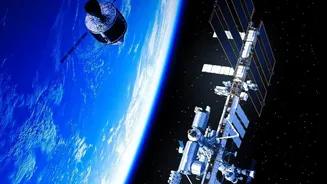
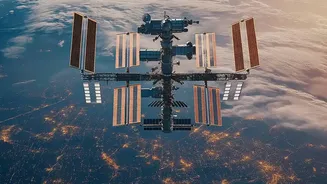
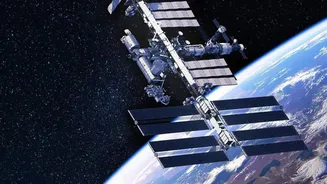
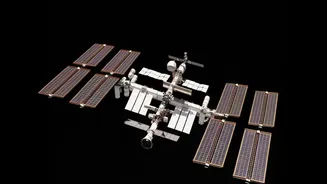
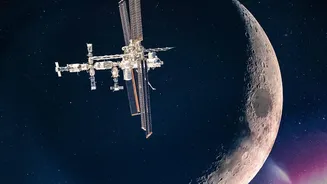
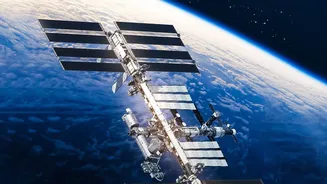
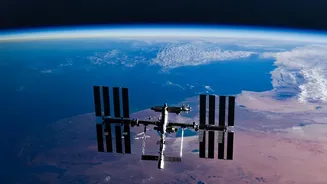
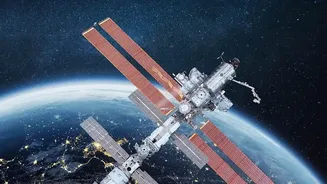
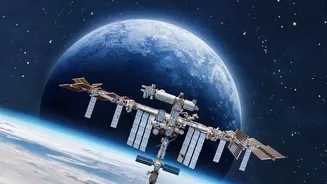
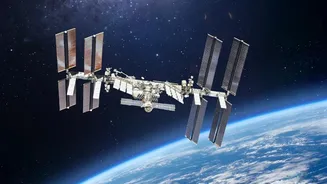
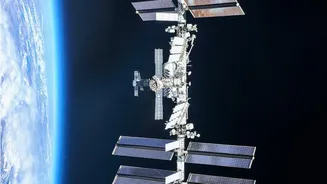
Before you head outside, it helps to know what you’re looking for. The International Space Station (ISS) is a massive orbiting laboratory, roughly the size of a football field, circling our planet about 400 kilometres up. It travels at a staggering 28,000
kilometres per hour, completing a full orbit of Earth every 90 minutes or so. We don't see the station itself, but rather the brilliant reflection of sunlight off its huge solar arrays. This is why the best viewing opportunities happen just after sunset or before sunrise, when the sky on the ground is dark, but the ISS is still high enough to be bathed in sunlight. At its brightest, it can outshine every star and planet in the sky, appearing as a powerful, steady light.
Your Phone is the Mission Control
The secret to an effortless sighting is your smartphone. Gone are the days of complex charts; today, a host of user-friendly apps can tell you precisely when and where to look from your exact location. One of the most popular is NASA's own official 'Spot The Station' app, which provides sighting times and real-time tracking. Other highly-rated options include 'ISS Detector', which offers a simple interface and notifications for various satellites, and 'Heavens-Above', a long-standing favourite among skywatchers. Many general stargazing apps like 'SkyView Lite' or 'Star Walk' also include features to track the ISS. Most of these apps use your phone's GPS to generate a list of upcoming visible passes, so you’ll know the exact minute to be ready.
Decoding the Pass Details
Once you open your chosen app, you’ll see a list of upcoming viewing opportunities. These listings usually provide a few key pieces of information. 'Time' indicates when the pass will begin. 'Appears' and 'Disappears' will tell you the compass direction where the station will first become visible and where it will vanish. 'Maximum Height' or 'Elevation' is crucial; measured in degrees, it tells you how high the ISS will get in the sky. Zero degrees is the horizon, while 90 degrees is directly overhead. A higher pass (anything above 40 degrees) is generally more impressive and easier to see. The pass duration is typically between three and six minutes, giving you a generous window to spot it.
What to Look For in the Dark
When the time comes, head outside a few minutes early to let your eyes adjust to the darkness. Face the direction where the app says the station will appear. You are looking for a single, bright point of light moving steadily and smoothly across the sky. The key differentiator from an airplane is that the ISS does not have flashing or blinking lights. It moves much faster than a typical plane but slower and more predictably than a shooting star. The station will look like a very bright, determined star on a mission. Sometimes, it may seem to fade out and disappear before reaching the opposite horizon. This is perfectly normal; it's simply the moment the station moves into Earth's shadow.
Tips for the Perfect Sighting
To make your first ISS sighting a success, find a spot with a clear view of the sky, away from tall buildings and bright city lights if possible. While the ISS is bright enough to be seen from urban areas, a darker environment enhances the experience. Resist the urge to look at your bright phone screen right before the pass, as it will ruin your night vision. And finally, be patient. It may take a moment to spot it as it rises above the horizon, but once you do, you’ll be treated to a silent, majestic flyover. Binoculars aren't necessary, but if you have them, they can make the bright light appear even more impressive.