




The Core of the Power Problem
At its heart, the massive energy draw of AI comes down to the hardware. While a standard cloud server relies on Central Processing Units (CPUs) to handle a wide range of tasks sequentially, AI workloads run on Graphics Processing Units (GPUs). Originally
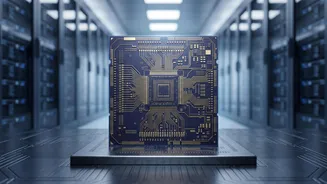
designed for video games, GPUs contain thousands of smaller, specialized cores that excel at running countless calculations in parallel. This capability is perfect for the complex matrix and tensor operations required to train large AI models and generate responses. The trade-off is a colossal power demand. A single high-end GPU can consume 700 to 1,200 watts of power, whereas a traditional server CPU might only use 150 to 200 watts. When you assemble thousands of these GPUs into a single AI data center, the energy requirements quickly escalate.
A Difference of Scale
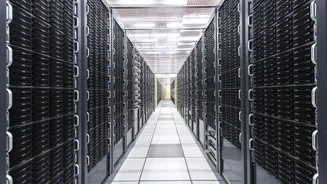
The contrast in power density is stark. A typical server rack in a conventional data center might draw between 7 and 15 kilowatts (kW) of power. An AI-optimized rack, packed with powerful GPUs, can demand anywhere from 30 kW to over 100 kW. This means a single AI rack can consume three to ten times more power than its traditional counterpart. The impact is visible at every level. A single query to a generative AI chatbot like ChatGPT is estimated to use nearly ten times the energy of a standard Google search. Projections show that by 2027, the electricity consumed by AI-optimized servers globally will surpass that of all conventional servers combined. By 2030, the global electricity demand from data centers is expected to more than double, with AI workloads driving the overwhelming majority of that growth.
The Data Center Dilemma
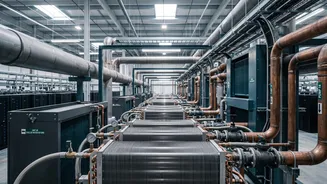
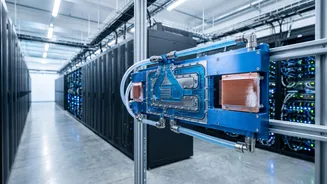
This intense power consumption creates a compounding problem for data centers. More power means more heat, and all that heat must be removed to prevent the chips from overheating. Cooling systems can account for 30-40% of a data center's total energy usage. The extreme heat generated by dense AI racks is pushing traditional air-cooling methods to their limits, forcing a shift to more effective—but also energy-intensive—liquid cooling technologies. Furthermore, the sheer amount of electricity required is reshaping where and how data centers are built. Companies are now constrained by the availability of power, with grid connection timelines in major markets stretching out for several years. This has created a new battleground for tech supremacy, where securing access to massive amounts of reliable power is a primary business risk and a key competitive advantage.
The Search for Greener AI
The industry is acutely aware of this challenge and is racing to find solutions. One major focus is on hardware efficiency, with each new generation of chips aiming for better performance per watt. Another path is through software and model optimization. Techniques like using smaller, specialized models for specific tasks instead of a giant one-size-fits-all model can dramatically cut energy use. Other strategies include developing more efficient algorithms and leveraging transfer learning, which involves adapting pre-trained models instead of building new ones from scratch. To tackle the strain on energy grids, tech giants are increasingly investing directly in renewable energy projects and strategically locating data centers in regions with access to clean power sources like solar, wind, and geothermal.