




The Sun's Swelling Finale
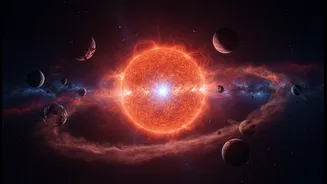
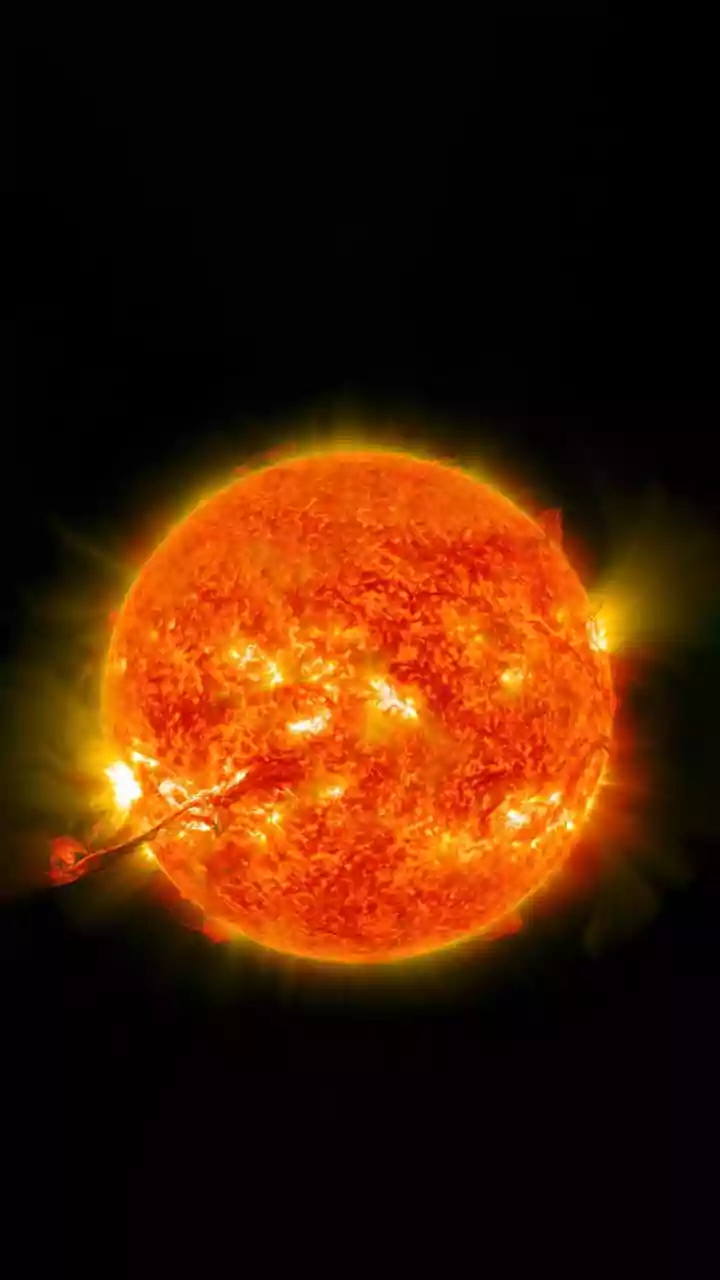
Like other stars of its type, the Sun will eventually exhaust the hydrogen fuel in its core. When this happens, it will begin to fuse helium, a process that generates a tremendous amount of energy. This will cause our star to swell dramatically, becoming
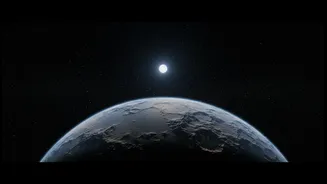
a red giant. Its outer atmosphere will expand, potentially growing more than 100 times its current size. This expansion will be catastrophic for the inner planets. Mercury and Venus are certain to be engulfed and vaporized. Earth's fate hangs in the balance; while some models suggest it will be swallowed, others propose it might just escape being consumed as the Sun loses mass and its gravitational grip weakens. Even if it survives, the planet's surface will be scorched, and its oceans will have long since boiled away.
A Glimpse of Our Ghostly Future
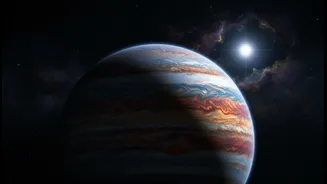
This isn't just theory. The James Webb Space Telescope (JWST) is acting as a cosmic time machine, showing us what this process looks like in other systems. In a landmark observation, Webb studied a Jupiter-sized planet named WD 1856 b, which orbits a white dwarf—the dense, Earth-sized remnant of a dead, Sun-like star. This system, located about 80 light-years away, offers a direct look at a potential future for our own solar system's outer planets. By analyzing the light passing through the planet's atmosphere, scientists detected the signatures of methane and cloud particles, the first time an atmosphere has been confirmed around a planet orbiting a stellar corpse.
The Survivors: Gas Giants in a New Era
The survival of WD 1856 b is a puzzle. The planet orbits its dead star much closer than Mercury orbits our Sun, a zone that should have been obliterated during the red giant phase. Webb's data revealed the planet is significantly warmer than it should be, suggesting it was reheated. The leading theory is that the planet was originally in a much wider, safer orbit and migrated inward billions of years after its star died, likely due to gravitational nudges from other stars in its triple-star system. This suggests that our own gas giants, Jupiter and Saturn, will likely survive the Sun's red giant phase. Their orbits will expand as the Sun loses mass, but they will remain, wandering a radically changed solar system.
Webb's View of Stellar Graveyards
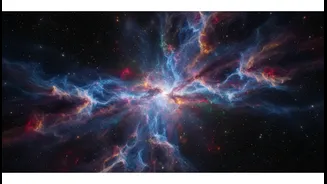
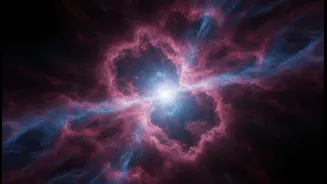
JWST is uniquely suited to explore these stellar graveyards. Its powerful infrared instruments can pierce through the dust and debris that often cloud white dwarf systems. Astronomers have found that between 25% and 50% of white dwarfs show signs of being 'polluted' with heavy elements, which are thought to be the remnants of asteroids and planets that were torn apart by the dead star's gravity. Webb has even directly imaged what appear to be two giant planet candidates orbiting other white dwarfs, providing more evidence that planets can and do survive their star's death. By studying the glowing shells of gas and dust called planetary nebulae—the beautiful remnants of a star's outer layers—Webb is also revealing the complex, often chaotic, processes that shape these systems.