





A New Era for Earth Science
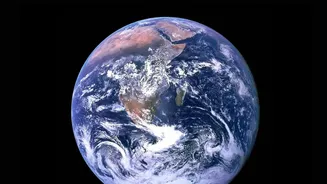
For decades, NASA has been our eyes in the sky, collecting a treasure trove of information about our home planet. The problem? That treasure chest is overflowing. NASA's Earth science data archives are measured in petabytes—millions of gigabytes—and are expected
to grow exponentially. By some estimates, scientists were projected to have 250,000 terabytes of new mission data by 2024 alone. Sifting through this digital mountain to find critical signals about our changing climate has become a near-impossible task for humans alone. This is where the new strategy comes in. By integrating powerful AI tools, NASA is fundamentally changing how it approaches climate science. It's a shift from just collecting data to understanding it at lightning speed, a move that officials say is essential to meet the urgency of the climate crisis.
Meet Prithvi: An AI Model for the Planet
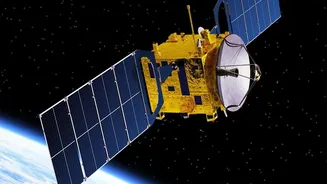
At the heart of this new strategy is a collaboration between NASA and tech giant IBM to create a new class of AI known as a 'foundation model'. Named Prithvi, the Sanskrit word for Earth, this model is designed specifically to analyze geospatial data. Think of it like the large language models that power chatbots, but instead of learning from text, Prithvi is trained on vast amounts of NASA's satellite imagery. By being fed years of data from programs like the Landsat and Sentinel satellites, the model learns to identify patterns and relationships in the Earth's systems on its own. This allows it to perform a wide range of tasks, from spotting the subtle signs of deforestation to mapping the extent of floodwaters after a storm, often with just a little extra fine-tuning.
From Data Overload to Actionable Insight
The true power of this AI integration lies in its ability to turn overwhelming data into actionable insights. For example, by fine-tuning the Prithvi model, researchers can quickly detect burn scars from wildfires, track changes in land use, or even monitor the health of crops from space. This dramatically speeds up analysis that would have previously taken months or years. More recently, NASA and IBM have expanded this work to create a model for weather and climate, trained on 40 years of atmospheric data. This model aims to improve everything from short-term weather forecasts and hurricane tracking to understanding long-term climate trends. It's like giving every climate scientist a team of super-intelligent assistants that never sleep.
An Open-Source Revolution for Climate Science
Crucially, NASA is not keeping these powerful tools to itself. In line with its commitment to open science, the agency has made the Prithvi models freely available to the global research community through platforms like Hugging Face. This collaborative, open-source approach is a game-changer. It means that scientists, non-profits, and even local governments around the world can use this cutting-edge technology without needing the massive computational resources required to build a foundation model from scratch. By democratizing access, NASA hopes to accelerate discovery and empower a global network of researchers to develop new applications for tracking and mitigating the effects of climate change in their own regions. Recently, a version of Prithvi even became the first geospatial foundation model to be deployed in orbit, running on the International Space Station to analyze data before it even reaches the ground.