



The Planet's Geological Engine
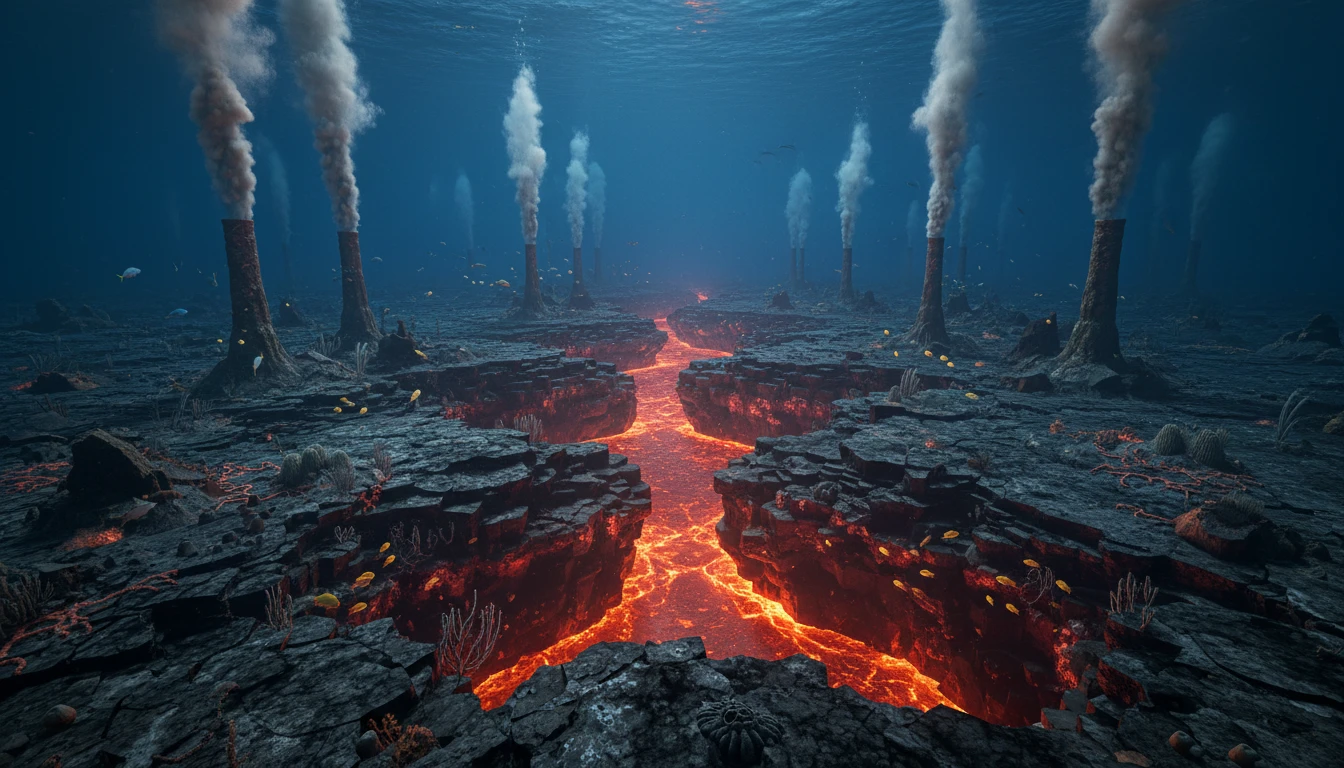
Imagine a vast, underwater mountain range that wraps around the globe like a seam on a baseball. This is the mid-ocean ridge system, and it is where plate tectonics gets to work building the planet. Here, tectonic plates pull away from each other, allowing
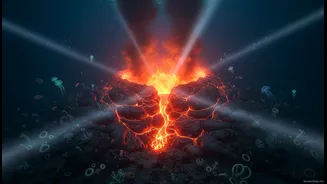
molten rock, or magma, from the Earth's mantle to rise and fill the gap. This magma cools rapidly in the near-freezing seawater, solidifying to form brand new oceanic crust. This process, known as seafloor spreading, is responsible for creating about two-thirds of the Earth's surface. The classic model, often called the Penrose model, suggested this process creates a fairly uniform, layered crust, particularly at faster-spreading ridges. This theory has been the bedrock of geology for over half a century.
An Unexpected Discovery in the Indian Ocean
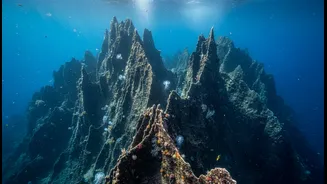
The story takes a dramatic turn at specific locations in the Indian Ocean, particularly along the Southwest Indian Ridge and the Southeast Indian Ridge. These are known as slow-spreading or ultra-slow-spreading ridges, where the tectonic plates are moving apart at a much slower pace. Scientists have long suspected that these slower ridges might not follow the standard rules. At these locations, the magma supply can be weak or intermittent. Instead of a consistent layer of new volcanic rock, researchers have found something startling: large sections of the Earth's mantle are exposed directly on the seafloor, with little to no crust covering them. This process, where mantle rocks are pulled to the surface by massive geological faults, is known as amagmatic spreading.
Caught in the Act
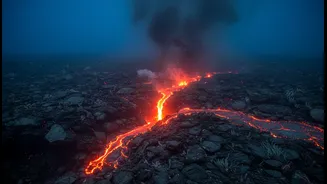
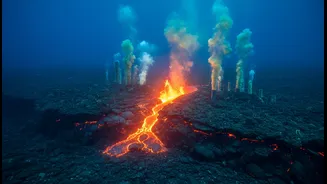
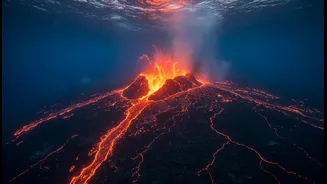
In a stroke of scientific luck, an international team of researchers recently captured a seafloor spreading event in real-time. In April 2024, instruments placed on the Southeast Indian Ridge recorded a dramatic sequence of events. It began with a swarm of earthquakes, followed by the seafloor dropping by over four metres in just six days. In the space of about two weeks, the ridge released an amount of tectonic strain equivalent to roughly four decades of normal, slow movement. An estimated 160 million cubic metres of lava poured onto the seafloor. These direct observations proved that crust formation is not always a slow, steady crawl. Instead, it can happen in sudden, violent lurches, fundamentally altering our understanding of the pace and nature of these geological events.
Rewriting the Geology Textbooks
These findings from the Indian Ocean are forcing a major rethink of how oceanic crust is formed. It is becoming clear that there is no single, one-size-fits-all model. The process depends heavily on the spreading rate and magma supply. At ultra-slow ridges, tectonic stretching, faulting, and the direct exposure of mantle rock play a much larger role than previously thought. Some studies have even found ancient pieces of continental crust, billions of years old, that have been recycled through the mantle and have re-emerged at these ridges in the Indian Ocean. This suggests a much more complex and interconnected system than the simple conveyor-belt model of crust creation. The idea of a neat, layered cake of oceanic crust is being replaced by a more complex picture of a mosaic, where some areas are magmatically robust and others are dominated by tectonic forces exposing the planet's deep interior.