
India's Eye on the Sun
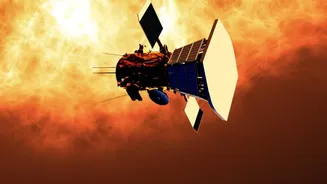
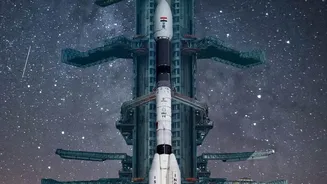
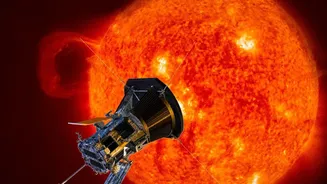
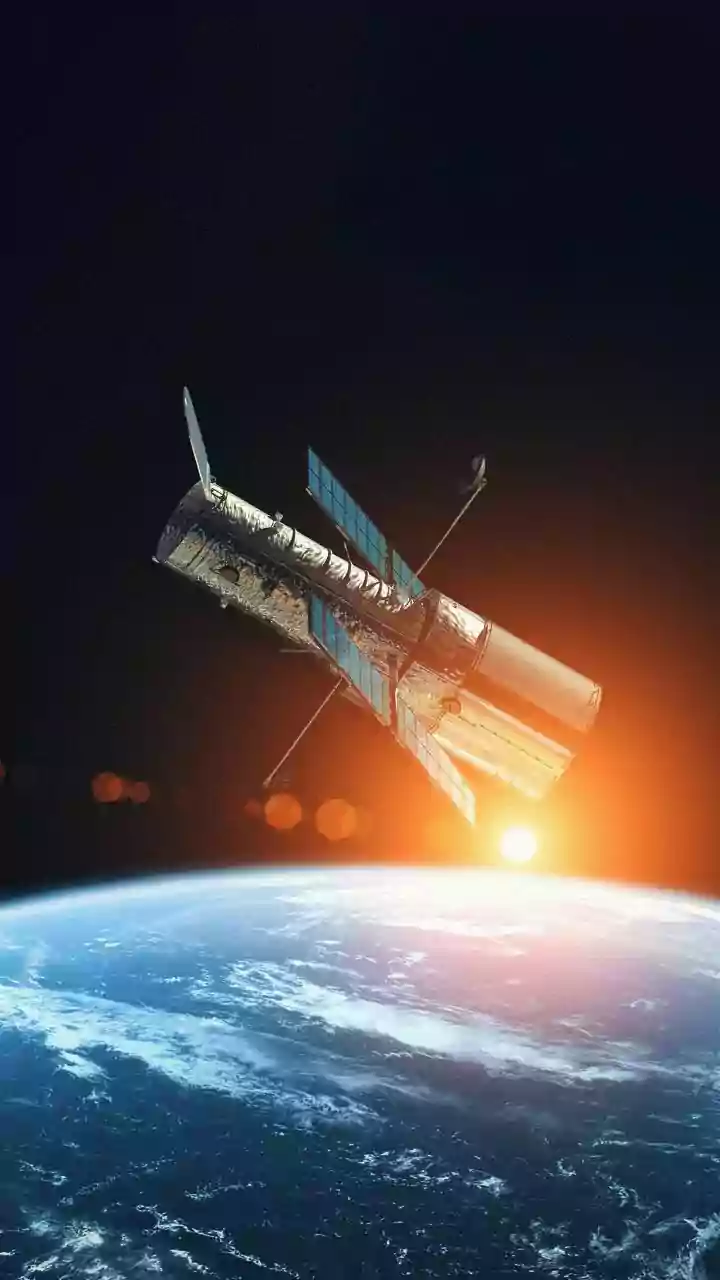
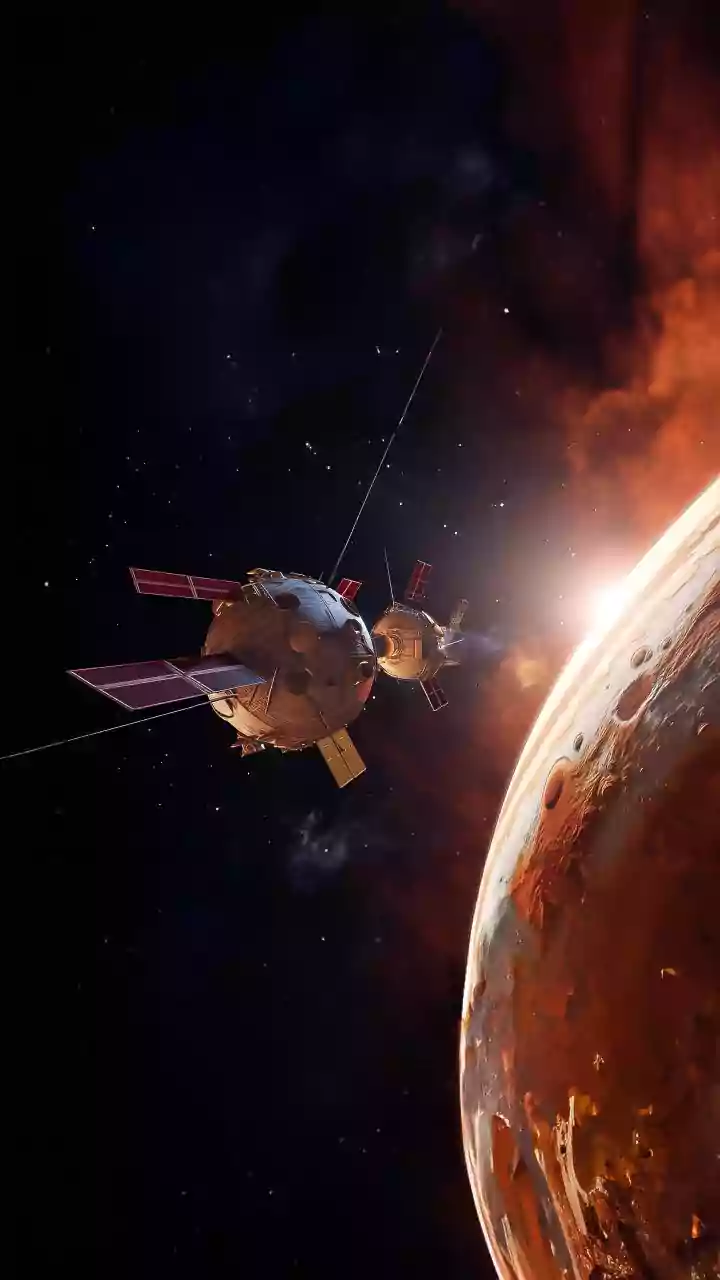
Launched by the Indian Space Research Organisation (ISRO), Aditya-L1 is India's first dedicated mission to study the Sun. It is strategically positioned at Lagrange Point 1 (L1), a spot 1.5 million kilometres from Earth where the gravitational pulls of
the Sun and Earth balance out. This unique vantage point allows the spacecraft to watch the Sun continuously, without any eclipses or interruptions. Think of it as India’s unblinking eye, providing a constant stream of data about our star’s behaviour. The primary goal is to understand the dynamics of the Sun's upper atmosphere, particularly the chromosphere and the corona, and how they influence space weather. This information is vital for protecting our satellites and power grids from potentially damaging solar events.
Decoding the Fiery Corona
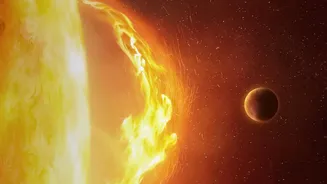
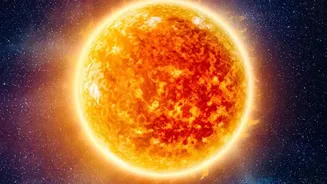
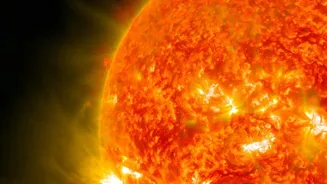
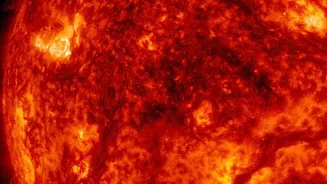
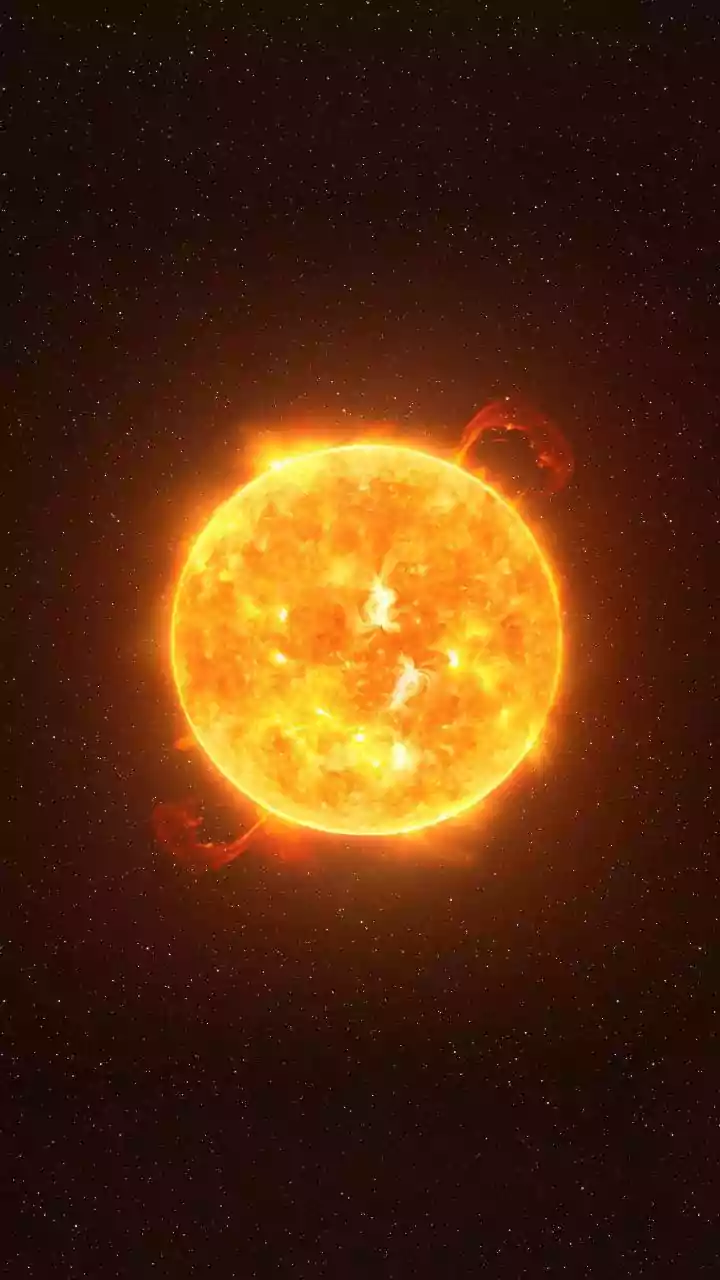
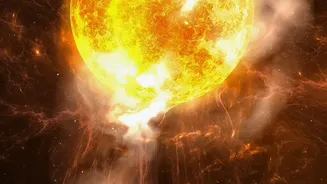
One of the longest-standing puzzles in solar physics is the coronal heating problem: why is the Sun’s outer atmosphere, the corona, millions of degrees hotter than its visible surface? The surface, or photosphere, is about 5,500°C, while the corona can sizzle at two million degrees Celsius. The corona is also the birthplace of major solar events like flares and Coronal Mass Ejections (CMEs), which are massive eruptions of plasma and magnetic fields. Understanding the corona's heating mechanism is directly linked to predicting these violent outbursts. Recent findings from Aditya-L1 suggest that the constant reconfiguration and reconnection of the Sun's magnetic fields are the primary source of this immense heat, contributing about 93% of the required energy. By studying the corona, scientists can better understand the engine that drives space weather.
The Instruments Doing the Work
Aditya-L1 is equipped with seven sophisticated instruments, but two are key for observing the corona and predicting activity: the Visible Emission Line Coronagraph (VELC) and the Solar Ultraviolet Imaging Telescope (SUIT). VELC is the primary payload, designed to image the corona closer to the Sun's disk than most other space coronagraphs. It does this by creating an artificial eclipse, blocking the Sun's bright face to reveal the much fainter corona. This allows it to capture the very initiation of CMEs. SUIT, on the other hand, captures full-disk images of the Sun in near-ultraviolet (NUV) wavelengths, a range never observed in such detail before. This helps scientists study the lower and middle layers of the Sun's atmosphere and how energy is transferred upwards to create flares and other events. Together, they provide a multi-layered view of solar phenomena.
From Data to Early Warnings
So, how does a picture of the corona become a useful prediction? The process involves a combination of direct observation and sophisticated modeling. Instruments like VELC provide spectroscopic data, measuring the temperature, velocity, and density of the plasma in CMEs as they erupt. This information on the ejection's mass and speed is a critical input for forecasting models. Meanwhile, other instruments called in-situ payloads, like the Aditya Solar wind Particle EXperiment (ASPEX), measure the solar wind particles flowing past the spacecraft. Changes in particle density and the ratio of helium to protons can signal that a CME is heading toward Earth. This gives us an invaluable early warning, typically 30-60 minutes before the solar storm impacts our planet's magnetic field. Scientists are now even using machine learning to analyse this data automatically, hoping to improve prediction accuracy by 20-30%.
Why This Matters for India and the World
In our hyper-connected world, we rely heavily on technology that is vulnerable to space weather. A severe solar storm could disrupt communication networks, damage satellites used for navigation and GPS, and even knock out power grids, with a potential economic impact in the trillions of dollars. Aditya-L1's data is helping India become self-reliant in space weather forecasting, moving from being a user of foreign data to a key producer. By providing real-time data on solar activity, the mission enhances our ability to forecast these events and take protective measures. The data from this national mission is shared with the global scientific community, strengthening our collective understanding of the Sun and improving our ability to shield our vital infrastructure from its powerful eruptions.