




The Engine: Power and Musculature
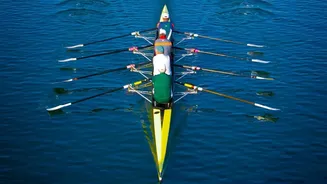
Rowing is often called the ultimate full-body workout, and for good reason. The rowing stroke is a powerful, coordinated sequence that engages over 85% of the body's muscles. It begins with an explosive leg drive—the 'catch'—that recruits the quadriceps,
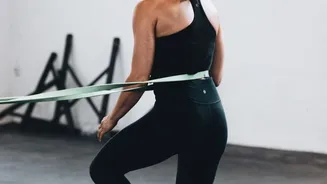
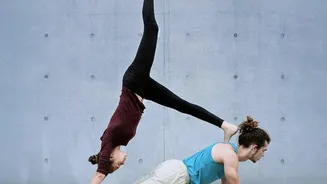
glutes, and calves. This power is then transferred through the core to the upper body, where the back, shoulders, and arms complete the 'drive' phase. It's a rhythmic, cyclical application of force, building a powerful posterior chain (the muscles on the backside of your body) and phenomenal pulling strength. Dancing, in contrast, demands a more varied muscular toolkit. While a ballet dancer’s grand jeté requires explosive leg power similar to a rower's drive, it also necessitates incredible adductor and abductor strength for leg extensions and turnout. A contemporary dancer might rely on isometric strength to hold a difficult position, followed by a burst of dynamic power. Dancers build a balanced, almost sculptural physique, where smaller stabilizing muscles are just as crucial as the large prime movers. It’s less about one repetitive motion and more about a vast vocabulary of movements.
A Question of Balance: Stability vs. Dynamics
The word 'balance' means something different in each sport. For a rower, balance is about core stability and control. Strapped into a boat that is often less than a foot wide, a rower must transfer immense force without upsetting the vessel. This requires a rock-solid core to prevent energy leaks and maintain a stable connection between the legs and the handle. The challenge is maintaining symmetry and stability while in constant, powerful motion. For a dancer, balance is dynamic and adaptive. It’s about proprioception—the body's awareness of its position in space. Dancers constantly challenge their centre of gravity, performing turns on one foot (pirouettes), holding off-kilter poses (arabesques), and landing jumps with pinpoint precision. Their balance is a conversation between their feet, core, and inner ear, allowing them to appear weightless and in complete control, even when executing physically 'unstable' movements. One discipline masters stability against force; the other masters stability through flux.
Rhythm and Pacing: The Cardio Challenge
Both activities provide a formidable cardiovascular workout, but their metabolic demands are different. Rowing races, particularly the standard 2000-meter event, are an all-out sprint that pushes athletes deep into the anaerobic threshold. It's a sustained, high-intensity effort that requires the body to work at its absolute limit for five to eight minutes, creating an enormous oxygen debt. Training involves long, steady-state sessions to build an aerobic base, punctuated by high-intensity interval training to prepare for the pain of the race. Dance is typically more varied. A performance can be an endurance event, but the effort is often interval-based. It involves short bursts of explosive, heart-pounding activity (jumps, fast sequences) followed by moments of relative stillness or slower, controlled movement. This stop-and-start nature places a different kind of demand on the cardiovascular system, requiring rapid recovery and the ability to perform intricate skills even when breathing heavily. While a rower’s challenge is managing a sustained peak, a dancer’s is handling constant peaks and valleys.
The Mind Game: Focus and Fortitude
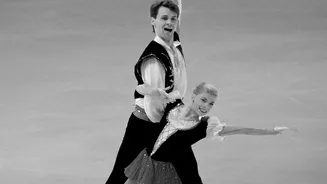
Beyond the physical, the mental demands of dancing and rowing are immense. Rowers must cultivate a unique mental toughness to push through extreme physical discomfort and embrace the monotonous rhythm of training. In a crew boat, this is amplified by the need for perfect synchronicity. Every rower must match their movements to their teammates flawlessly, creating a single, unified machine. It is a sport of internal focus and collective unity. Dancers, on the other hand, must blend internal focus with external expression. They need to memorize complex choreography, interpret music, and convey emotion to an audience, all while executing technically flawless movements. Their spatial awareness is critical, especially when performing with a partner or in a large company. It’s a dual challenge of executing the physical while projecting artistry and connecting with an audience.