






Jamun (Indian Blackberry)
This deep purple fruit is a quintessential monsoon delight and for good reason. Jamun is a powerhouse of Vitamin C and antioxidants, which are essential for a strong immune system. [3, 5] Traditionally used in Ayurvedic practices, it's known to help regulate
blood sugar levels and improve digestion. [3, 7] Its rich iron content also helps increase haemoglobin, making it a great choice to combat fatigue. [7, 12] Being low in calories but high in nutrients like potassium and magnesium, it supports heart health by helping to regulate blood pressure and cholesterol. [3, 7] A handful of fresh jamun makes for a perfect, healthy snack during the rains.
Ginger and Garlic
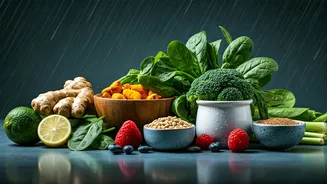
This duo is a cornerstone of Indian cooking and a formidable force during the monsoon. Ginger is celebrated for its anti-inflammatory properties and its ability to soothe a sore throat and fight off cold and flu symptoms. [17, 21] Garlic contains a compound called allicin, which has potent antibacterial and antiviral properties, providing a shield against common seasonal infections. [5, 14] Incorporating freshly grated ginger into your tea or adding chopped garlic to soups and curries are easy ways to leverage their immune-boosting benefits. [5, 17] Together, they work to improve digestion and keep your body warm from the inside. [17, 21]
Turmeric
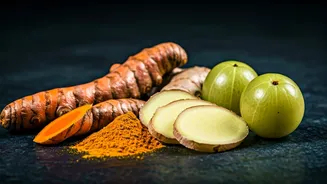
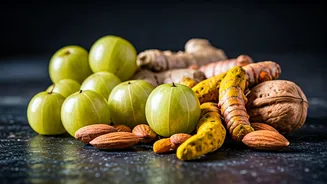
Known as 'golden milk', a warm glass of turmeric milk is a cherished monsoon remedy. The active compound in turmeric, curcumin, has powerful anti-inflammatory, antiviral, and antibacterial properties. [5, 17] This makes it incredibly effective at fighting the infections that are common during the rainy season. [14, 21] Regular consumption of turmeric can help bolster your body’s natural defences. [19] For better absorption, it’s often recommended to consume turmeric with a pinch of black pepper. [17] Adding this vibrant spice to your dals, vegetables, or milk is a simple step towards better health.
Probiotic-Rich Foods
Gut health is directly linked to a strong immune system, and the monsoon can be tough on digestion. [14, 26] Including probiotics in your diet helps maintain a healthy balance of gut bacteria. [4, 10] Freshly made curd (dahi) and buttermilk (chaas) are excellent and widely available sources of probiotics in India. [4, 9] They aid digestion, prevent bloating, and can help combat stomach issues. [4, 10] Other fermented foods like idli and dosa, made from fermented rice and lentil batter, are also beneficial for gut health and are light on the stomach. [4, 9]
Seasonal Gourds and Greens
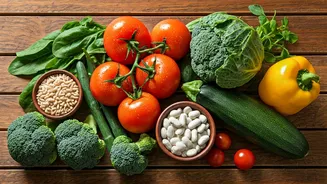
While many raw vegetables are best avoided during the monsoon due to the risk of contamination, cooked seasonal vegetables are highly recommended. Gourds like bottle gourd (lauki), bitter gourd (karela), and ridge gourd (tori) are easy to digest and packed with essential nutrients. [11, 23] Bitter gourd, in particular, is known as an immunomodulator, helping to increase immunity and protect against seasonal colds. [5] Properly washed and cooked leafy greens like spinach are also great, offering a wealth of vitamins and antioxidants that enhance your body's infection-fighting capabilities. [5, 18]
Corn (Bhutta)
Roasted corn on the cob is a classic monsoon street food for a reason. [2, 13] It's not just a nostalgic snack; it’s also a healthy one. Corn is rich in fibre, which aids digestion, and contains antioxidants that support overall health. [2] The act of roasting it over coals makes it a safer option than many other street foods during this season. [13] Seasoned with a simple mix of salt, chilli, and lemon juice, it provides a delicious and satisfying way to enjoy a seasonal favourite while getting a dose of healthy carbohydrates and nutrients.