







The Core Rule: No Charges for Most Users
Let's clear the air: for the vast majority of UPI users, nothing has changed. Person-to-person (P2P) money transfers remain completely free, regardless of the amount. If you are sending money from your bank account to a friend or family member, you will
not be charged. Similarly, most person-to-merchant (P2M) payments made by scanning a QR code or entering a UPI ID remain free for the customer. The National Payments Corporation of India (NPCI) has repeatedly clarified that bank account-to-bank account UPI payments are not subject to these new charges. So, if your UPI app is linked directly to your bank account, you can continue transacting without worry.
So, What Is This Fee Everyone Is Talking About?
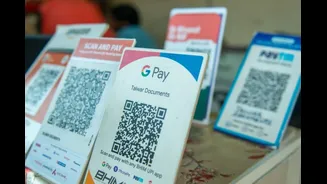
The charge in question is a Merchant Discount Rate (MDR), which is a fee paid by merchants for payment processing. As of October 15, 2026, a 0.4% MDR applies to certain UPI transactions over ₹2,000 made to merchants. It's crucial to understand that this fee is levied on the merchant receiving the payment, not the customer making it. For instance, on an eligible transaction of ₹3,000, the merchant would pay a fee of ₹12. For very large transactions, this fee is capped at ₹300. The government and NPCI have been firm that merchants are not permitted to pass this cost on to customers.
The Specific Case: Prepaid Payment Instruments (PPI)
The conversation around a 1.1% fee specifically relates to an interchange fee on transactions made using Prepaid Payment Instruments (PPIs) for amounts over ₹2,000. So, what is a PPI? Think of digital wallets (like Paytm Wallet, PhonePe Wallet), gift cards, and other instruments where you load money in advance instead of paying directly from your bank account. When you use the balance in one of these wallets to pay a merchant via UPI, and the amount is over ₹2,000, the merchant's bank pays an interchange fee to your wallet provider. This fee is meant to cover the costs of processing the transaction and is a mechanism within the financial system, not a direct charge to you as the user.
Why Was This Fee Framework Introduced?
For years, UPI operated on a zero-MDR model, which was crucial for its widespread adoption. However, maintaining the vast infrastructure, ensuring cybersecurity, and processing billions of transactions daily comes at a significant cost for banks and payment service providers. The introduction of a nominal MDR on certain high-value merchant transactions is designed to create a sustainable revenue model for these players. This ensures they can continue to invest in and innovate the UPI ecosystem, ultimately benefiting both consumers and businesses. The fee is distributed among the participants in the payment chain to cover their operational expenses.
Are There Any Exemptions?
Yes, the framework includes several important exemptions. All P2P transactions are exempt, as are all merchant payments up to ₹2,000. This covers the vast majority of daily UPI transactions. Furthermore, small merchants operating under the P2PM framework who receive up to ₹1 lakh per month via UPI are also exempt from this MDR, which helps protect smaller neighbourhood businesses from additional costs. Certain essential sectors like fuel, railways, telecom, and insurance have a different structure, with a flat fee of ₹5 for eligible transactions over ₹2,000 instead of a percentage-based charge.