





Why You Can't See It From Home
The culprit is light pollution. The collective glow from streetlights, office buildings, and homes creates a phenomenon called 'sky glow,' an artificial twilight that obscures all but the most brilliant celestial objects. Astronomers use the Bortle Scale
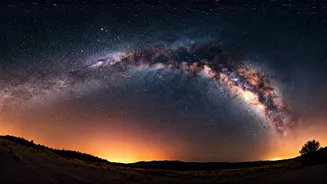
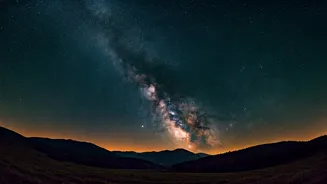
to measure sky brightness, ranging from Class 1 (an excellent, truly dark sky) to Class 9 (an inner-city sky). To see the Milky Way's magnificent, dusty core, you need to find a location that’s a Class 4 or, ideally, lower. This almost always means driving away from populated centers into rural or protected natural areas.
When and How to Look
Timing is everything. In the Northern Hemisphere, the core of the Milky Way is most visible during the summer months, from roughly June through August, though the viewing season extends from late spring to early fall. The second critical factor is the moon. A full moon is a giant, natural light polluter, so plan your trip around the new moon phase, when the sky is at its darkest. Give your eyes at least 20-30 minutes to fully adapt to the darkness. Avoid looking at your phone screen; if you need light, use a flashlight with a red filter, which is less disruptive to your night vision.
Death Valley National Park, California & Nevada
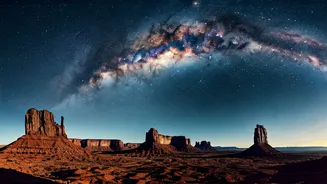
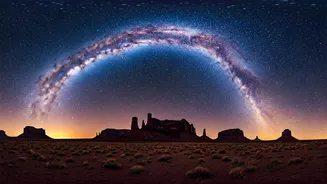
As a designated Gold Tier International Dark Sky Park—the highest rating—Death Valley offers one of the most profound stargazing experiences in the country. Its remote location, vast salt flats, and arid climate mean cloud cover is rare. The sheer scale of the landscape feels otherworldly by day, and by night, the sky transforms into a dense tapestry of stars. Areas like Mesquite Flat Sand Dunes or Harmony Borax Works provide expansive, unobstructed views of the heavens, where the Milky Way appears so bright it can seem to cast a faint shadow.
Cherry Springs State Park, Pennsylvania
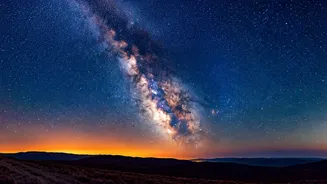
For those on the East Coast, Cherry Springs is a legendary destination. Surrounded by the vast Susquehannock State Forest, this 82-acre park is a Class 2 on the Bortle Scale, making it an oasis of darkness in the densely populated Northeast. The park is designed specifically for astronomers, with a dedicated Astronomy Field offering 360-degree views. On a clear, moonless night, the Milky Way is bright enough to be seen with the naked eye, appearing as a cloudy, luminous band stretching from horizon to horizon.
Big Bend National Park, Texas
Big Bend holds the distinction of having the least light pollution of any national park in the lower 48 states. Located on a remote stretch of the U.S.-Mexico border, it is far from any major cities. The park’s vast, rugged terrain and clear desert air create pristine viewing conditions. On a good night, you can see an estimated 2,000 stars, compared to the few hundred visible from a typical suburb. The park actively promotes its dark skies, offering star parties and ranger-led night programs that help visitors appreciate the cosmic spectacle above.
Central Idaho Dark Sky Reserve
America's first Gold Tier International Dark Sky Reserve, this enormous 1,416-square-mile area encompasses the Sawtooth National Recreation Area and lands around the towns of Ketchum, Sun Valley, and Stanley. The communities here have committed to preserving the night through smart lighting ordinances. The result is a protected core of wilderness with some of the most stunningly dark skies accessible in the U.S. The jagged peaks of the Sawtooth Mountains provide a dramatic silhouette against a sky shimmering with celestial light.
Headlands International Dark Sky Park, Michigan
Located on the shores of Lake Michigan near Mackinaw City, Headlands offers a unique stargazing experience over water. The 550-acre park is forested and undeveloped, with two miles of shoreline providing a clear, dark horizon to the west. It’s one of the first ten International Dark Sky Parks in the world and is open 24/7, free of charge. Visitors can bring a blanket and lie on the shore, watching the Milky Way rise over the Great Lakes, far from the glare of Detroit or Chicago.