






Understanding India’s Changing Diet
Recent data, including the 2024 guidelines from the Indian Council of Medical Research (ICMR) and the National Institute of Nutrition (NIN), reveals a major shift in how Indians eat. This collective change is often referred to as 'India's Changing Food
Basket'. Key findings show that while incomes are rising, diets are not necessarily getting healthier. Many people are consuming more ultra-processed foods which are high in sugar, salt, and unhealthy fats, while intake of traditional foods like millets and diverse vegetables has decreased. This shift is contributing to a 'double burden' of malnutrition, where issues of undernutrition exist alongside a rapid rise in obesity and non-communicable diseases like diabetes and heart problems. Reports show unhealthy diets are responsible for over 56% of the disease burden in the country.
The Blueprint: ICMR-NIN's 'My Plate for the Day'
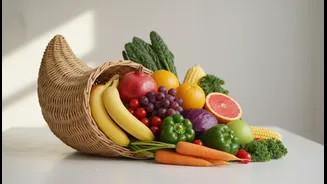
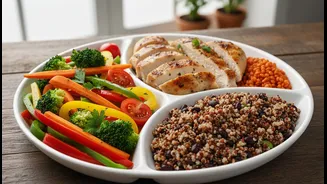
To counter these trends, the ICMR-NIN has released a simple visual tool called 'My Plate for the Day'. This guide is the single most important takeaway for building a balanced meal. It moves away from confusing calorie counting and focuses on proportions. The plate recommends that half of your meal should consist of fruits and vegetables. The other half should be divided between carbohydrates like cereals and millets, and protein sources such as pulses, legumes, eggs, or lean meat. A serving of dairy like milk or curd and a moderate amount of healthy fats completes the picture. This framework is designed to ensure you get a wide range of essential vitamins, minerals, fibre, and antioxidants from food itself, rather than relying on supplements.
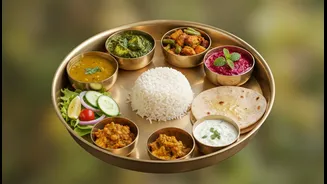
Building Your Balanced Thali: A Practical Guide
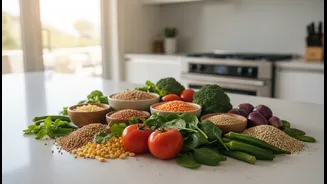
Translating the 'My Plate' concept to your daily thali is straightforward. Here’s how to structure your main meals: 50% Vegetables & Fruits: Fill half your plate with a colourful sabzi and a generous portion of salad like kachumber. This could be anything from bhindi masala and palak paneer to a mixed vegetable stir-fry. Include a seasonal fruit as a snack or a healthy dessert. 25% Protein: Dedicate a quarter of your plate to a protein source. This is crucial for muscle repair and feeling full. Excellent options include a katori of dal, rajma, chana masala, or sambar. Non-vegetarians can opt for grilled fish, chicken curry, or boiled eggs. 25% Carbohydrates: The final quarter is for carbohydrates. Instead of just white rice or plain atta rotis, try to incorporate whole grains. Opt for brown rice, or even better, millets like jowar, bajra, or ragi, which are packed with fibre and nutrients. Dairy & Healthy Fats: Add a glass of buttermilk (chaas) or a small bowl of curd. Use oils like mustard, groundnut, or sesame in moderation for cooking.
Simple Swaps for Lasting Health
Making your diet healthier doesn’t require drastic changes. Small, consistent swaps can make a huge difference: Swap Packaged Snacks for Whole Foods: Instead of reaching for a packet of chips, have a handful of nuts, a piece of fruit, or a bowl of sprouts. Reduce Ultra-Processed Items: The ICMR guidelines strongly advise minimizing foods high in fat, sugar, and salt (HFSS). This means cutting back on biscuits, instant noodles, sugary drinks, and ready-to-eat meals. Reading food labels to check for hidden sugars and sodium is a powerful habit. Choose Grilling Over Frying: Enjoy your favourite foods like chicken or paneer by grilling or baking them in a tandoori style instead of deep-frying. Hydrate Smartly: Drink plenty of water throughout the day. Replace sugary juices and soft drinks with water, coconut water, or unsweetened nimbu paani.