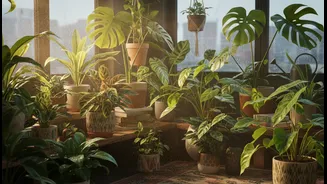

A Note on Monsoon Plant Care
Before we meet the plants, it's crucial to understand a key monsoon rule: high humidity does not mean more watering. In fact, the opposite is true. The damp air slows down soil evaporation, making overwatering a major risk that can lead to root rot. Always
check the top inch of soil; if it feels moist, wait before watering again. Good drainage is non-negotiable, so ensure your pots have holes and aren't sitting in trays full of water. Finally, good air circulation helps prevent the fungal infections that thrive in damp, stagnant conditions.
Money Plant (Epipremnum aureum)
Arguably India’s most popular indoor plant, the Money Plant is famously easygoing and adaptable. During the monsoon, its growth often becomes even more vigorous. The humid air mimics its native tropical forest environment, encouraging its heart-shaped leaves to look their glossiest. This fast-growing vine is an excellent air purifier and thrives in the ambient moisture. During the rainy season, you'll need to water it less frequently. Since it can be grown in both soil and water, if you have a water-based plant, ensure you change the water every week to prevent mosquito breeding, a common concern during this time.
Peace Lily (Spathiphyllum)
The Peace Lily is another plant that flourishes in the humid conditions common across India, especially during the monsoon. Known for its elegant white spathes and deep green leaves, this plant is a natural air purifier. It loves consistently moist (but not waterlogged) soil and the high humidity helps keep its foliage lush. Peace Lilies are quite communicative; their leaves will visibly droop when they need water, which takes the guesswork out of your watering routine during the unpredictable rainy months. They prefer low to medium indirect light, making them perfect for brightening up indoor spaces when the skies are overcast.
Ferns (Nephrolepis exaltata)
Ferns, particularly the popular Boston Fern, are classic humidity lovers. Their delicate, feathery fronds are prone to drying out in arid conditions, so the monsoon is their favourite time of year. The moisture-rich air keeps them looking verdant and full. Ferns are excellent natural humidifiers themselves, adding to the lush, jungle-like feel of a room. They do best in bright, indirect light and require consistently moist soil. A bathroom with a window or a shaded balcony are ideal spots for a fern to soak up the monsoon atmosphere.
Syngonium (Arrowhead Plant)
The Arrowhead Plant, or Syngonium, is a fast-growing foliage plant that appreciates the high humidity of the rainy season. Its attractive, arrow-shaped leaves come in various shades of green, pink, and white. This plant thrives in the warm, moist conditions of the monsoon, often putting out new leaves at a rapid pace. It's quite forgiving but prefers its soil to dry out slightly between waterings, so be extra cautious during this season. It enjoys bright, indirect light, which helps maintain its vibrant leaf colour even on cloudy days.
Calathea
Known for their stunningly patterned leaves that look almost hand-painted, Calatheas are true tropical beauties. They are notorious for demanding high humidity to prevent their leaf edges from turning brown and crispy. The monsoon season provides this environment naturally, making it the perfect time for these plants to thrive. Often called 'prayer plants' because their leaves fold up at night, they bring drama and life to any indoor space. They prefer filtered light and consistently moist soil, so a spot away from direct sun where they can enjoy the ambient moisture is perfect.