




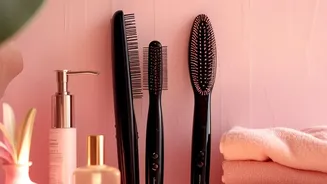
Understanding Indian Hair
Indian hair is incredibly diverse, ranging from silky straight to soft waves and tight curls. A defining characteristic is its natural thickness and density, which gives it enviable volume but also makes it prone to tangles. The hair shaft itself is often
thicker and more robust than other hair types, with a strong cuticle structure that ensures durability. However, this texture, especially if wavy or curly, can prevent natural scalp oils from travelling down the hair shaft, leading to drier ends and a higher likelihood of knots. Using the wrong tool can quickly lead to a frustrating battle with breakage and frizz. This is why a thoughtful approach to brushing and combing is the foundation of any effective hair care routine.
The Non-Negotiable Wide-Tooth Comb
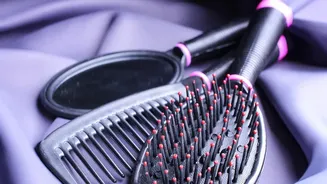
If there is one tool every person with Indian hair needs, it is a wide-tooth comb. Unlike fine-toothed combs that can snag and pull, the ample space between the teeth of a wide-tooth comb allows it to glide through hair with minimal resistance. This design is perfectly suited for thick and curly textures, as it detangles gently without causing stress to the hair strands or disrupting the natural curl pattern. This significantly reduces breakage, which is especially important when hair is wet and at its most fragile. Regular, gentle detangling with a wide-tooth comb not only helps prevent split ends but also stimulates blood circulation in the scalp, promoting healthier growth.
How to Use a Wide-Tooth Comb
The secret to effective detangling is to work in small, manageable sections, starting from the ends and gradually moving up towards the roots. Never try to force the comb through a knot from top to bottom. By starting at the tips, you gently undo tangles without pulling on the scalp. For best results on wet hair, apply a conditioner or a leave-in detangling spray to provide 'slip', allowing the comb to move even more smoothly. This method also helps to distribute products like hair masks and oils evenly through every strand, ensuring your hair gets the full benefit of the treatment. Many experts suggest detangling hair before washing to minimize knots that can form during shampooing.
The Speedy Vent Brush
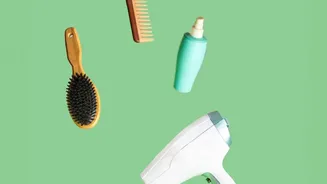
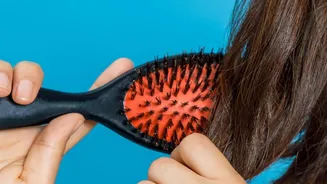
Often overlooked, the vent brush is a styling game-changer, particularly for those who blow-dry their hair. Its name comes from the vents or openings in the base, which allow hot air from your dryer to pass through the brush and reach the hair from all angles. This simple but brilliant design drastically cuts down on drying time. Less time under heat means less potential for damage, keeping your hair healthier in the long run. For the typically dense and thick Indian hair, which can take a long time to dry, a vent brush is an efficiency tool that can transform your morning routine.
Best Uses for a Vent Brush
A vent brush excels at fast, rough-drying and adding volume at the roots. As you blow-dry, lifting the hair at the scalp with the vent brush directs airflow right where you need it for a bouncy, lifted look. Because it doesn't trap heat like a solid-backed brush, it helps prevent hot spots and smooths hair without overheating it. It's important to note that a vent brush is primarily a drying and detangling tool, not a shaping tool. For creating sleek, straight styles, a paddle brush is better suited, and for creating curls or bend, a round brush is the right choice. However, for a quick, voluminous blowout, the vent brush is your best friend.