





The Hidden Helpers Underground
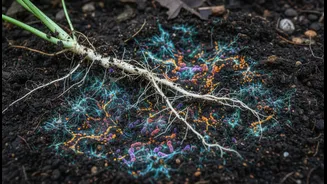
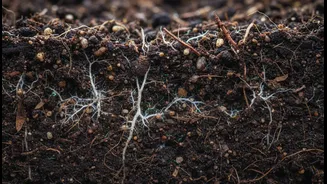
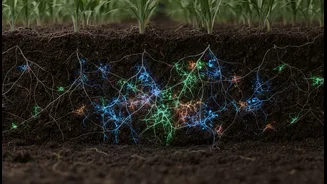
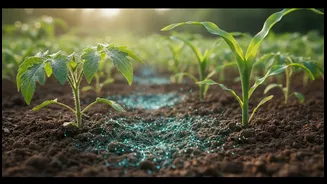
Beneath the surface of every healthy farm lies a bustling, invisible world. A single gram of soil can contain billions of microorganisms, including bacteria and fungi, that form a complex community known as the soil microbiome. For centuries, we have
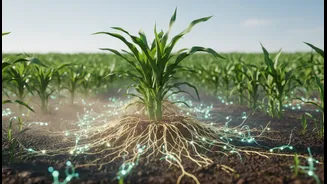
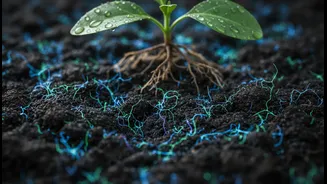
focused on what happens above the ground, but scientists are now realising that this hidden ecosystem is crucial for plant health. Plants and microbes have a symbiotic relationship; the plant provides sugars to the microbes, and in return, the microbes perform a host of services that help the plant grow stronger and more resilient. This is especially true when conditions get tough. Think of it as a plant's personal support system, working 24/7 to keep it healthy.
How Exactly Do Microbes Help?
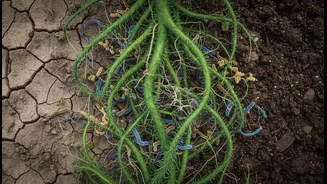
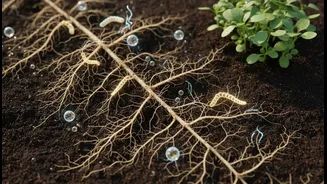
These microscopic allies have a toolkit of strategies to help plants survive stress. When a plant faces drought, certain bacteria can produce compounds that help plant cells maintain their water balance. Some microbes also produce a sticky substance called exopolysaccharide, which acts like a biological glue, binding soil particles together and helping the soil retain more water. Mycorrhizal fungi create vast networks that extend a plant's root system, allowing it to access water and nutrients from a much larger soil area. Furthermore, beneficial microbes can produce hormones that stimulate deeper root growth and even help regulate the plant's own stress hormones, preventing it from panicking and shutting down during a heatwave.
From Lab to Farmland
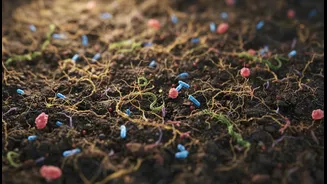
The science is now being translated into practical solutions for farmers. These products, known as microbial inoculants or biostimulants, contain specific, high-performing strains of bacteria and fungi. Common examples include microbes from the genera Bacillus, Pseudomonas, and Trichoderma, each with unique abilities. These inoculants can be applied as a coating on seeds, drenched into the soil, or sprayed onto leaves. The goal is to introduce a concentrated dose of beneficial microbes to give crops a head start, especially in challenging environments. Companies are now isolating microbes that have evolved to survive in harsh conditions—like deserts or saline soils—and using them to develop products tailored to fight specific stresses like drought or heat.
A Boon for Indian Agriculture?
The potential for Indian agriculture is enormous. With unpredictable monsoons, increasing soil salinity, and rising temperatures, microbial solutions offer a way to make farming more resilient. They can help reduce the reliance on chemical fertilisers by making soil nutrients more available to the plant. Field trials in India have already shown promising results. For example, in Maharashtra, cotton crops treated with seaweed-based biostimulants (which work by stimulating microbial activity) showed better performance during a dry spell. In Haryana, certain biostimulants led to a noticeable increase in wheat yields. By enhancing soil health and improving water use efficiency, these products can help stabilise crop yields, improve farmer livelihoods, and bolster national food security in the face of climate change.
Challenges and the Road Ahead
Despite the promise, the widespread adoption of microbial inoculants faces hurdles. The performance of these products can be inconsistent, varying greatly with soil type, climate, and farming practices. Unlike a chemical fertiliser with a predictable effect, a living microbe's success depends on its ability to survive and establish itself in a complex and competitive soil environment. Ensuring the quality and shelf-life of these living products is another major challenge. Furthermore, there is a need for greater awareness and education among farmers, who may be cautious about adopting new technologies. As research continues, the focus is on developing more robust and reliable microbial consortia—teams of different microbes that work together—to provide more consistent benefits across diverse agricultural landscapes.