



Our Sun's Restless Cycle
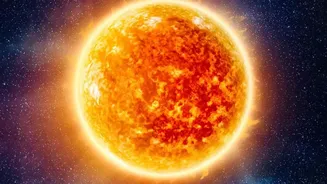
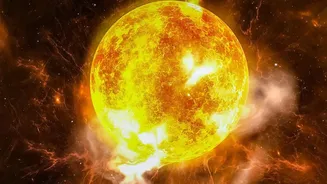
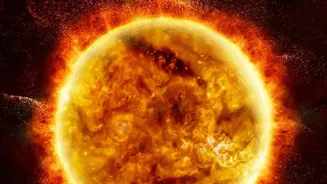
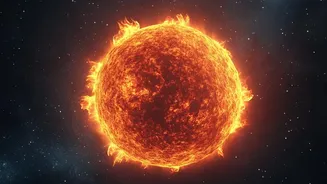
Our star isn't a constant, unchanging ball of fire. It goes through an approximately 11-year cycle of activity, moving from a quiet period (solar minimum) to a turbulent peak (solar maximum). We are currently in Solar Cycle 25, which began in December
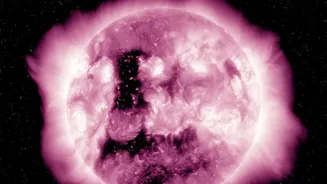
2019. While early predictions suggested a weak cycle, the Sun has been far more active than expected, with scientists now forecasting the peak period to be happening between late 2024 and early 2026. This heightened activity is characterized by an increase in sunspots, which are dark, magnetically complex regions on the Sun's surface. These sunspots are the launchpads for powerful explosions, including solar flares and coronal mass ejections (CMEs). During solar maximum, the Sun can produce multiple CMEs per day, compared to just one every five days during its quiet phase.
Solar Flares and Coronal Mass Ejections
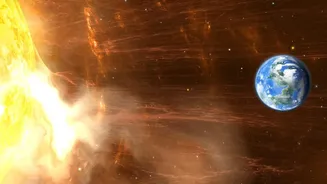
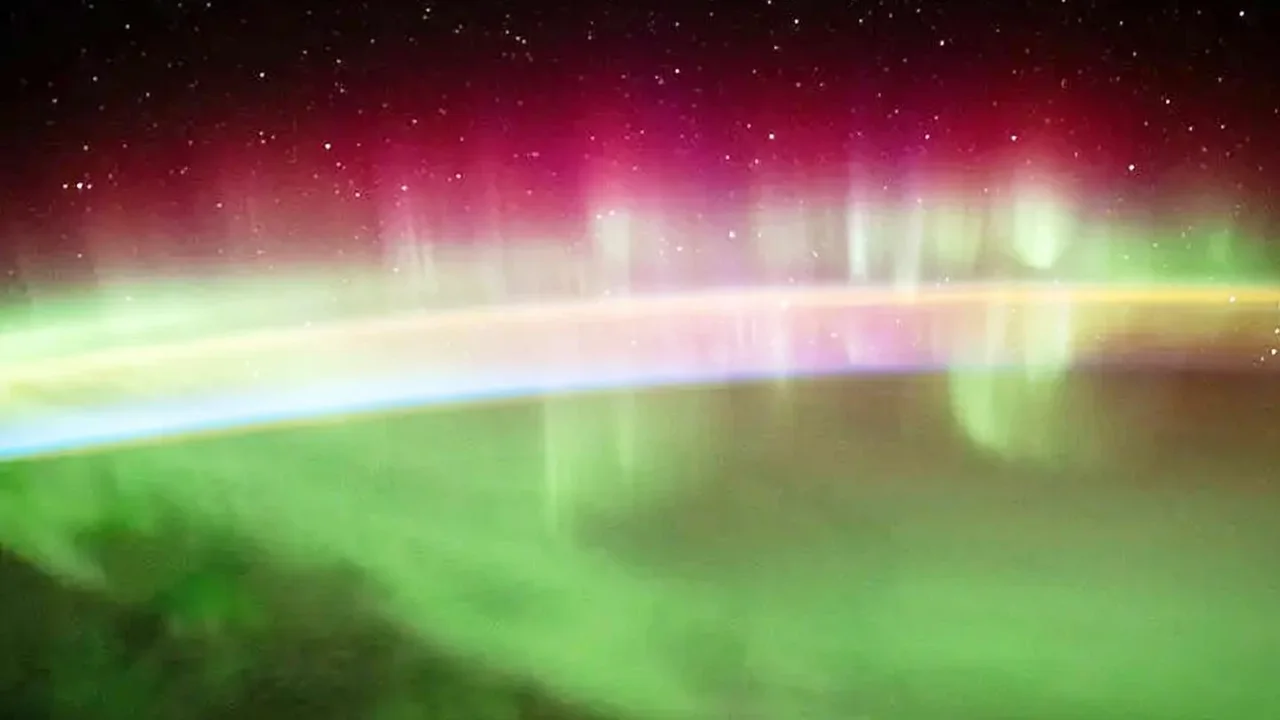
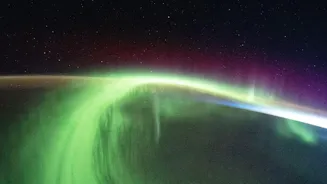
Think of solar flares and CMEs as two different kinds of solar tantrums. A solar flare is an intense burst of radiation—mostly X-rays—that travels at the speed of light, reaching Earth in about eight minutes. These flares can cause immediate and temporary radio blackouts on the sunlit side of our planet. A Coronal Mass Ejection (CME), on the other hand, is a massive cloud of magnetised plasma and charged particles that gets hurled into space. These are slower, taking anywhere from 15 hours to several days to reach Earth. When a CME slams into our planet's magnetic shield, the magnetosphere, it triggers a geomagnetic storm. This interaction is what causes the most significant and prolonged disruptions to our technological systems.
How Solar Storms Scramble Radio Waves
High-frequency (HF) radio signals, used for long-distance communication by aircraft, ships, and amateur radio operators, rely on a layer of Earth's upper atmosphere called the ionosphere. Normally, this layer acts like a mirror, bouncing radio waves back down to Earth, allowing them to travel over the horizon. However, the intense X-ray radiation from a solar flare supercharges the lower part of the ionosphere, causing it to absorb HF radio signals instead of reflecting them. This results in a radio blackout that can last from minutes to hours. A CME-driven geomagnetic storm can disturb the ionosphere for even longer, making HF communication unreliable, especially in polar regions.
Satellites in the Firing Line
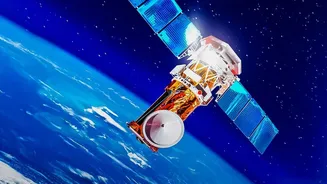
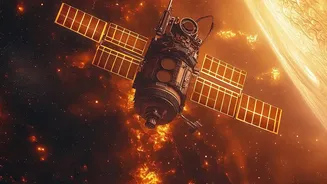
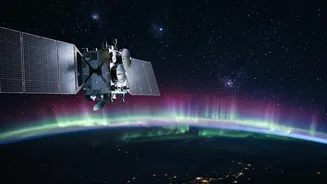
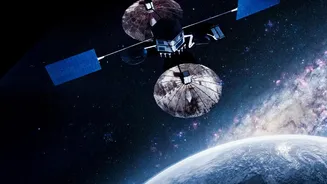
Satellites face a double threat from solar maximum. First, the radio signals they use for communication and for services like the Global Positioning System (GPS) can be disrupted. As these signals pass through a disturbed ionosphere, they can be distorted or delayed, leading to significant errors in GPS navigation—sometimes by tens of meters. Second, the satellites themselves are vulnerable to physical damage. Energetic particles from a CME can bombard a satellite's electronics, causing what are known as single-event upsets—flipping a 0 to a 1 in the satellite's memory—which can lead to phantom commands or force the satellite into a protective 'safe mode'. In extreme cases, this can lead to permanent damage and the loss of the satellite.
What This Means for Daily Life in India
These solar disruptions aren't just abstract problems for scientists and engineers. They have tangible consequences for everyday life. Inaccurate GPS can affect everything from ride-hailing apps and food delivery services to critical navigation for aviation and shipping. Disruptions to satellite communications can impact television broadcasts, digital payment gateways, and even stock market operations that rely on precise timing signals from GPS. While widespread power grid failures like the one in Québec in 1989 are rare, geomagnetic storms can induce currents in long transmission lines, potentially damaging transformers. As our society becomes ever more dependent on space-based technology, our vulnerability to the Sun's temperamental nature grows.