
A New Star Challenges Old Ideas
When the star appeared in the constellation Ophiuchus, it caused a stir across Europe and was recorded by observers in China, Korea, and Arabia. At the time, the prevailing view, inherited from the ancient philosopher Aristotle, was that the heavens beyond
the Moon were perfect and unchanging. The sudden arrival of a 'new star' directly challenged this cosmic order. The German astronomer Johannes Kepler, for whom the event is now named, was not the first to see it but studied it meticulously for over a year. His detailed observations, made entirely with the naked eye, helped prove that this was no nearby atmospheric event but a true change in the distant, fixed stars. This realization was a pivotal moment, contributing to a scientific revolution that would soon be accelerated by Galileo's use of the telescope.
What Kepler Actually Witnessed
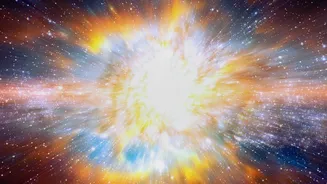
Centuries later, we know what Kepler and his contemporaries saw was not the birth of a new star, but the cataclysmic death of an old one. SN 1604 was a Type Ia supernova, a specific kind of stellar explosion. This type of supernova occurs in a binary star system, where two stars orbit each other. One of the stars is a white dwarf—the small, incredibly dense core left over from a star like our Sun. Over time, the white dwarf siphons material from its companion star. When the white dwarf's mass reaches a critical limit, about 1.4 times the mass of our Sun, it triggers a runaway thermonuclear explosion that completely obliterates it. These explosions are fantastically bright and are key to understanding the cosmos.
From Naked Eye to Digital Sensors
Kepler's toolkit was limited to his eyes, his careful records, and his geometric calculations. Today, astronomers have a vast array of instruments to study these stellar explosions, which are now discovered at a rate of thousands per year in distant galaxies. The first step is detection. Automated sky surveys constantly monitor patches of the sky, using software to compare new images with old ones, flagging any new points of light. Once a potential supernova is spotted, the real work begins. Astronomers use larger telescopes to capture its light curve—a graph of its brightness over days and weeks. The shape of this curve helps classify the type of supernova.
Decoding the Light of an Explosion
Perhaps the most powerful tool is spectroscopy. By passing the supernova's light through a prism-like instrument, astronomers can spread it into a rainbow of its constituent colors, called a spectrum. This spectrum is like a chemical fingerprint, revealing which elements are present in the exploding material and how fast they are moving. For example, the presence of silicon and the absence of hydrogen are key identifiers of a Type Ia supernova like Kepler's. Because Type Ia supernovae are triggered at a consistent mass, they reach a predictable peak brightness. This makes them invaluable 'standard candles' for astronomers, allowing them to measure vast distances across the universe and even track its accelerating expansion.
Kepler's Star, Revisited in New Light
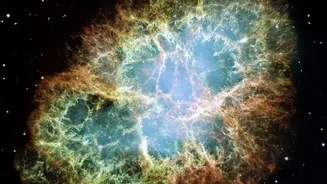
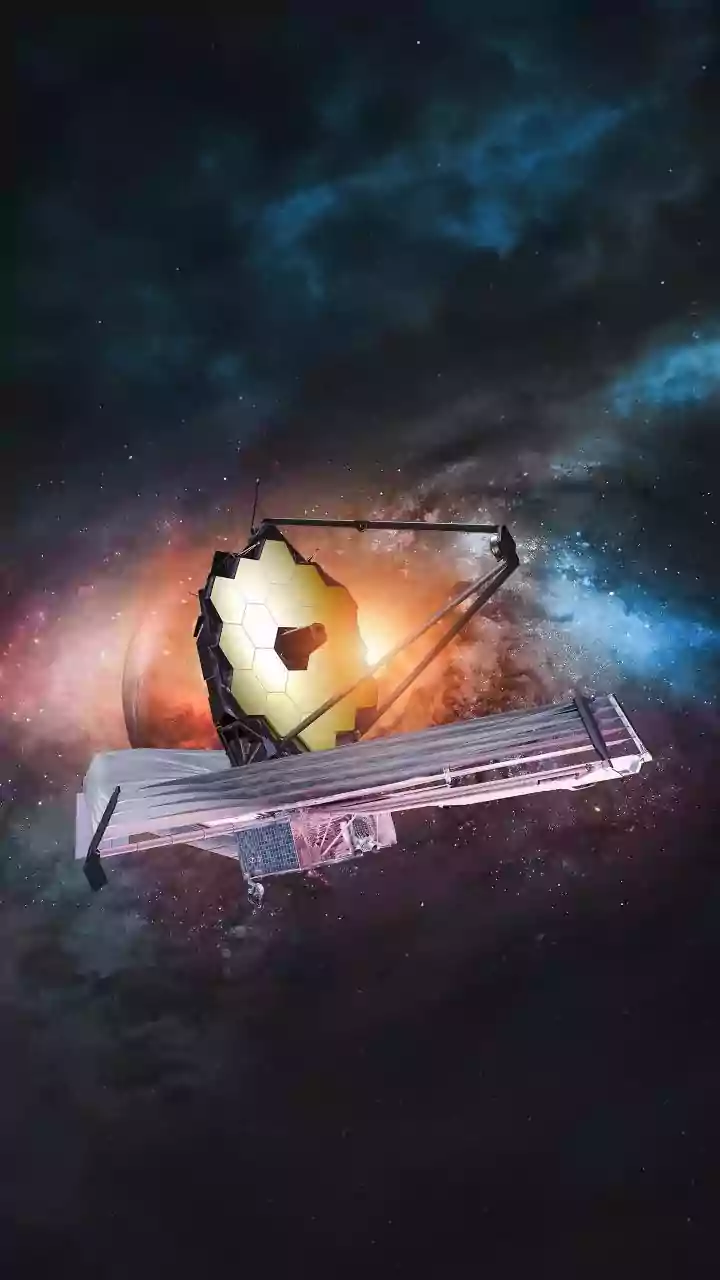
The story comes full circle with the remnant of Kepler's Supernova. Though the star itself is long gone, the expanding cloud of debris from the 1604 explosion is still visible to modern telescopes. And we don't just look at it in visible light. Space telescopes like NASA's Chandra X-ray Observatory, the Spitzer Space Telescope, and others observe the remnant in different wavelengths, from X-rays to infrared. These multi-wavelength images reveal details Kepler could never have dreamed of, showing the shape of the shockwave, the distribution of elements like iron forged in the blast, and clues about the environment around the star before it exploded. By studying the remnant, astronomers continue to test their theories and piece together the final moments of the star that so captivated the world over 400 years ago.