





An End of an Era, A New Beginning
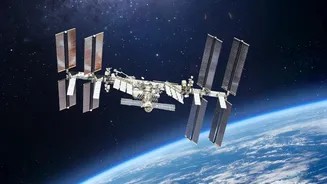
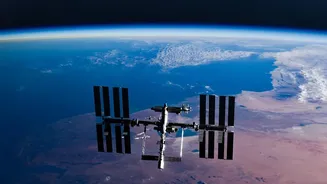
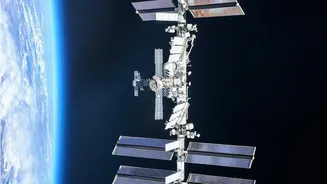
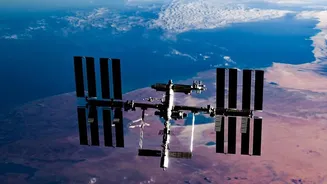
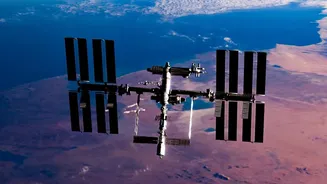
The International Space Station is one of modern history's greatest engineering feats, hosting astronauts and thousands of experiments that have advanced science. However, the aging platform is scheduled to be deorbited by 2030, creating a potential gap
in America's ability to conduct critical research in low-Earth orbit (LEO). Instead of building a costly successor, NASA is pivoting its strategy. The agency plans to become just one of many customers for a new fleet of commercially owned and operated space stations, fostering a robust economy in LEO. This transition is designed to lower costs for the government and open up space for a wider range of users.
Designed for Discovery and Commerce
Next-generation stations are being designed from the ground up with research and manufacturing as a core business. The unique microgravity environment, where the effects of gravity are negligible, allows for breakthroughs in areas like biotechnology, materials science, and regenerative medicine that are impossible on Earth. Companies like Axiom Space are developing dedicated research and manufacturing facilities to produce everything from superior semiconductor materials to 3D-bioprinted human tissues. These new platforms promise state-of-the-art labs, increased automation to free up astronaut time, and greater power and data capabilities, all aimed at accelerating innovation.
The Contenders for the Orbital Crown
Several key players are racing to become the premier destinations in LEO. Axiom Space is taking a unique approach by first attaching its commercial modules to the ISS before they detach to form a free-flying station. Another major project is Orbital Reef, a collaboration between Blue Origin and Sierra Space, envisioned as a "mixed-use business park in space." This station will leverage Sierra Space's inflatable LIFE habitats, which launch in a compact form and expand in orbit to create large, three-story-tall volumes for living and working. Other ventures like Starlab, from Voyager Space and its partners, and Vast's Haven-1, are also developing stations to serve a global market of researchers, companies, and space agencies.
A New Marketplace in Orbit
The shift to commercial stations fundamentally changes the business model for space research. Instead of navigating complex government processes, private companies, academic institutions, and even nations will be able to lease space, time, or services directly from the station operators. This creates a more flexible and cost-effective pathway to orbit. Axiom Space, for example, already facilitates private astronaut missions to the ISS, bundling services like hardware development, mission planning, and integration for its clients. This "turnkey" approach democratizes access, allowing a wider range of organizations to explore the benefits of microgravity without the massive overhead of running a national space program. This model is expected to scale significantly once free-flying commercial stations are operational.