






Beyond Flat Paint: What Is a Clay Wash?
When we think of changing a room's colour, our minds immediately go to paint. But a growing movement towards natural, tactile interiors has brought an ancient alternative into the modern home: the clay wash. Unlike standard latex or acrylic paints, which
form a plastic-like film on the surface, a clay-based finish is a mineral coating made from natural clays, pigments, and other aggregates. It doesn't just sit on the wall; it becomes part of it. The result is a uniquely matte, chalky finish with subtle variations in tone and texture. It absorbs light rather than reflecting it, creating a soft, velvety depth that feels organic and handcrafted. This isn't just a wall covering; it’s a way to introduce a raw, elemental material directly into your living space.
The Allure of Terracotta
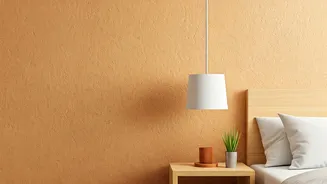
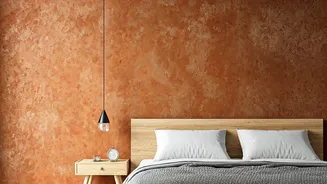
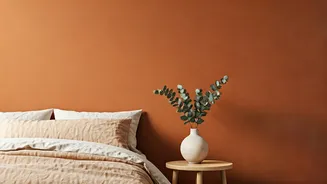
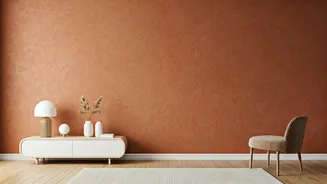
While clay washes come in many colours, terracotta holds a special appeal, particularly for a bedroom. The name itself, Italian for “baked earth,” evokes images of sun-drenched courtyards, rustic pottery, and warm, sun-baked landscapes. This rich, earthy hue—ranging from dusty rose to deep burnt orange—has a grounding effect. In colour psychology, it’s associated with warmth, comfort, and stability, making it an ideal choice for a space dedicated to rest and rejuvenation. An accent wall in terracotta doesn't just add colour; it infuses the room with a sense of history and connection to the natural world. It pairs beautifully with neutral tones, natural woods, linen textiles, and lush green plants, forming the perfect backdrop for a biophilic-inspired sanctuary.
A Feast for the Senses: Embracing Texture
The true magic of a clay wash lies in its texture. Standard paint offers a uniform, flat surface, but a clay finish is alive with imperfection. Depending on the application technique—often done with a special brush in crisscrossing, sweeping motions—the wall takes on a suede-like or limewashed appearance. These subtle inconsistencies create visual interest and a sense of movement, causing the wall to look different as the light changes throughout the day. It invites touch, adding a tactile dimension to your decor that flat paint simply cannot replicate. This textured quality helps a room feel more layered and curated, lending it an artisanal, wabi-sabi charm that celebrates the beauty of imperfection. An accent wall treated with a clay wash becomes a focal point and a piece of art in its own right.
Healthier Walls, Healthier You
The benefits of a clay wash extend far beyond aesthetics. Because they are made from natural materials, most clay-based paints are free from Volatile Organic Compounds (VOCs), the harmful chemicals found in many conventional paints that can off-gas for years, impacting indoor air quality. This makes them an excellent choice for bedrooms, where we spend a significant portion of our time. Furthermore, clay is naturally breathable, or “vapour permeable.” This means it allows moisture to pass through the wall, helping to regulate humidity in the room and reducing the risk of mould and mildew growth. For those with allergies or sensitivities, or anyone simply wanting to create a healthier home environment, a clay finish is a superior, non-toxic option.
Creating Your Accent Wall: What to Know
Inspired to try it? Applying a clay wash is often marketed as a DIY-friendly project, but it requires a different approach than rolling on a coat of paint. The distinctive textured look is achieved through specific brushwork, and consistency is key. Most brands offer specialised brushes and detailed instructions. The surface needs to be properly prepared, typically with a mineral-based primer to ensure the clay wash adheres correctly. While the material cost might be higher than standard paint, it's often comparable to premium designer paint brands. Given its unique look and health benefits, many find the investment worthwhile. If you’re hesitant to take it on yourself, a professional painter experienced with limewash or plasters can achieve a flawless, beautiful result.