




Myth 1: No Sun, No Sunscreen
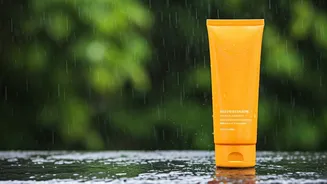
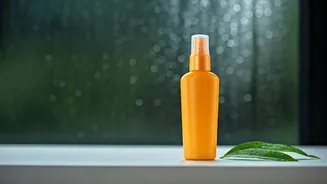
It’s the most common and dangerous monsoon myth: if you can’t see the sun, you don’t need sun protection. But clouds are not a UV shield. Up to 80% of the sun's ultraviolet (UV) rays can penetrate through cloud cover and reach your skin. While UVB rays,
the primary cause of sunburn, are partially blocked, UVA rays are not. UVA rays have a longer wavelength that allows them to pass through clouds and even glass, contributing to premature ageing, wrinkles, and pigmentation. Think of UVA as the 'ageing' ray, present with consistent intensity all year, rain or shine.
Myth 2: I’m Only Outside for a Few Minutes
You might think a quick dash from the car to the office or a short walk to the market doesn’t warrant sunscreen. However, sun damage is cumulative. Short, repeated intervals of UV exposure add up over time, contributing to long-term issues like loss of skin elasticity and dark spots. Furthermore, wet surfaces like roads and puddles can reflect and scatter UV radiation, potentially increasing your overall exposure. Daily application of a broad-spectrum sunscreen is your best defence against this incidental damage, which happens every day, not just on beach holidays.
Myth 3: My Makeup with SPF is Enough
Many foundations and BB creams now come with an SPF rating, leading many to believe they can skip a dedicated sunscreen step. Unfortunately, this is a false sense of security. To achieve the protection level stated on the bottle, you need to apply a significant amount of product—far more than the average person uses for a natural makeup look. Relying solely on SPF in makeup often leaves your skin vulnerable. The best practice is to apply a dedicated, broad-spectrum sunscreen as the last step of your skincare routine before makeup. This ensures you have an even, protective base.
Myth 4: Sunscreen Feels Too Greasy in Humid Weather
The sticky, heavy feeling of some sunscreens is a major deterrent, especially in the high humidity of the Indian monsoon. This often leads people to avoid it altogether, fearing clogged pores and breakouts. However, modern sunscreen formulations have evolved far beyond the thick, goopy creams of the past. Today's market is filled with lightweight, non-comedogenic (won't clog pores) options designed for humid climates. Look for gel, fluid, or serum-based sunscreens that absorb quickly and leave a matte or natural finish. These formulas provide essential protection without the uncomfortable, greasy residue.
Myth 5: It Will Just Wash Off in the Rain
It’s a logical question: what’s the point of applying sunscreen if a sudden downpour will just wash it away? This is where 'water-resistant' formulas become your best friend during the monsoon. While no sunscreen is completely waterproof, water-resistant versions are formulated to maintain their SPF protection for a specific duration (usually 40 or 80 minutes) while swimming or sweating. This makes them more durable against rain and humidity. The key is consistent reapplication. For maximum protection, you should reapply your sunscreen every two to three hours, especially after being in the rain or towelling off.