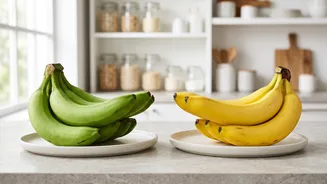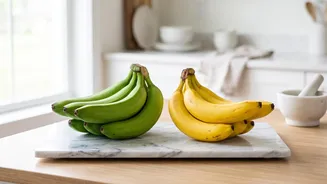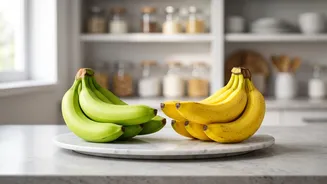



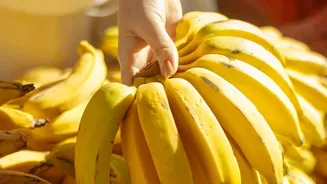
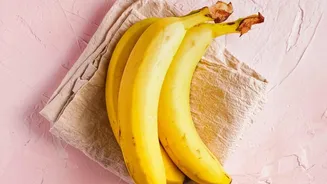
It’s a daily kitchen debate: is that banana perfectly yellow, a little too green, or best for bread? The ideal ripeness isn't just about taste. The nutritional profile of a banana changes dramatically, making the best choice all about you.
The Great Starch-to-Sugar Switch
The fundamental
difference between a raw, green banana and a soft, yellow one lies in its carbohydrates. As a banana ripens, enzymes work to break down long chains of resistant starch into simple sugars like sucrose, glucose, and fructose. A firm, green banana can be made up of 70-80% starch, but by the time it's fully ripe and yellow, that number plummets to just 1% starch, with the rest converted to sugar. This chemical shift is why green bananas have a firm, almost waxy texture and a mild taste, while ripe bananas are soft and distinctly sweet. Importantly, the total calories don't really change during this process; the type of carbohydrate just transforms.
Green Bananas: A Win for Gut Health
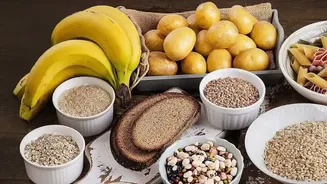
If you prioritize stable blood sugar and gut health, a greener banana might be your best bet. The high concentration of resistant starch in unripe bananas is key. This type of starch isn't fully digested in your small intestine, so it functions more like a dietary fibre. It travels to your large intestine, where it becomes food for your friendly gut bacteria, acting as a powerful prebiotic. This process helps nourish your gut microbiome. Because it slows down digestion, resistant starch also leads to a more gradual rise in blood sugar levels, making green bananas a lower-glycemic option that can keep you feeling full for longer. However, for some people, this high starch content can cause gas or bloating.
Ripe Bananas: Quick Energy and Antioxidants
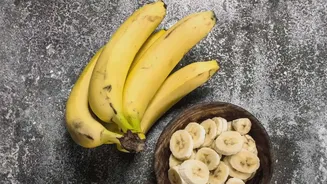
When you need a quick and easily digestible energy boost, a ripe, yellow banana is the superior choice. The simple sugars it contains are readily absorbed by the body, making it a favourite pre-workout snack for athletes. Ripening doesn't just increase sweetness; it also makes the banana easier to digest for most people. Furthermore, as bananas ripen, their antioxidant levels increase. These beneficial compounds, including flavonoids and amines, help protect your body's cells from damage. For those who find green bananas tough on their stomach, the softer texture and lower resistant starch content of a yellow banana make it a more comfortable option. However, some studies note there can be a slight loss of certain micronutrients as a banana ages.
The FODMAP Factor for Sensitive Stomachs
For individuals with Irritable Bowel Syndrome (IBS) or sensitivity to FODMAPs (Fermentable Oligosaccharides, Disaccharides, Monosaccharides, and Polyols), ripeness is crucial. Unripe, green bananas are considered a low-FODMAP food. As they ripen, however, they accumulate fructans, a type of FODMAP that can trigger digestive symptoms like bloating and gas in sensitive people. Because of this, a fully ripe banana is considered a high-FODMAP food. Guidelines often suggest that people on a low-FODMAP diet can safely consume a whole unripe banana, but should limit themselves to about one third of a ripe banana to avoid discomfort.
Why Portion Size Is the Deciding Factor
This brings us back to the headline: portions matter immensely. While a green banana has a lower glycemic index (GI)—a measure of how quickly a food raises blood sugar—the total impact depends on how much you eat. This is measured by the glycemic load (GL), which considers both the GI and the serving size. A very large green banana could potentially have a similar effect on blood sugar as a very small ripe banana. If you are managing blood sugar, choosing a smaller banana, regardless of ripeness, is a simple way to control your sugar intake. Pairing your banana with a source of protein or fat, like a handful of nuts or a scoop of yogurt, can also help slow the absorption of sugar and stabilize your energy levels.